Special Investigation: Time to stick or twist on legalising industry
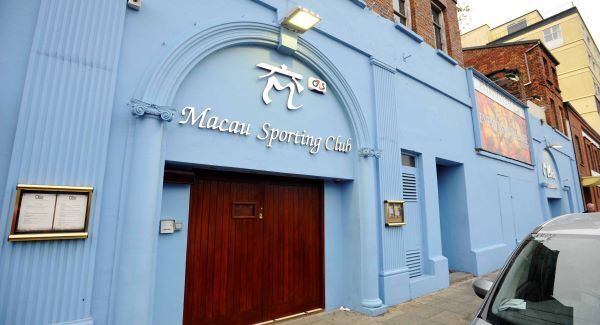
BLACK or red? Our economy is very much in the latter after the game of chance played by so many during the Celtic Tiger.
The people who, every night, take thousands of euro staked on the roll of a dice or the deal of a hand of cards by willing punters are also engaging in a risky gamble.
For years, they have been treading on the edge of a legal precipice due to a lack of proper regulation, though under legislation to be enacted by Justice Minister Alan Shatter, that is about to change.
For now, what happens inside the clubs, the entrance criteria, the opening hours, even such matters as the sale of alcohol remain a mystery.
The lack of regulation has meant that, despite the legal uncertainty, the number of clubs around the country peaked at the height of the boom at almost 50.
At present, Section 4 (1) of the Gaming and Lotteries Act 1956 prohibits casino gaming. As the Department of Justice states: “There is at present no provision in Irish law that permits the licensing of casinos.”
So how come every large town and city in the country has at least one “private member” gaming club where people can go to place a bet?
According to the department, the “the so-called ‘private members’ clubs’ rely on section 4(3) of the 1956 act as a legal basis for their operations”. That section states that “gaming shall not be unlawful if no stake is hazarded by the players with the promoter or banker other than a charge for the right to take part in the game, provided that: (a) only one such charge is made in respect of the day on which the game is played, and (b) the charge is of the same amount for all the players, and (c) the promoter derives no personal profit from the promotion of the game.”
However, that would mean that the clubs would only be lawful if nobody placed bets other than an ante to play the game and that the banker could never win. The spinning roulettes and thrown dice in every city in the country would give a lie to that perception.
With so many of these facilities on such shaky ground, it seems bizarre that Mr Shatter can say “attempts to curtail unlicensed private members’ clubs, including prosecutions, have been unsuccessful”.
“One club was prosecuted under section 4(1) in 2009 but it did not result in a conviction,” his department confirmed.
“No further prosecutions have been brought since then.”
That is in spite of the fact that some clubs are selling alcohol at all hours of the night and the basic fact that there is no legal provision for casinos in this country.
Various attempts have been made to shore up the obvious shortfalls in the legislation. In particular in 2006, then justice minister Michael McDowell went on the offensive saying he was determined to close down the private gaming clubs by using the Gaming and Lotteries Act, and amending the law if necessary.
However, it transpired that he showed his hand too early. There was no political will to close the glaring loophole and his Cabinet colleagues refused to back him. He emerged from a meeting of ministers and admitted: “We had a discussion of this matter in Government. The Government has asked me to come back with proposals for a regulatory approach rather than a prohibitionary approach.”
Among those who put the reins on Mr McDowell was fellow Progressive Democrat tánaiste Mary Harney who said it wasn’t realistic to ban casinos.
“We do a lot of gambling in Ireland. We bet on horses, dogs, we have the National Lottery and these one-armed bandits in some places in the country,” she said at the time.
Duly chastened, Mr McDowell did instigate a working group saying: “I expect that the legislative proposals will bring about strict regulation over the establishment of and operation of casinos while ensuring that public and local interests are served.”
The group reported within a matter of months with a wealth of recommendations all contained within a 200-page report. The industry did not change one iota as a result.
The 2010 Criminal Justice (Money Laundering and Terrorist Financing) Act did at least mean private members’ clubs had to register with the State, albeit for the purposes of monitoring money laundering. The law says those who have not registered are committing an offence under section 109 (2) of the act and are liable to a fine not exceeding €5,000 or imprisonment for a term not exceeding 12 months or both. A conviction on indictment means a fine or imprisonment for a term not exceeding five years or both.
The legislation requires clubs no only to register but also to provide “to the fullest extent possible for the prevention of money laundering and terrorist financing”.
“These obligations include ones to identify customers, to report suspicious transactions to An Garda Síochána and the Revenue Commissioners, and to have specific procedures in place for the prevention of money laundering and terrorist financing,” the Department of Justice states on its anti-money laundering compliance unit website.
According to that website, there are only 34 clubs registered with the unit — leaving a number that remain at unregistered.
Perhaps the failure to bring them into line has something to do with the fact the Government is in the process of developing a suite of laws designed to finally regulate the industry.
Much of the new legislation is dedicated to addressing the glaring shortfalls in existing laws crafted in 1956, when online gambling was an alien concept not least since, as Mr Shatter puts it himself: “The exchequer is being short changed because of the absence of a taxation regime for online and other forms of remote gambling.”
However, he is also using the legislation to bring the private gaming clubs into a more public and accountable structure.
A limited number of “modest” sized casinos are to be allowed. According to the department, a license will only be issued where the applicant “satisfies the minister as to his personal suitability, financial resources, tax compliance, previous record as a licence holder (whether in Ireland or elsewhere), criminal history (if any).”
Verification checks of the applicant’s bona fides will be made both here and internationally.
“Only those promoters meeting high standards of personal and financial probity will be considered for a licence,” said Mr Shatter.
He said the Government recognised there was support for a form of casino entertainment and that it would be especially beneficial “as an added attraction for some tourists”.
However, Mr Shatter was obviously reluctant to turn Ireland into a gambling tourist trap to rival the likes of Las Vegas. The minister’s use of the term “modest” in relation to the types of casinos that would be permitted and the timing of the announcement of the legislation appeared to be a direct attack on the plans for a “super-casino” in Co Tipperary championed by his former party colleague Michael Lowry.
Businessman Richard Quirke had even secured planning permission for his 2,000-table, €460m hotel and casino development on an 800-acre site. Up to 2,000 full-time jobs were expected to be created.
The Government was not prepared to take the gamble.
“While accepting that such developments would bring, for example, some employment benefits both at construction stage and when in operation, the Government is nevertheless concerned that the scale of such developments is so large that they can attract other activities that are not desirable and pose a particular risk to vulnerable people,” the department said of such large resort-style venues.
“It therefore concluded that, on balance, the social impact was likely to be negative.”
According to the Gaming and Leisure Association of Ireland, which lists 11 casinos as its members, the advent of poker into the online arena combined with increasing prosperity during the Celtic Tiger years from 2002 to 2006 saw a significant increase in the number of private member gaming clubs.
However, according to the association’s director David Hickson, just like every aspect of the economy, gambling has been hit hard by the recession. “Since the economic downturn, some operators are reporting a 35% to 50% decline in business levels since 2008. This combined with the imposition of Vat at 23% on their gross income, has forced at least four of five operators to close their doors. In short, I believe that the number of operators has declined in recent years and is currently somewhere between the 36 and 42 mark.”
He says club owners have found people are visiting their businesses less often and when they do, they are spending less.
The level of activity in the clubs varies according to the size of the population. Smaller venues might only have 40-50 members per night while the bigger clubs in Dublin might attract up to 250. According to association, that tends to increase when larger international poker events are on nearby.
The amount punters spend also varies significantly. While there are obviously the big spenders who splash thousands of euro on the fall of a dice, the average punter will spend somewhere between €25 and €200 per visit.
Given that its members already fit into the “modest” criteria the association is supportive of what the Government is trying to achieve though the new legislation. “I believe that it will significantly help the industry to develop an offering that is comparable to that available in any other EU jurisdiction,” said Mr Hickson.
“Indeed the Gaming and Leisure Association has been campaigning for regulation since 2006. It will also enhance Ireland’s regulatory reputation and assist in our economic growth, as both local residents and many tourists to Ireland, who are familiar with licensed casinos, are less familiar with the concept of a private members’ gaming club. I am concerned that not all operators provide their services in a socially responsible manner.
“Therefore appropriate legislation combined with robust enforcement should also serve to heighten consumer protection in our sector.”
In particular, he says the new legislation needs to crack down on underage gambling.
“International research demonstrates that there is a very strong link between underage gambling and problem gambling in later life. Therefore, in order to prevent the incidence of problem gambling, there must be an absolute prohibition on underage gambling, and operators should be held to account for any breaches of this fundamental principle.
“This principle must also apply to the betting [on and off course], lottery, gaming arcades, and bingo sectors if it is to ensure the protection of the weak and vulnerable.”
It seems ironic that it is a casino group which is raising social responsibility.
“After all, it is the clubs that benefit from the players’ lack of financial control.
The Gaming and Leisure Association operates a code of practice and says its members should:
* Not permit underage gambling;
* Be able to facilitate any member who identifies themselves as having a gambling problem by denying them access to the venue upon their request;
* Train their staff to be alert to changes in player behaviour that might indicate they are developing a gambling problem.
Any aggressive behaviour or visible signs of frustration should be brought to their managers’ attention, who in turn will try to have a quite word with the player;
* Be equipped to deal with genuinely concerned family members if contacted by same;
* Not provide credit to their customers.
However, as the association only represents 11, or less than a quarter, of the country’s private members’ clubs, there is no way of knowing whether others are operating the same safeguards.
As part of the new legislation, the minister is looking at the imposition of a levy to support research, educational programmes or treatment facilities for problem gamblers.
“Such a provision, would be activated only if the minister formed the view that any fund established by the operators themselves was inadequate,” the department said.
* Gamblers Anonymous
Dublin: 01 8721133
Cork: 087 2859552
Galway: 086 3494450
Waterford: 086 2683538 or 086 3973317
* Tabor Lodge
021 4887110
* Aiséirí Treatment Centres
Cahir: 052/ 744 1166
Wexford: 053/ 914 1818
* Cuan Mhuire
Cork: 021 7335994
Limerick: 063 90555
Kildare: 059 8631090
Galway: 091 797102
* Ireland Addiction Advice
046 9242009
089 4458721
* Aislinn Adolescent Addiction Centre
056 8833777
* Read more:
Special Investigation: Multimillion casino sector operates outside law
Special Investigation: Behind the closed doors of private gaming clubs
Special Investigation: Time to stick or twist on legalising industry
Special Investigation: A paradise for gamblers where time is truly irrelevant
Legalising casinos - Fairer throw of the dice
CONNECT WITH US TODAY



Be the first to know the latest news and updates