Credit study contradicts itself, say bankers

The Irish Banking Federation (IBF) claims there are “fundamental weaknesses” with the Central Bank report which found small businesses here faced some of the most challenging credit conditions in the eurozone.

Credit study contradicts itself, say bankers

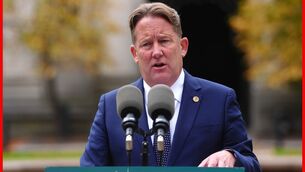
IBF public affairs director Felix O’Regan says the federation intends to conduct a detailed analysis of the report over the next week and will release a comprehensive response to its findings.

A spokesperson said: “But from what we have seen, we are more concerned than ever, based on what these two Central Bank economists have concluded, and what the Mazars report has concluded.”

The Department of Finance commissioned the consultancy firm Mazars to conduct an independent review of Irish bank lending to the SME sector. The results were released in July and found the lack of lending to the SME sector was caused by weak demand.

Mr O’Regan said: “The Central Bank report agreed with the Mazars report that three out of every four SME loan applications were approved. But then the Central Bank economists, without any basis, go on to make broad sweeping statements about what is happening in the marketplace.”

He argued there were major contradictions in the report. One of Central Bank’s conclusions was that “the tough credit conditions experienced in Ireland are not explained by firm level characteristics such as size, turnover, sector, ownership structure, capital position, profitability or prospects for internal funds, again suggesting that supply-side factors are feeding through to credit conditions for real economy firms.”

Mr O’Regan described this statement as “fantasy stuff”. “It just couldn’t be further from the truth.”

He argued that the SME sector had been hit harder in the economic crisis and property bust in Ireland than almost any other eurozone country.

“What about an SME with a large property portfolio and a big overhang of debt? To say these factors don’t have a bearing is not grounded in reality. Where is the substance for these broad sweeping statements?”

Mr O’Regan asked: “What did these Central Bank economists do to assess the credit quality of potential borrowers? This report is a statistical analysis. Unlike the Mazars report, it does not do face-to-face interviews with SMEs.”

The Central Bank report was based on the findings of two surveys. One, known as the Safe (SME Access to Finance) survey, was conducted by the ECB and European Commission and surveyed 485 Irish SMEs. The other survey was conducted by Mazars and surveyed 1,505 Irish SMEs.

Mr O’Regan said that in the Central Bank report it said only Safe surveys of 500 SMEs or more were included in the overall findings, which would seem to exclude the Irish survey.

“We are certainly not saying that everything is right with about the banks-SME relationship, but it is nowhere as bleak and negative as these Central Bank economists suggest.”

The Central Bank declined to respond to Mr O’Regan’s points.

SME loans

The Mazars lending report found less than 40% of small businesses sought credit from banks in the first six months of 2012.

Standing over the findings of the original report, Irish Banking Federation chief executive Pat Farrell said: “We now have a situation where the Department of Finance and the Government are definitively standing behind the Mazars report.

“Now we have this report out of the blue sky coming from the Central Bank which on the face of it seems to be saying something completely different.”

The Mazars report in question found only 38% of SMEs sought credit during from Oct 2011 to March. The report said that 51% of small firms felt banks were not lending to the sector.

However, the report states that despite the perception that the banks are not lending, only one fifth of those surveyed said they had personal experience of banks not lending.

The Mazars report recommended that the banks encourage SMEs to seek credit from lending institutions.

However, the report released by the Central Bank on Tuesday found that Ireland is the second toughest place in the eurozone for SME to get loans approved.

The Central Bank survey found that Irish SMEs have the second highest rejection rate from banks for loan applications and overdrafts in the eurozone, apart from Greece, although demand for credit is above the region’s average. Ireland also has the second highest level of “discouraged borrowers”, which means firms do not apply for a loan even though they need credit. — Vincent Ryan

Read more:

Firms call for probe into bailed-out banks’ loan books

No real recovery until vicious cycle of credit cost is broken

Businesses back Central Bank report

More in this section

Lunchtime News

Newsletter

Keep up with stories of the day with our lunchtime news wrap and important breaking news alerts.

Cookie Policy Privacy Policy Brand Safety FAQ Help Contact Us Terms and Conditions

© Examiner Echo Group Limited