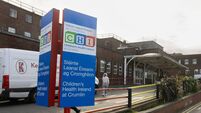
EU officials inspect Haulbowline toxic dump
They wanted to see first-hand the scale of the environmental disaster at the former steel-works plant and examine what’s being done to manage the 500,000 tonnes of toxic waste dumped there.
It contains mountainous slag heaps — byproducts of the steel-making process — including the deadly carcinogen chromium 6 and a number of heavy metals.
The delegation is in Ireland as part of nationwide fact-finding mission to some of the State’s worst environmental sites.
The visit follows a threat from the Commission earlier this year that the Government would face hefty fines unless it took action make the site’s safe.
Their visit to Haulbowline comes days after contractors finished plugging several breaches in the sea wall at the eastern end of the former Irish Steel and ISPAT plant.
The work is underway as part of a major application to the EPA, which is being coordinated by Cork County Council, for a licence to run the site as a landfill.
A spokesman for the county council confirmed that the licensing work is advancing under the watchful eye of a dedicated four-person council team charged to drive the project forward.
He said consultants are due to be appointed before the end of the year to advise on a range of site investigation works.
They will draw from pervious reports on the site, including White Young Green reports from 2004 and 2008, before engineers bore holes across the tip to map the full extent and type of materials buried there.
The spokesman said it is only when all this work is done, that the application to the EPA will be ready — probably towards the end of next year.
The EU Commission delegation’s visit to Haulbowline was prompted by a complaint lodged in 2008 by the Friends of the Irish Environment (FIE).
The lobby group said the State had shown “utter disregard” towards the proper management of the site.
Then last year, the Commission issued a final letter of formal notice to Ireland over the State’s failure to licence the toxic dump. The Commission warned the State would face daily fines unless action was taken.
Faced with this threat, Agriculture and Marine Minister Simon Coveney volunteered earlier this year to chair an inter-agency taskforce, involving various government departments, the EPA and Cork County Council, to examine the site. The Cabinet also signed off on a €40m package to fund the clean-up work.
Despite local concerns and higher-than-average cancer rates in Cobh, directly across from the contaminated sites, several reports say the material dumped on the site poses no health risk.

CONNECT WITH US TODAY



Be the first to know the latest news and updates