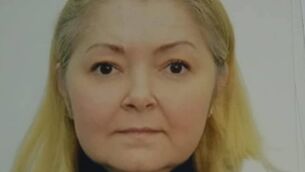
Retired soldier exposed truth about his friends’ deaths
Michael Walker, from Co Donegal, was with the reconnaissance section and served with the 64th Battalion in 1989.
On that morning, had an early bird mine sweep been sought to ensure the dirt track where the explosion happened was safe, he and his team would have been detailed to carry it out.
However, there was no early bird sweep ordered and the report has said this exposed the men to unnecessary danger.
Mr Walker remembers the anger and recriminations in camp at the time and recently gave a detailed statement to gardaí investigating the matter for potential criminal charges.
Like the bereaved families, the soldiers who toured with the 64th Battalion were never given an explanation for what happened.
Yesterday, he said he and others felt burned out after the struggle to get to this stage but the dead men’s memories had been vindicated even if he was disappointed that those responsible were not named.
Mr Walker retired from the army, with an exemplary record, in 2003. This allowed him the space to properly investigate the issue without fear of reprisals from his employer. He said many of those serving had been afraid to speak out because it would have put their livelihoods at risk.
In recent years Mr Walker tirelessly pursued the army, the Department of Defence, the UN and even journalists who first covered the incident. He was anxious for explanations about what happened. Last year the army dismissed his efforts and requested that he stop making contact. It based this demand on a disputed internal inquiry finalised in 2003 and partially released to him under the Freedom of Information Act.
In 2010, Major General Dave Ashe wrote the following note to Mr Walker.
“The investigation concluded that given the passage of time, the lack of contemporaneous accounts at the time, and the subjective nature regarding the question of whether the military commanders should or should not have foreseen a situation such as the one which resulted in the death of these three soldiers, that it was difficult to see how any further inquiry could come to an alternative view...
“This was arrived at in 2003, some 14 years after the incident. Save for new evidence being uncovered, it is difficult to see how this position would have changed in the intervening years.
“As no additional evidence has been brought to light there is no basis for reopening an inquiry which concluded with its findings over two decades ago. You are requested to cease your correspondence with defence forces headquarters.”
However, the families have said despite obstacles it was Mr Walker’s work which kept the flow of information coming. He was also the soldier who first approached the Heneghans in Donegal to flag the possibility of a lengthy cover-up.
In one crucial instance the bibliography in a UN peacekeeping book Mr Walker picked up 10 years earlier had referred to “S-class” documents. Among these were what amounted to twice-yearly updates on the United Nations Interim Force in Lebanon (UNIFIL) mission from the secretary general to the UN Security Council.
After Mr Walker was taught to research through the internet he discovered the critical S documents through an online portal buried in the security council’s website. This was despite repeated refusals by the UN to respond to his request for their release.
These contradicted much of the army’s positions at the time of the 2003 inquiry.
Earlier this year a lucky Google search by him happened across photos which had been taken of the scene in Brashit after the men died. These were posted online by a former soldier but nobody, not even the relatives, knew they existed.
They showed the state of the road which suggested it was unlikely to have been a regular supply route as the army had once maintained.
Anthony Walsh, who served with Mr Walker, said his tenacity and consistency on the facts of the case were important in helping to verify the families’ suspicions. “If Michael Walker was on his death bed he would still say the same thing about what he did that morning,” he said.
CONNECT WITH US TODAY



Be the first to know the latest news and updates