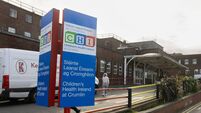
Doctor crisis: Just 15 of 270 recruits in system
Figures for September 1 supplied by the Medical Council show that fewer than 6% of the doctors, recruited by the HSE from India and Pakistan, have met the criteria for registration — despite the fact the HSE was aware six months ago of a pending shortage.
The doctors are being housed by the taxpayer at a cost of €100 a week for an eight-week period, while the HSE and the Medical Council work their way through a complex registration process.
This means the state has, to date, paid approximately €20,000 to cover the accommodation costs of the doctors, most of whom are still unsure whether they will be cleared to work here.
The Medical Council said the delay in processing the applications was due to two factors:
nFailure by many doctors to submit the appropriate documentation.
nFailure by the HSE to submit a supporting declaration.
As part of its responsibilities, the HSE must make a declaration to the council for each doctor registered in a new supervised division outlining the nature of the post, the duties of the doctor and the nature of the supervisory arrangements.
The new division, created through legislation in response to the shortfall of junior doctors, allows non-EU doctors to be registered in council-approved posts for a maximum of two years, working under supervision only.
The HSE said it has made in excess of 200 declarations and that once doctors are registered they start work immediately.
However, Fine Gael Seanad health spokesman Colm Burke said the delay in getting doctors into the system was unacceptable.
He said he had met with the Medical Council and understood it had flagged the need to address the shortfall last December.
He also questioned why doctors were interviewed as late as May when the HSE had known a shortfall would arise in July once junior doctors began a new rotation.
Mr Burke said the situation showed there was “no joined-up thinking” between the Department of Health, the HSE and the Medical Council.
“They [the HSE] interviewed a large number of people before the Government was made aware that there was a need for amending legislation to allow the doctors work here.
“By the time the legislation was passed and approved mid-July, some of the doctors had already arrived and many more had travel arrangements in place. Two months later, just 15 are ready to start work. All of this should have been planned, co-ordinated and completed prior to June 2011,” Mr Burke said.
The Department of Health said it only became evident in June that an amendment would be required to the Medical Practitioners Act 2007 to facilitate the recruitment process.
“Once the HSE and the Medical Council sought the amendment it was drafted and processed through both Houses of the Oireachtas and enacted within one month,” a statement said.
As of July, there were 191 junior doctor vacancies. Of the 270 doctors from India and Pakistan, 236 have passed the required exams.