Links forged with Libya, despite IRA connection

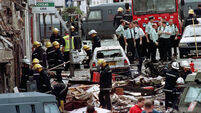
THE Government secretly forged trade links with Libya in the 1970s, while privately acknowledging the north African state was arming the IRA.

Links forged with Libya, despite IRA connection

Confidential documents uncover moves to keep business deals with Colonel Gaddafi’s regime under wraps because of the reaction they would have sparked both in Ireland and Britain.

Senior officials argued it was better to remain friendly with Libya than to risk losing lucrative contracts for the likes of Aer Lingus, according to files just released into the National Archives.

The then state-owned airliner contacted the newly-elected Fine Gael/Labour coalition in April 1973 over concerns about a contract to help train and manage Libyan Arab Airlines.

A number of Cabinet ministers were asked to sign off on talks towards a deal before Aer Lingus bosses travelled to Tripoli.

While the value of the contract was not deemed great, it was felt it held out the opportunity of further deals on aircraft maintenance and leasing.

A handwritten note to then-Industry and Commerce Minister Justin Keating underlines the Government’s awareness that Gaddafi’s regime was arming the Provos.

However, the memo from a ministerial adviser signals the main worry was the potential loss of commercial deals with other countries if Aer Lingus refused to work with Libya.

“Aer Lingus could suffer commercially, perhaps elsewhere in the Arab world (eg Algeria),” he states.

The adviser also suggests that aborting any deal would have no effect on the shipment of Semtex and guns to the Provos.

In a separate deal that year, papers show the Department of Industry and Commerce agreed a request by Enterprise Ireland’s predecessor, the Institute of Industrial Research and Standards (IIRS), to train up Libyan graduates. Again acknowledging the then rogue state was arming the IRA, the memo insists the training deal would be “yet another link with Libya that can be to our eventual economic advantage”.

A ministerial aide wrote: “It is true that there have been difficulties about the Libian (sic) regime support for the Provisionals and that our message to Colonel Gaddafi on this matter did not seem to be getting through as we like.

“In spite of this, I feel we should do what we can to be friendly with Libya and to exert our influences in such a way as to bring it into a more reasonable relationship not only with Ireland but with Europe as a whole.”

The memo said the IIRS should seek full commercial costs for the training because “whatever it may be short of, Libya is not short of money”.

Two years later in 1975, the Department of Health said it had no objection to training Libyan doctors in Irish hospitals after an approach from the Libyan embassy in London.

More in this section

Lunchtime News

Newsletter

Keep up with stories of the day with our lunchtime news wrap and important breaking news alerts.

Cookie Policy Privacy Policy Brand Safety FAQ Help Contact Us Terms and Conditions

© Examiner Echo Group Limited