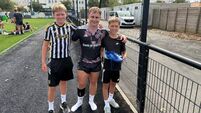
‘The best course in the world’
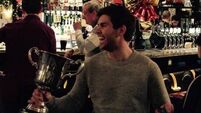
The 26-year-old was born in Cork, but lives in Terenure in Dublin. Last night he received his scroll for graduating from the innovative two-year course, which allows students to undertake a range of modules and to attend mainstream lectures.
The only course of its kind in Ireland, it has produced two graduate classes and it is hoped that it will be extended to other parts of the country, including Cork, Dundalk and Sligo.
For Jack, the experience was enlightening: “The best ever two-year course in the world,” he says.
Articulate and engaging, Jack had previously studied for a year in UCD, but the Certificate in Contemporary Living at Trinity has allowed his talents to blossom.
Modules include numeracy, literacy, computing, art and drama, as well as the chance to attend mainstream lectures in world history twice a week.
There are also modules in mathematics and financial management and social studies, while the course includes a work placement element.
The full-time course runs four days a week from 10am to 4pm, and allowed students with an interest in other mainstream courses to attend lectures. “It gave me an appreciation of world history and an appreciation of another part of the college,” says Jack.
The course also allowed him the opportunity to travel independently to and from lectures, and boosted his confidence to such a degree that he now travels independently from Dublin to Bordeaux whenever he visits his father, who lives in the French city.
This blossoming of Jack’s self-confidence has been noted by his mother, Ann, and his key worker Mick Kelly.
“Apart from the content of the course it was a great networking opportunity,” Ann says of the TCD course. “He made such a wide variety of friends.”
The course also included a mentoring programme, where undergraduates regularly met students of the Contemporary Living Certificate on a weekly basis, sometimes just to share a coffee or go to the cinema. As Jack says, it resulted in increasing his circle of friends, “from an empty table we have a big table”.
For Mick Kelly, the travel aspect of the course has been a vital development.
“A lot of people would be reliant on their parents to get them here, but in doing the Trinity programme Jack got to use the bus himself.”
Indeed, students from as far away as Kildare and Portlaoise attended the course, travelling in and out every day. The travel does not end there either; Jack was able to visit some of the famous sites in Athens as part of a planned trip which intersected with a visit to the city by students from Trinity’s classics programme.
The course also allowed Jack to continue to express himself artistically, although this was not such a radical departure: Jack already had an exhibition of his work at the Kettles Yard Gallery in Cambridge, where his grandmother lives.
John Kubiak, the teaching and learning officer at the National Institute for Intellectual Disability (NIID), which operates the programme in conjunction with Trinity College, said the programme had been so successful that universities from other countries were now keen to copy it.
“We had interest from Belgium, our Icelandic and German counterparts were interested, people are hearing about it and they are coming here and spending a few days here looking at how it operates,” he says. “There is huge interest in what we do.”


CONNECT WITH US TODAY



Be the first to know the latest news and updates