HSE has to meet €540m funding shortfall
Health Minister Mary Harney said the figure was over and above what was provided in the HSE’s 2009 service plan that she approved last December.
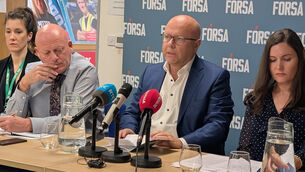
She was speaking at a meeting of the Joint Oireachtas Committee on Health and Children.
Ms Harney also revealed that she intended using emergency powers to reduce the state’s drug bill from May of this year.
She intended using legislation to reduce the distribution and dispensing costs of drugs issued by healthcare professionals, including community pharmacists.
The Irish Pharmacy Union warned yesterday that the medical card scheme would collapse, 5,000 jobs would be at risk and up to 300 pharmacies would close, if cuts in the payments scheme of the magnitude proposed by the HSE last year were re-introduced.
Last March, the HSE cut pharmacists’ payments by 24% but the High Court later ruled that the cuts were a breach of contract and payments were reintroduced.
Ms Harney said the shortfall of e540m meant that the cost of distributing and dispensing drugs under the community schemes had to be addressed.
HSE chief executive Prof Brendan Drumm said that the health authority was trying to reduce non-core pay of about e1.2bn.
Measures sought included the redeployment of nurses, eliminating work practices such as paid lunch breaks and living-out allowances for junior doctors.
It was also revealed that the HSE spent e5.57m during the first six months of last year on outside consultants.
Labour’s Kathleen Lynch said the payments’ list ran to 10 pages and wondered why the HSE could not find the skills it needed within the organisation.
Prof Drumm told Ms Lynch no decision had been made on the payment of performance-related bonuses this year.
Ms Harney told the committee that 85% of consultants have signed up for the new contracts. She said the higher payments would be made in “different installments” this year and accepted there might be issues around that.
She also accepted that the }difficult economic climate may affect the co-location of private hospitals on public hospital grounds.
“The co-location initiative, like other major projects, has to deal with the new situation,” the minister said.
CONNECT WITH US TODAY



Be the first to know the latest news and updates