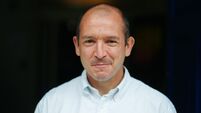
Comments not insensitive, says Drumm
But Prof Drumm strongly rejected criticism of his “insensitive” public comments that criticised people for marching to retain local services.
He also argued that reinforced the need for reform, saying Ireland could not have facilities “in every corner of the country”.
The CEO of the HSE came to Leinster House early yesterday for his annual briefing to TDs and senators.
Instead, it became a marathon three-hour showdown between Prof Drumm and the politicians.
The meeting was chaired by Ceann Comhairle John O’Donoghue. Prof Drumm gave a 10-minute briefing and then fielded questions from the 70 to 80 TDs and senators present.
Speaking afterwards, Prof Drumm described the meeting as positive and constructive though some TDs said he was assertive in putting across his position.
“I thought he was somewhat abrasive at times in relation to defending what he was doing,” said Labour Party TD Michael D Higgins.
Commenting on the misdiagnosis of seven women in Portlaoise, Prof Drumm said: “It was a terrible experience for the women who experienced it.
“Having said that my comments were portrayed as insensitive. I’d ask anyone to identify what I said that was anything other than sensitive.”
In relation to the sequence of events that led to the suspension of breast radiology services in August, Prof Drumm described in detail the chronology from July 2005, when Midlands surgeon Dr Peter Naughten wrote to the Minister for Health Mary Harney.
He told the meeting that the matter was brought to the attention of Prof Donal Hollywood, the regional director of Cancer Services in the Midlands. Extensive discussions ensued with Dr Naughten over two months.
At that stage, Dr Naughten’s concern was about false positives (mistaken diagnosis suggesting women were positive for cancer). Having got assurance that unnecessary surgery had not taken place, Dr Naughten was given permission to seek a second opinion on mammograms from St Vincent’s Hospital in Dublin, with the State bearing the cost.
Prof Drumm said that Dr Naughten began to refer mammograms for a second opinion and over time a number of mistaken diagnoses were confirmed. This prompted the wider enquiry and the suspension of services in August.
He also confirmed that the review being carried out by Dr Ann O’Doherty is inquiring into all of the radiology services in Portlaoise. The review is not confined to the mammograms of the consultant radiologist who is on leave but will also look, for completeness, at mammograms diagnosed by the other three radiologists who were based there.
The discussions were wide ranging with Prof Drumm arguing strongly that the Portlaoise experience reinforced the need to set up a smaller number of centres of excellence. “It’s not only about cancer, it’s about children and tertiary treatment, intensive care units, the transformation of services in the north-east,” he said. “People are beginning to realise that we can’t have one at every corner of the country,” he said.
“What happened may have brought the realisation that by trying to do it everywhere we are actually damaging people.”