Star of epic set for Rosy reception at film festival
The British actress played the lead role of Rosy Ryan, which earned her an Academy Award nomination, and she will be a special guest at a film festival in An Daingean, taking place from September 6 to 9.
She will participate in a panel discussion with local people and a number of others who were involved in the David Lean film.
Ryan’s Daughter, which showed the natural scenery of the Dingle Peninsula at its best, is credited with launching the fishing port as a major tourist destination. Money flooded into the area during the making of the three-and-a-half-hour film and helped set up some An Daingean businesses which still thrive.
Scores of Kerry people also found employment as extras.
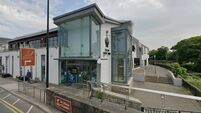
Alan Parker will open the film festival in the Phoenix Cinema, An Daingean, and cameraman, Godfrey Graham, will be showing a documentary about the film entitled On Location.
Lean’s epic tale of forbidden love, set during the 1916 Rebellion, tells the story of Charles Shaughnessy, played by Robert Mitchum, who falls in love with and marries the much younger Rosy.
However, Rosy soon becomes involved in an affair with a young British officer who arrives in the area, and she is soon suspected of passing on information about rebels to the British authorities.
Released in 1970, the film was one of the highlights of Miles’s career. She also starred in The Big Sleep and Hope and Glory.
Some of the best-known Kerry locations used in the making of Ryan’s Daughter include Inch strand and Coumeenole strand and the woods around Ross Castle in Killarney.
A village known as Kirrary was built specially for the film on a bleak hillside overlooking the sea near Dunquin.
It was constructed by 200 workmen using slate and 20,000 tonnes of stone from local quarries.
It was solidly built to stand up to the winter gales off the Atlantic.
After filming, an attempt was made to retain the village — which included shops, a schoolhouse, church, pub and post office — as a tourist attraction.
Many of the buildings in the village had fitted interiors, ceilings, lighting, plumbing and even working fireplaces and chimneys.
However, the preservation of the village was deemed unfeasible and it was eventually dismantled, although the remains of an old schoolhouse used in the film — a separate structure from the village — can still be seen.
At the 1971 Academy Awards, John Mills won the Best Supporting Actor award for his portrayal of a mute in the film.
He bowed and said nothing in the shortest-ever ‘acceptance speech’ at the awards.
CONNECT WITH US TODAY



Be the first to know the latest news and updates