The Forgotten have their say in quest for justice
In the intervening years it flickered on the radar screens, momentarily remembered before being dispatched again to the distant past. The name of the victims' group which has campaigned for justice in the face of official and public indifference could not be more accurate Justice for the Forgotten.
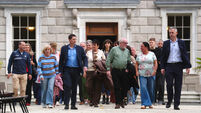
But yesterday went some way to changing that. In the course of a remarkable and heart-rending day, 26 people, injured or bereaved by the Dublin and Monaghan car bombings told their stories to an Oireachtas sub-committee.
Though three decades have passed since the bombs exploded in Dublin and Monaghan, the trauma and horror of the massacre was relived with an immediacy and vividness that was always moving and, at times, harrowing. As the hearing went on, it became clear that for many, that day in May 1974 has so indented itself upon their lives that day has, in one sense, become their lives.
Many of the accounts were unbearably sad. There was the barber, Liam Sullivan, racked by guilt over the death of his friend, Edward O'Neill, who had come to his shop in Parnell Street with his two sons for a hair-cut because they were friends.
Iris Boyd regretted she did not insist on accompanying her father, Archie Harper, grievously injured in the Monaghan bomb, into the operating theatre. Still conscious, he did not survive the emergency surgery.
Bernie McNally, only 16 when the Talbot Street bomb exploded, received extensive facial injuries and has since had to have an eye removed. An employee in O'Neill's shoe shop, she had been speaking to a customer and had stepped away to get a pair of sandals when the bomb exploded. Afterwards Bernie could hear the moaning of the injured woman but had been blinded by the bomb. Her body was found the following day.
Derek Byrne, another badly injured victim, told of how he had been declared dead and placed in the hospital morgue.
Only 14 years of age at the time, he had been working as a petrol pump attendant. It would take him five years before he could work again and his medical treatment continues to this day.
The State's belated response to the plight of those affected by the bombings has been bitterly criticised.
But for one day at least, a State response got it right. Yesterday's testimony was a potent reminder of awful, continuing, human suffering and why that one day remains so important 30 years later.