Army ready to take over prisons, says O’Dea
Defence Minister Willie O’Dea said he did not anticipate he would need to send in troops as the Prison Officers Association had made contact with Department of Justice officials in recent days to try to resolve their differences but he said soldiers were ready to move in.
“I don’t envisage the situation will get to that point but if it does, we have to have contingency measures in place,” he said.
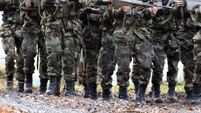
The Irish Examiner revealed last week that members of the Defence Forces were receiving special training in preparation for taking over the prisons in a joint operation with the gardaí.
Defence Forces Chief of Staff, Lieutenant General Jim Sreenan, said almost 2,000 personnel had undergone training for prison duties at the request of the Department of Justice. He said the gardaí would take the lead role in any such operations and the army would act as logistical support and emergency back-up.
Lt Gen Sreenan echoed Mr O’Dea’s hopes that it would not be necessary to put the plan into action. “Nobody wishes to see this situation develop. The last thing our soldiers want is to be on duty in a prison,” he said. “But our people are trained to deal with prisoners.”
The two men were speaking yesterday at the publication of the Defence Forces annual report for 2004 which details one of the forces’ busiest ever years both at home, due to Ireland’s presidency of the EU and the visit of US President George W Bush, and on overseas missions.
Earlier in the day, the Cabinet approved a 12-month extension to Ireland’s participation in KFOR, the NATO-led peacekeeping mission in Kosovo to which around 200 Irish troops are committed at any given time.
The Cabinet also approved the continued deployment of seven soldiers to the International Security Assistance Force in Afghanistan subject to regular review by the minister.
Almost 800 members of the Defence Forces are currently on peacekeeping assignments and observer missions in 14 countries.
The number of compulsory random drug tests increased to 1,000 during the year, its second year in operation, with four personnel dismissed as a result.
Mr O’Dea said bullying within the Defence Forces, identified in a damning report several years ago, was no longer a problem. Just four cases had been referred to the internal procedures and the number of calls to a specially established external helpline had not reached double digits.
Compensation payments for injury and illness suffered by serving and former personnel, separate from the army deafness claims, cost the forces €10.6 million last year.
CONNECT WITH US TODAY



Be the first to know the latest news and updates