Only one social worker at cancer department
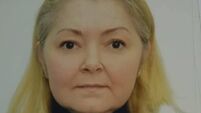
According to CUH social work services manager Mary Casey, there are at least 2,000 new patients seen every year.
“As far as I am aware, there is no provision for extra specialist social workers in the package,” she said.
Last year, figures show that more than 20,000 out-patient treatment appointments took place in the department. That was an increase on 2002 when 19,000 treatment appointments took place, which constituted 1,520 new patients.
CUH oncology department looks after patients from Limerick, Kerry, Waterford, Clare, Tipperary and Carlow, as well as Cork,
“Obviously, every patient with cancer can’t have a personal social worker, but there should be more than one specialist attached to the unit,” said Mary Casey. “There should be at least four or five - one each for radiotherapy, oncology, general ward, and a team leader.”
“Emotional support should be an intrinsic part of the holistic notion of care for the patient and their family. At the moment there is no statutory service for patients in the community,” said Ms Casey.
While there were voluntary organisations engaged in invaluable work with cancer sufferers, as well as a number of nurse specialists, they were not supervised or qualified counsellors. “The social worker assists patients and their families to adapt to the physical, psychological and emotional changes brought about by the cancer diagnosis, treatment phase and follow-up care,” said Ms Casey.
The SHB said the social worker has identified the need for additional staff.
“We would hope that our next submission for national cancer strategy funding would include additional counsellors.”
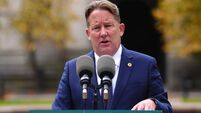
Last week it was announced that €5 million has been provided by Health Minister Micheál Martin to further develop the radiation oncology department, which is the only centre outside Dublin offering radiotherapy treatment.
Of that, €4 million will enable the purchase and commissioning of two linear accelerators, specialist equipment used to shrink tumours, or to prevent recurrence of a tumour after cancer surgery.
They will replace one redundant unit and an existing cobalt treatment unit.
The department will have four linear accelerators by mid-2005. The remaining €1m allows for the appointment of two radiation oncology consultants as well as all the support staff necessary to run and commission the treatment units.
CONNECT WITH US TODAY



Be the first to know the latest news and updates