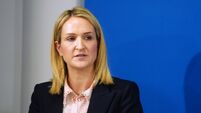
Government U-turn on class size cut pledge
The Labour Party said the Government could have provided half the teachers needed for the same amount it spent on the doomed e-voting project.
Although the Irish National Teachers Organisation (INTO) suggested the target could still be met, Education Minister Mary Hanafin said resources would be concentrated instead on reaching the target in disadvantaged areas.
Department of Education figures for 2002/03 show that more than 110,000 primary pupils were being taught in classes with at least 30 children and almost 600 children were in class groups of 40 pupils or more. It is estimated that the promised class sizes would require 2,500 extra primary teachers at an annual cost of around €100 million.
Labour’s education spokesperson Jan O’Sullivan said it was clear that little further progress would be made and said it was a new low for a Government minister to break such promises to young children.
“The cost is just twice what the Government has squandered on the electronic voting fiasco,” she said. “I am calling on the minister to indicate when this commitment will be achieved and to outline a timeframe for reducing class sizes to international standards.”
A spokesperson for Ms Hanafin said the minister had said that all children would not be in classes under 20 but that the target of an average class size of 20 was still being pursued. More than 2,000 more mainstream teachers have been appointed in the country’s 3,300 primary schools since September 2002.
The INTO claimed last night that the extra numbers could be provided if the political will exists. The union said there would be a surplus of around 1,000 new teachers next year and in 2006, after around 800 primary teachers retiring or taking leave are replaced. “The teachers will be available, therefore, the Government will be able to bring down class size. We are willing to enter discussions with the Department of Education to agree a framework within which class sizes can be reduced,” said INTO general secretary John Carr.
The Irish Primary Principals Network (IPPN) said the minister’s statement was an admission that primary education is no longer a Government priority.
“Primary education is the most important thing for every child but, without smaller classes, teachers can’t tackle disadvantage, help children with special needs or implement the new curriculum,” said IPPN director Sean Cottrell.
The National Parents Council (Primary) questioned why no plan was put in place to ensure a sufficient number of teachers would be trained to meet the class size target.
CONNECT WITH US TODAY



Be the first to know the latest news and updates