Welfare checks by postal workers and medicine kept cool: Europe warned to prep for future heatwaves

Europe needs to adapt for inevitable future heatwaves by performing welfare checks on the elderly and homeless and keeping medicines cool, a senior World Health Organization (WHO) official has warned. File photo: Larry Cummins.
Europe needs to adapt for inevitable future heatwaves by performing welfare checks on the elderly and homeless and keeping medicines cool, a senior World Health Organization (WHO) official has warned.
Oliver Schmoll, programme manager at the European Centre for Environment, Climate Change and Health at the WHO, called on authorities to look at “reshaping” its cities to create more shade and to take a multi-agency approach to future heatwaves.
He said good examples of heat adaptation measures included French postal workers checking on vulnerable groups, and ensuring heat-sensitive medicines were kept cool.
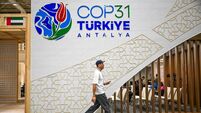
“It’s not a single sector or a single actor that is responding to heat,” he said during a panel discussion at the Irish pavilion
at Cop31 in Türkiye.
Read More
“That also includes civil society actors, not only government actors.
“Think, for example, in France where the postal services during heatwaves knocked on the doors of vulnerable groups and checking in with them.
“Also the churches offered cooling places. So the whole community, all of society needs to play a role.”
Mr Schmoll said that healthcare workers needed to be “well prepared and protected”, and that some medicines may need to be cooled to remain effective.
The WHO published its heat-health action plan in June, where it flagged “challenges with storage of medicines” as an indirect impact of extreme heat.
Among its recommendations were stocking and releasing intravenous fluids, oral rehydration salts and cooling packs to emergency departments and issuing patients advice on keeping medicines cool at home.
Diuretics, antihypertensives, antipsychotics, and antidepressants were listed as examples of heat-sensitive medicines.
While over 50,000 heat-related deaths were recorded across 854 European cities over two months this summer, many others were affected by the temperature spike, with pregnant women, children and the elderly particularly vulnerable.
Researchers have warned that productivity is also impacted during heatwaves, as some people find they cannot work, particularly in sectors such as construction and agriculture.
It comes as the World Meteorological Organization warned on Monday that the global average surface temperature for the first nine months of this year was 1.47°C above the pre-industrial average - and is likely to rise due to the El Niño climate phenomenon.
Countries had committed to limit global warming to 1.5°C under the Paris Agreement in 2015; senior figures at Cop31 emphasised that the focus needed to be kept on the 1.5°C figure, despite a UN report earlier this year concluding there would be an “overshoot”.

CLIMATE & SUSTAINABILITY HUB
CONNECT WITH US TODAY



Be the first to know the latest news and updates