Toyota C-HR+ review: Is this the electric SUV that finally gets EVs right?
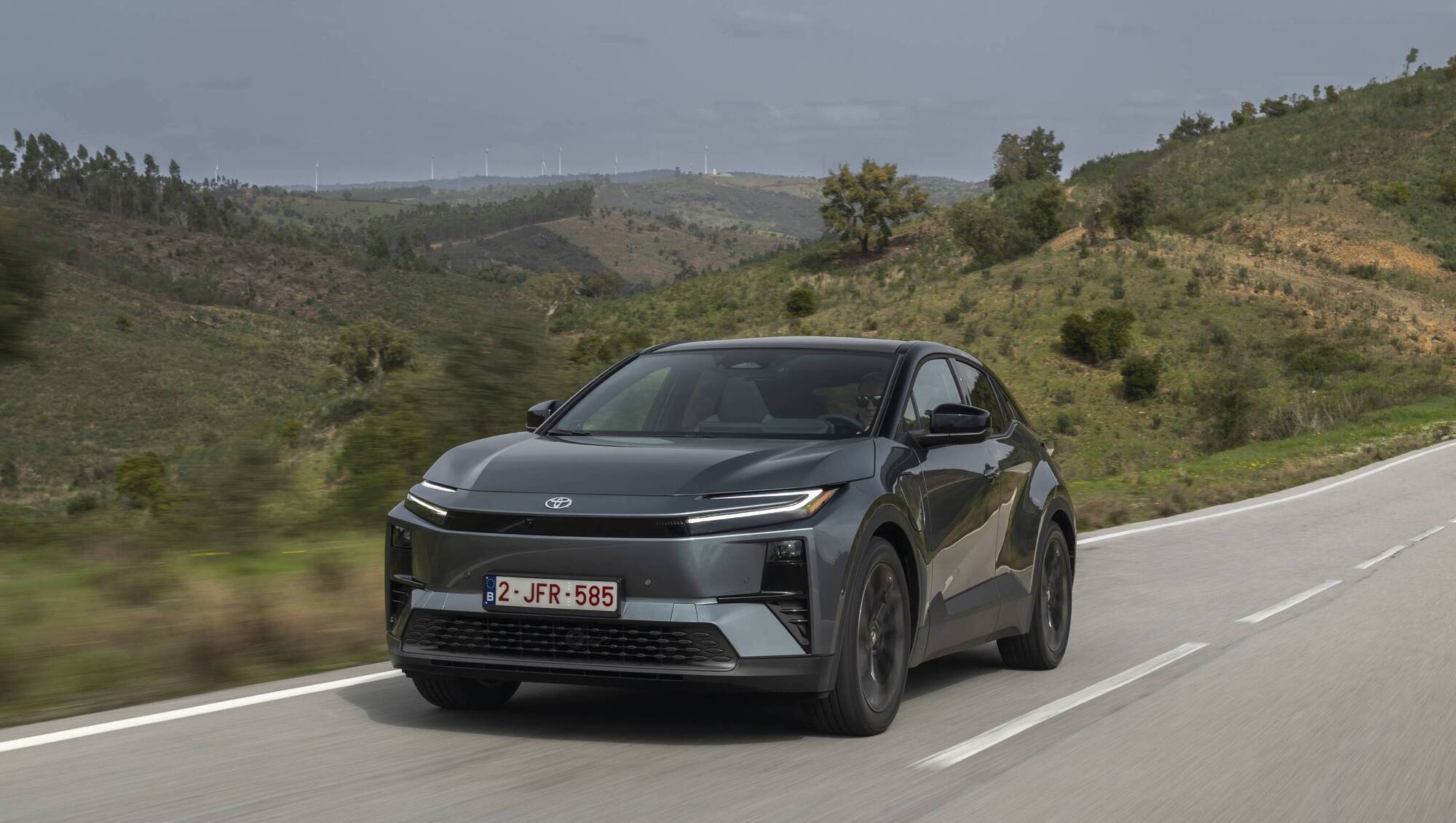
The CH-R+ is undoubtedly a gamechanger.
|
TOYOTA C-HR+ |
|
|---|---|
|
Rating |
★★★★☆ |
|
Price |
€41,355 including grants |
|
Power |
Pure electric with the equivalent of 220 bhp on tap |
|
Range |
Claimed to be in excess of 600km, but about 520km is more realistic |
|
The Spec |
Very impressive in Sports grade spec |
|
Verdict |
Hugely impressive EV from Toyota |
Toyota has been slower than most to get on the bandwagon. While others plunged fearlessly, sometimes recklessly, into that particular pool, the Japanese giant – the world’s biggest car manufacturer – stood its ground and bided its time.
Clinging to the hybrid technology which it largely pioneered and was hugely successful in selling to the buying public, Toyota watched while others got scorched by the flames (in some cases, literally) of their own feeble attempts at making a decent EV.
Ford blew it completely, losing billions of dollars and having to torch numerous planned product developments, eventually ending up having to buy into Renault technology to get back on an even keel; Volkswagen too were quick to the scene of the crime but got singed financially and reputationally by making cars that had all the emotional attachment of a washing machine.
The premium boys too pretty much made a hash of it: Mercedes got all excited by their new ‘EQ’ branding, but the public didn’t, and BMW’s early efforts lacked certainty and assuredness.
A few struck a chord. Skoda embarrassed its bosses. Tesla produced wonderful batteries and electric motors but was reputationally tainted by the man in charge, and then the Chinese got in on the act, making product that was cheaper than chips but with technology that would flummox Einstein.
All the while Toyota sat back, got its R and D departments working hard and waited until it was ready with a product that was affordable, dependable and workable. Its first stab at the genre was the BZ4X, which was somewhat ‘meh’ but indicated that of all the big players, it was the one going to get it right.
Read More
This week we test the C-HR+. Now the C-HR has been with us since 2016 and was, at the time, the funkiest Toyota anyone had ever seen. The ‘Coupe-High Rider’ (another somewhat bizarre Asian handle) was – although we didn’t fully know it at the time – the advance party for a slew of products from the company that were as good to look at as they were bomb-proof ownership prospects.
The C-HR+ was only unveiled last year, and while its accomplishments might be somewhat modest by comparison with what we’ve seen with the first of BMW’s revolutionary ‘Neue Klasse’ line-up, this is undoubtedly a game-changer.
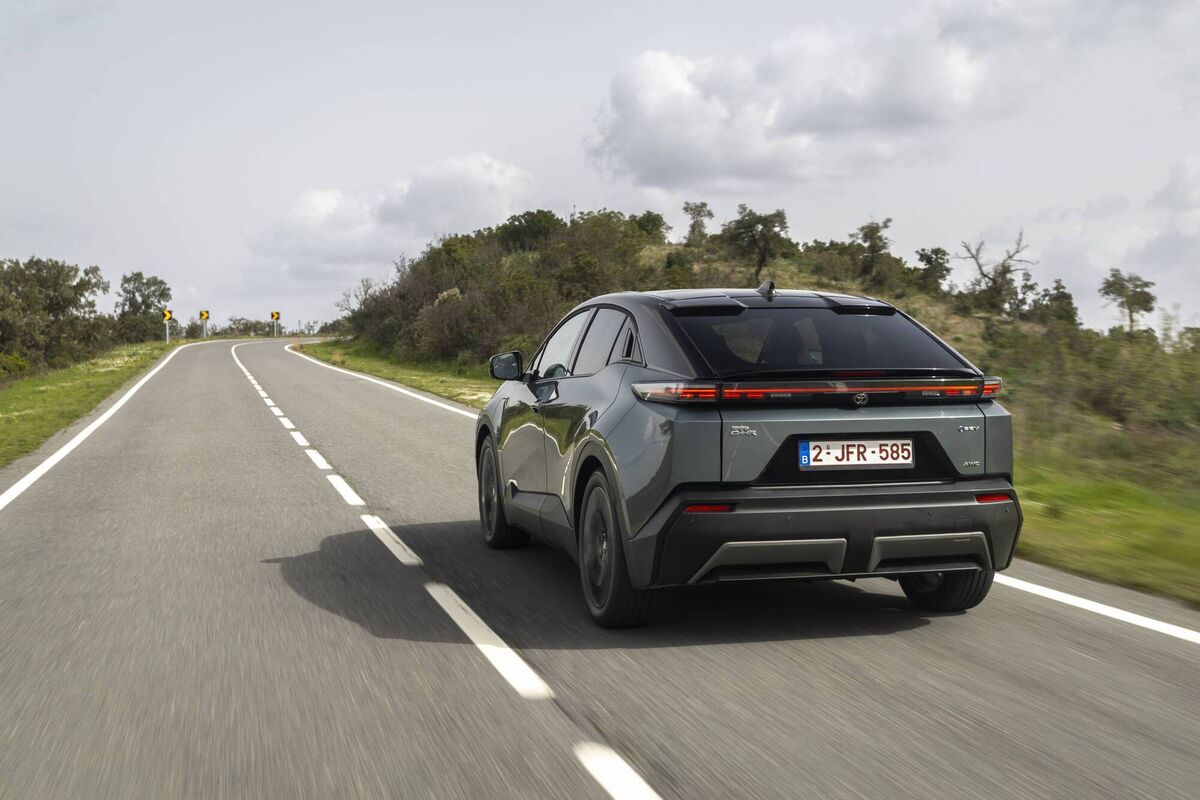
It was the second-generation BZ4X (which we will be testing shortly) that paved the way for this car, and it is immediately obvious that Toyota learns quickly and turns that learning into a practical and feasible product.
Now, it might not be as classy or competent as the BMW iX3, but it comes damn close with a hugely efficient, well-built and great-to-drive compact SUV. The C-HR was always a stylish car, and this one adds to that legacy.
But quite a lot has changed with regard to this model by comparison with the regular C-HR, and that’s largely because it is based on the same platform (Toyota’s e-TNGA, which was created specifically for the company’s latest generation BEVs) as the BZ4X with which it shares so much.
That means this one is longer by 110mm, has a 65mm lower centre of gravity, and the chassis is 30% stiffer. Suspension too has been given a makeover in order to make it a sharper handler and, overall, more engaging to drive.
For the exterior, there are more design touches too – lines and curves catch the eye everywhere – while the headlight and rear light clusters are now more homogeneously Toyota. It is worth noting too that, like the BZ4X, it is a joint production between the Japanese company and Subaru (that co-operation also resulted in the Solterra) and will eventually see something called the Subaru Uncharted.
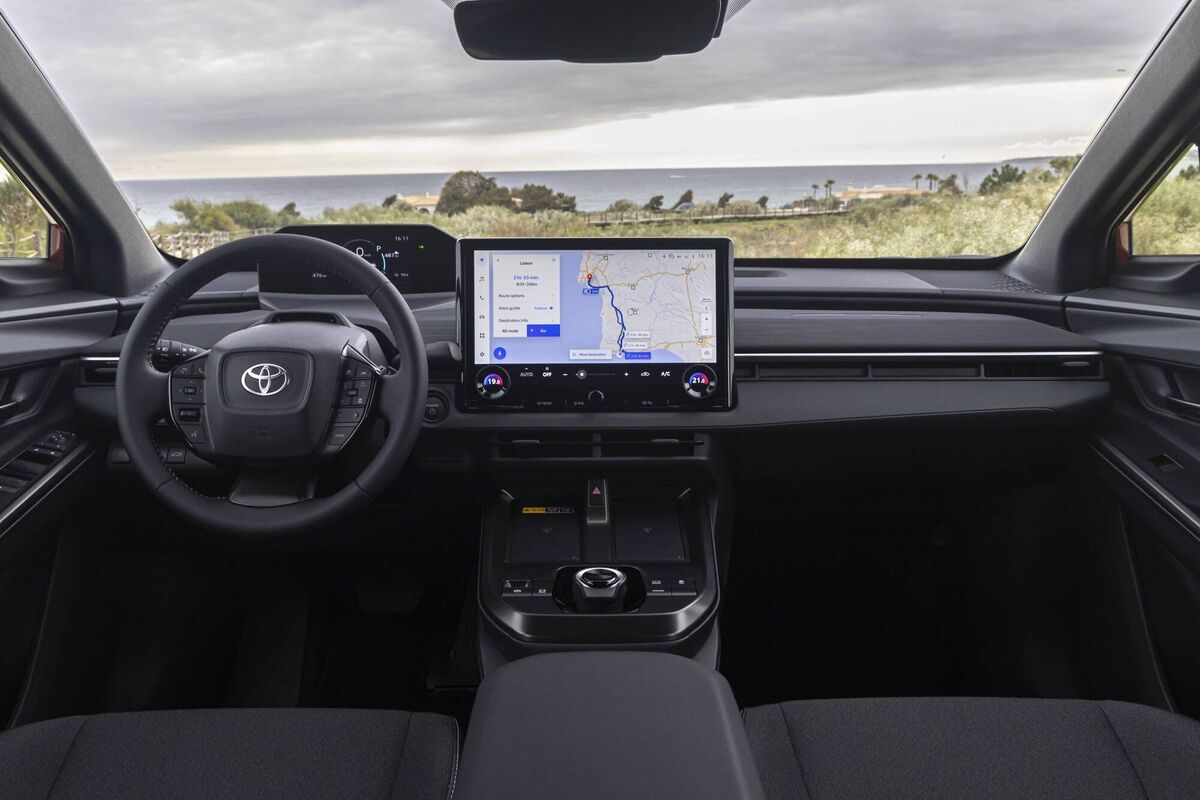
The interior is very Toyota: an undramatic if solid and comfortable interior which is amazingly well-put together. Unusually, that interior does not include a glovebox, although I don’t think that’s going to dramatically affect sales.
It has a 77kWh battery which is claimed to be good for over 600 km in absolutely perfect conditions, but since they rarely are to be found, the realistic range is somewhere in the region of 520. In fact, on my elderly and pretty feeble home charger, the car told me it was 100% charged with just 495km ready for use.
Those figures might seem a touch alarming, but the fact of the matter is that this, unlike so many EVs, doesn’t tell porkies about its range or consumption. Leaving Cork with some 399km of range in the car, I got to my destination 125km away with 250km remaining – and that after giving it a fairly thorough spanking. I was impressed.
To be honest, few EVs in my experience can endure such an examination without the range falling off a cliff. This one didn’t. And it was great to drive too what with sharp handling, excellent steering feedback and comfort levels which were unexpectedly high.
Surprisingly for a front wheel drive, there were few unpleasant understeering traits, especially so as there’s the equivalent of 220 bhp on tap and the 0-100 km/h dash is achieved in an admirable 7.2 seconds.
I don’t think I’ve encountered any front-driver EVs that work as well as this one; it is foot-perfect on the road and, to be honest, a bit of a hoot to pedal along. That is most certainly not something I’d have said about most of them.
Unsurprisingly, much of the instrumentation is shared with its EV sibling, and there’s a 7” instrument panel and a 14” central touchscreen, which is notable for its ease of use and is not distracting. The physical climate controls too are a delight after so many incomprehensible infotainment-based ones we’ve tried recently.
One small fault – shared with the regular C-HR – is that it’s a little dark in the back due to the coupe roofline. It is spacious though, largely thanks to the added length of the chassis. The boot too – at 415 litres – is bigger than in the hybrid car.
The upholstery is a mix of leather and suede – both faux, as is the trend these days – but the seats are comfortable and supportive. As part of the Sport grade specification package, it also comes with heated front seats, a powered hatchback, a heat pump, rear view camera, dual zone climate control and dual wireless chargers.
I was hugely impressed by this car, and while it is not a technological game-changer in the same way the iX3 is, it’s damned impressive as an overall package and suggests that Toyota are closer to cracking the seemingly impenetrable EV problems so many face but so few have cracked.
It might not be quite as versatile as other comparable EVs such as the Kia EV3 or the Skoda Elroq, but it’s fantastic nonetheless and gets a resounding thumbs-up from this quarter.