Honda Jazz Crossstar: hybrid efficiency and SUV styling in practical supermini package
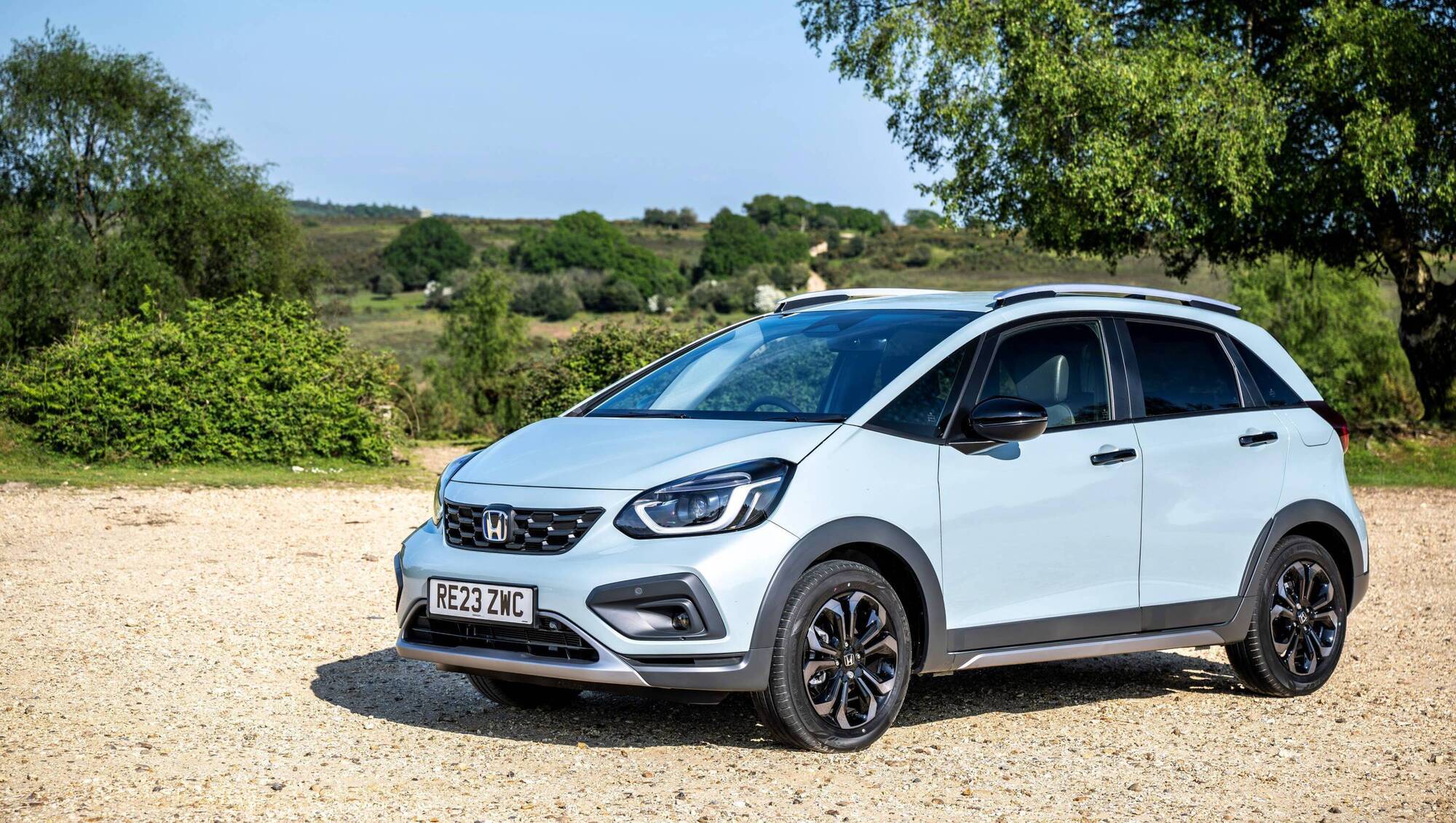
Honda’s Jazz Crosstar blends hybrid efficiency, clever packaging and subtle SUV styling in a versatile supermini package
Honda Jazz Crossstar: hybrid efficiency and SUV styling in practical supermini package

Aside altogether from its potential appeal, the Honda Jazz and the Jazz Crosstar are very notable for the unique hybrid-engined system they both utilise. Honda, of course, has a unique place in automotive history for its innovation led engineering – as testified by its exemplary history in Formula One

HONDA JAZZ CROSSTAR

Rating

★★★★☆

Price

€34,950

Engine

a unique and exceptionally economic 1.5 litre hybrid

The Spec

only one spec on offer and it is very thorough

Verdict

a new take on the Jazz model and a good one at that

ALTHOUGH it certainly might not be a manufacturer of the knee-jerk variety — you know, one which introduces a two-tone paint job on their cars a fortnight after their most hated rival did — Honda is occasionally prone to a little bit of copycatting.

A resolutely independent force in terms of both design and engineering, Honda is nevertheless occasionally forced into doing stuff it most certainly had not pioneered.

Market forces are a curious beast in that they can propel a manufacturer down a route it had not envisioned when it came up with the original design parameters for any given car. While in some cases that can lead unprepared car makers into tricky waters, that is a trap Honda — in my experience at least — has rarely if ever fallen into.

But those market forces impose upon manufacturers certain necessities, the prime one being the selling of cars.

Now, if someone produces some sort of sales wrinkle which proves to be popular with the masses, then it is obvious that others will follow. On the other hand, if sales of a car are being blighted by some perceived, or real, demographic blip, then something must be done to get around it.

A case in point is the Honda Jazz, which has been a standout in the supermini segment for its practicality and reliability. That’s not something which necessarily appeals to the Millennials or Gen Zers of this world, who are more attracted by style and verve.

In the case of the Jazz, its core characteristics have led it to be labelled a ‘blue rinse’ machine, which is particularly attractive to older buyers and that’s not really where Honda want it to be at. They ideally want a much broader demographic.

So, with an eye on what’s happening in the segment, the Honda bosses in Minato, just outside Tokyo, will have observed the wild success of such as the Toyota Yaris Cross — which is effectively the SUV version of the Yaris supermini.

That it appealed particularly to a younger audience will have been noticed by rival managements who immediately wanted a slice of the action. The result in Honda’s case is the Jazz Crosstar, which has taken the Jazz and SUV-ed it.

To this end, the designers have made the styling a bit more rugged, raised the suspension, added a rake of cladding to the wheelarches, made it taller, and thrown in a set of roof rails for good measure. To be honest, the changes are a bit on the watery side and this Jazz doesn’t really have the ‘go anywhere’ looks of an SUV.

But it is different from the regular Jazz, without having lost any of the core assets of practicality, spaciousness, or driving pleasure and — it being the obvious hope of the management — saleability. The latter, of course, is the key here, because they want it to sell to a different audience.

Honda Jazz Crosstar interior

Oddly, however, given the source inspiration, the car is not really at all like the Toyota which inspired it. But that’s a sign that Honda is an outfit which is determinedly non-copyist.

Aside altogether from its potential appeal, the Jazz and the Jazz Crosstar are very notable for the unique hybrid-engined system they both utilise. Honda, of course, has a unique place in automotive history for its innovation led engineering — as testified by its exemplary history in Formula One.

But the engine offered here is actually quite unique. There is an engine — a 1.5 petrol — but it does not actually drive anything other than a generator. This powers two electric motors on the front wheels, but the trick is that the system switches seamlessly from electric to petrol power without any driver input.

This means that it will drive on electric only when not under any serious power demand and the engine then kicks in to provide that power when necessary. The 0-100km/h dash takes 9.7 seconds and top speed is 174km/h.

Like many other hybrids, it works via a CVT gearbox which I have seen appropriately described as a “constantly vocal gearbox” ,which tend to screech loudly when under pressure.

In this instance, however, Honda has engineered fake gear changes into the transmission to obviate the incessant droning experienced in other, vaguely similar, designs.

Sure the performance is not earth shattering, but there is good acceleration when needed and it should be swift enough for most requirements.

The best outcome of all this is that this is a petrol sipper rather than a drinker. You can expect to see a return of 4.7 l/100km (58.9mpg) and that is one of the stand-out characteristics of the model.

Despite the raised suspension, the Crosstar drives in pretty much the same fashion as the regular Jazz and that’s another serious plus point.

Honda Jazz Crosstar
Honda Jazz Crosstar

Having retained the wheel-at-each-corner demeanour of the existing model that means the handling is pin sharp, even if the ride quality is a little on the sharp side.

That means it does react strongly to bad bumps, but it corners like a go-kart and is actually quite fun to drive once you stay away from the worst excesses our road network can throw up.

The steering is light and the turning circle impressively tight, so it is a doddle in the urban environment and a sinch to park.

Interior space is a huge plus and so too the amount of light in the cabin thanks to the large glass area.

Thanks to Honda’s ‘magic seat’ rear seat arrangement, which folds flat to the floor, potential cargo space is vast and there is also a smaller underfloor space available as well.

A high specification level goes some way toward explaining the fact this is not the cheapest supermini out there, but that one fact might be something of a millstone around sales potential. Those who do invest, one feels, will not regret it because of the kit levels on offer.

The interior design is neat and very functional, and it has to be said too that the infotainment system is one of the best around. It is easy to navigate and is generally not a distraction for the driver, which is a major plus point in our view.

While it might not appear so from just a cursory view, in many ways this car represents peak Honda in terms of both engineering and design — all wrapped in a very small but tidy package.

It really is a versatile thing and people who might question the asking price must realise the sum of its parts represent much more than your normal inconsequential runabout.

A very satisfying car to drive and live with, the Crosstar might not initially top anyone’s list of choices in the segment, but it definitely should not be overlooked, so good is the finished product.

More in this section

Revoiced

Newsletter

Sign up to the best reads of the week from irishexaminer.com selected just for you.

Cookie Policy Privacy Policy Brand Safety FAQ Help Contact Us Terms and Conditions

© Examiner Echo Group Limited