Volkswagen Taigo review: A pig in a poke of the German's SUV-heavy line up

The Volkswagen Taigo is a coupe SUV based on the Polo Mk 6 platform and it has many shared components with the Polo, including the doors, the windscreen, roof stamping, and the suspension set-up.
|
VOLKSWAGEN TAIGO |
|
|---|---|
|
|
★★★★☆ |
|
|
from €29.635 |
|
|
Two 1ltr three-cylinder petrol options and a 1.5 diesel |
|
|
basic at entry level, but not mean |
|
|
something of an anomaly in the Volkswagen line-up |
It’s always interesting in these parts to come across a car that has an existential problem. Or, in other words, a motor that exists, but nobody other than the manufacturer knows why.
Such a car came across our radar recently and it is the Volkswagen Taigo which, it has to be said, is a very nice little coupe SUV. However, it fits into a VW model line-up that is already bursting with small SUVs and the very fact it is with us at all is something of a mystery.
And that mystery is not just confined to dopey motoring hacks like yours truly. I was approached one Sunday morning while out walking the dog by a lady who had seen me park the Taigo in the adjacent car park.
“It’s a VW, I know – and I love everything VW does – but what is it,” the woman inquired. “I have a T-Roc and love it,” she added conspiratorially.
“Well,” I replied, “It’s their new coupe SUV – the Taigo.”
“Oh yes, I’d heard about it,” she responded, “but don’t they have rather a lot of SUVs available right now?”
“I know,” I responded sagely, “it’s like Mary McIlgoney’s black baby – a mystery.”
The lady wandered away – amused but wondering why. I didn’t admit to having robbed an old gag from Spike Milligan’s seminal comic masterpiece Puckoon, but she was probably wondering who Mary McIlgoney was, where in the parish she lived and how she had a coloured child.
But the thing is that the Taigo does have an out-of-place vibe going on. It is – in VW terms – a coloured child in an otherwise Caucasian world. Then again, it was born in that cultural stew pot, Brazil, and of mixed parentage.
VW’s Brazilian division has had a habit of throwing up small cars, many of which are derived from recognisable European product, but adapted to local needs.
The car was born as the VW Nivus and it was unveiled in Brazil in March 2020, launched in other South American markets in 2021 and crossed the Atlantic later that year to be brought to Europe to sell as the Taigo.
Curiously, it was marketed alongside the T-Roc in Europe, but below the T-Cross in South America, but the most important thing to note is that it is based on VW’s MBQ A0 platform which it shares with the Mk. 6 Polo.
Indeed it has many shared components with the Polo, including the doors, the windscreen, roof stamping and the suspension set-up. Most of the interior bit and pieces are also common.
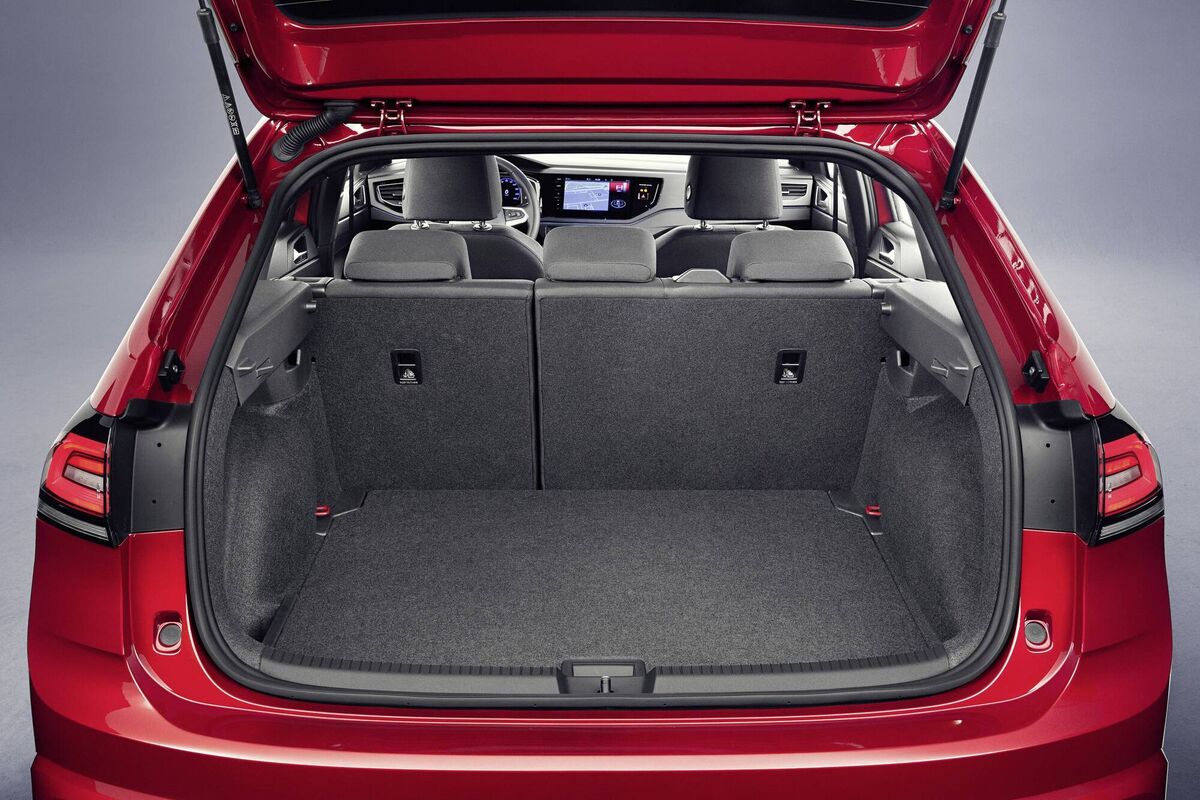
What’s new is the raised bonnet which gives it a more rugged look than that of the Polo and a different C-pillar stamping which allows for a bigger rear end and a larger boot – 415 litres here as against 300 for the Polo.
Realising that the Brazilian arm of VW had come up with something different and very marketable – despite the crush of SUVs coming out of the company – production facilities were created at VW’s Pamplona, alongside the Polo and the T-Cross, to build the European version and thus the car became the first coupe SUV to be launched in Europe.
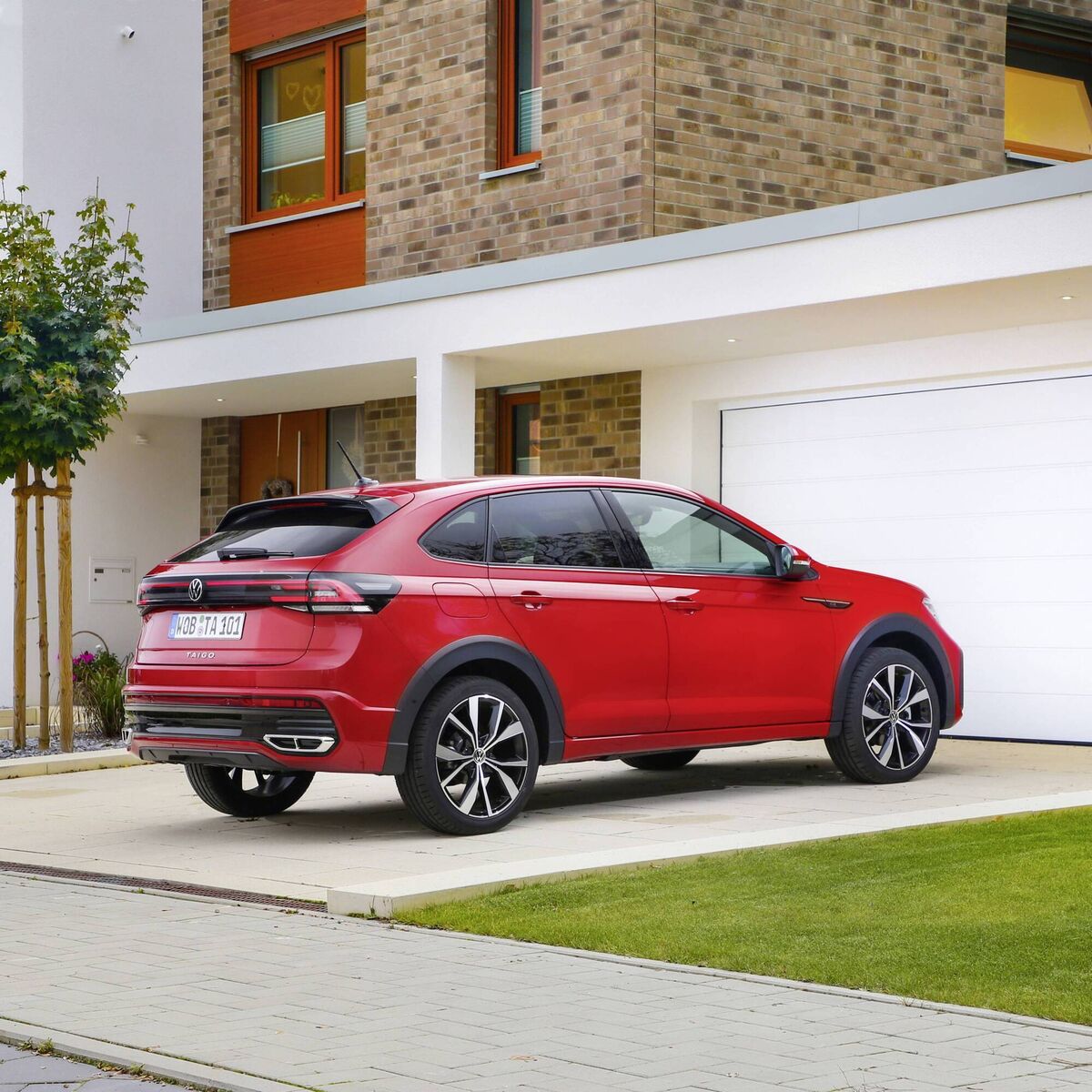
By comparison to the T-Cross, the Taigo loses some boot space because of that sloping roofline and it is therefore not quite as practical, but then it’s supposed to be a coupe SUV, so potential owners should note the discrepancy.
Despite being an SUV, this is only available as a front-wheel drive option and that probably has as much to do with the fact this is really only going to be an urban warrior with its’ primary audience being young city and town dwellers.
With a clear resemblance between it and the T-Cross, the Taigo does differ slightly in that it has a sportier front end and a less boxy derriere. But the fact the on-the-road price differential between the two is nearly €700, makes one wonder why you’d choose the coupe version rather than the more standard car, given that the two are mechanically so similar.
When I first sat into the Taigo and drove it, it struck me was being an ideal car for younger, more inexperienced drivers, what with its’ tall demeanour and lofty, commanding, driving position, as well as the very predictable driving characteristics and the fact it truly is not a boy racer type machine.
But, with a near thirty-grand entry cost, not too many learner or novice drivers are going to be able to afford the asking price. And, with more experienced drivers looking for family-esque practicality, that also appears to narrow the potential audience for the Taigo.
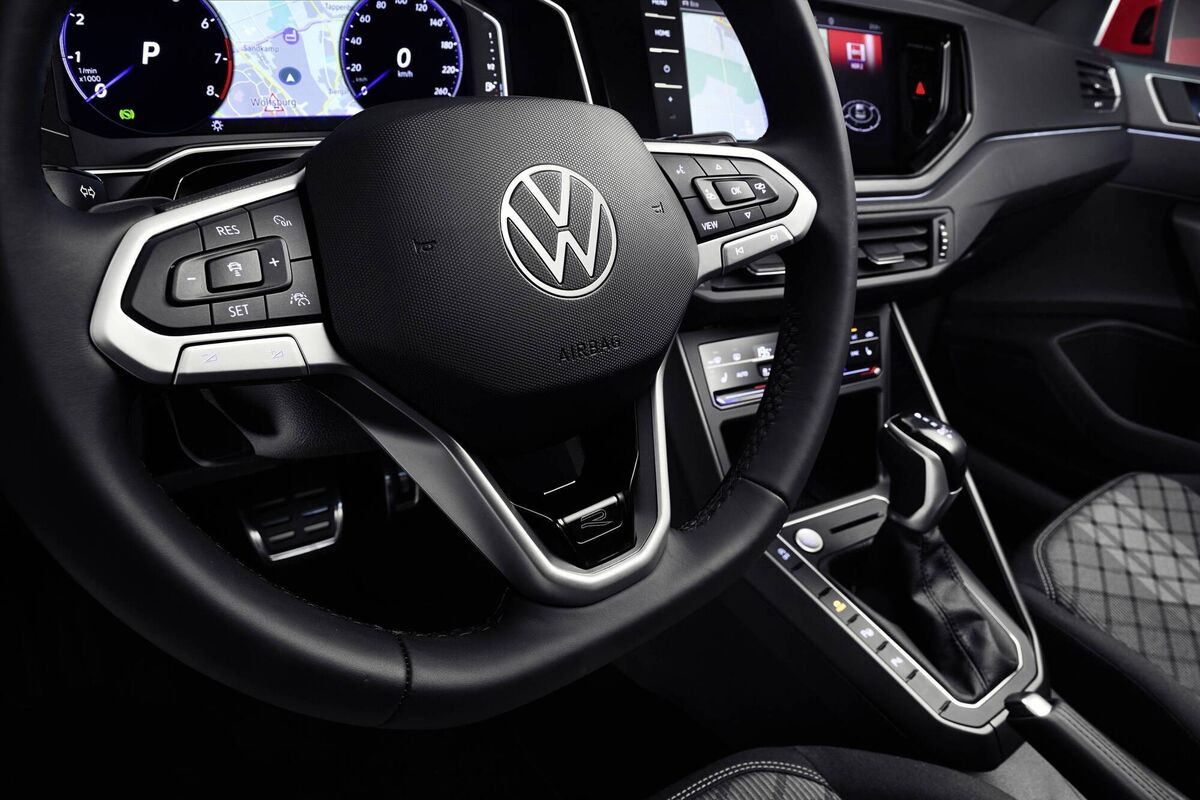
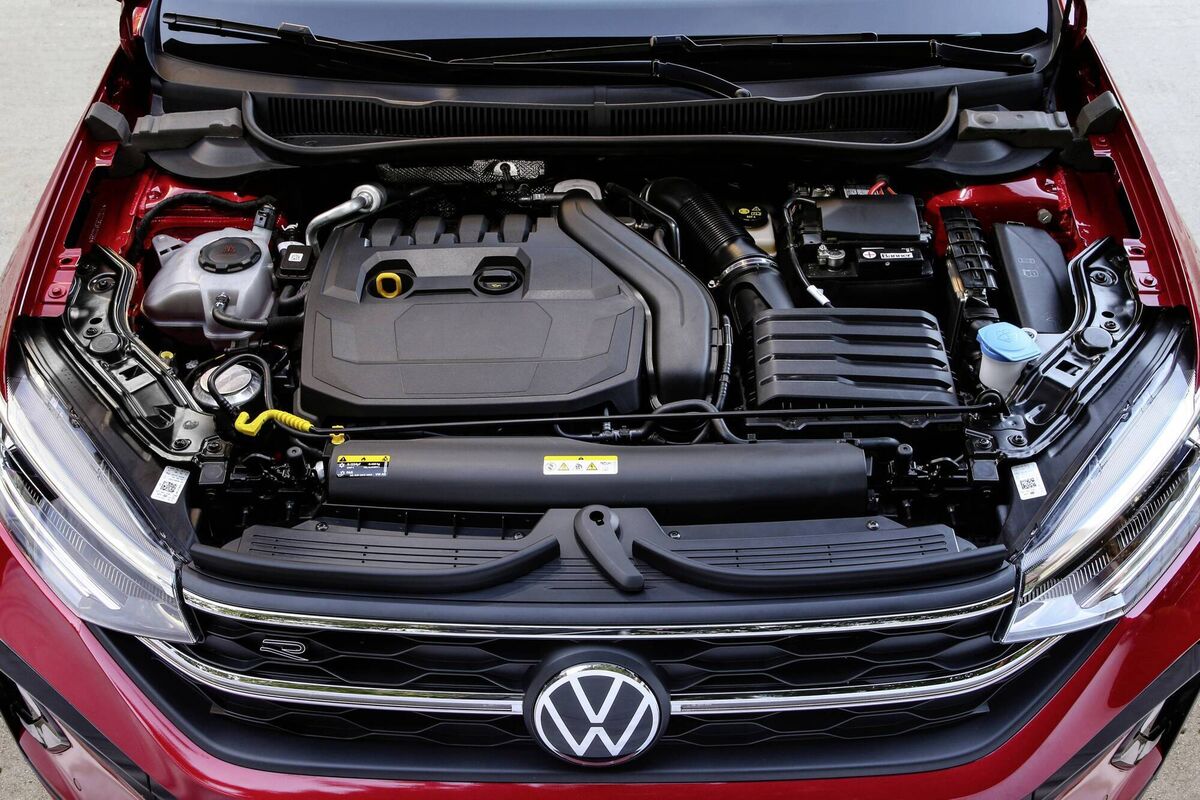
That said – and whatever the size of the customer base – this is a very nice car to drive and I must say there was little I found to quibble about. The tester was fitted with the less powerful of the two one-litre three-cylinder petrol engines available – there’s also a 1.5 diesel – and a fine thing it is too.
Even with only 95 bhp the Taigo we had is not lacking in grunt and was quite a sprightly performer, despite the claimed 11.1 second 0-100 km/h time and the top speed of 183 km/h. Allied to a five-speed manual gearbox, it might seem a little dated, perhaps, but to be honest it was nice to drive something so simple.
In the normal course of events, car manufacturers tend to only put top-of-the-line models on their press fleet, so it was actually good to try something which is very much closer to the entry level models a majority of people will actually buy.
The ‘Life’ version then is a car which will probably be the most popular seller in the Taigo range here and while the tester had a few additions and extras – alloys and so forth – but in general, while the car was hardly a paragon of modernity, it was equipped with sufficient kit to meet the demands of a wide range of owners.
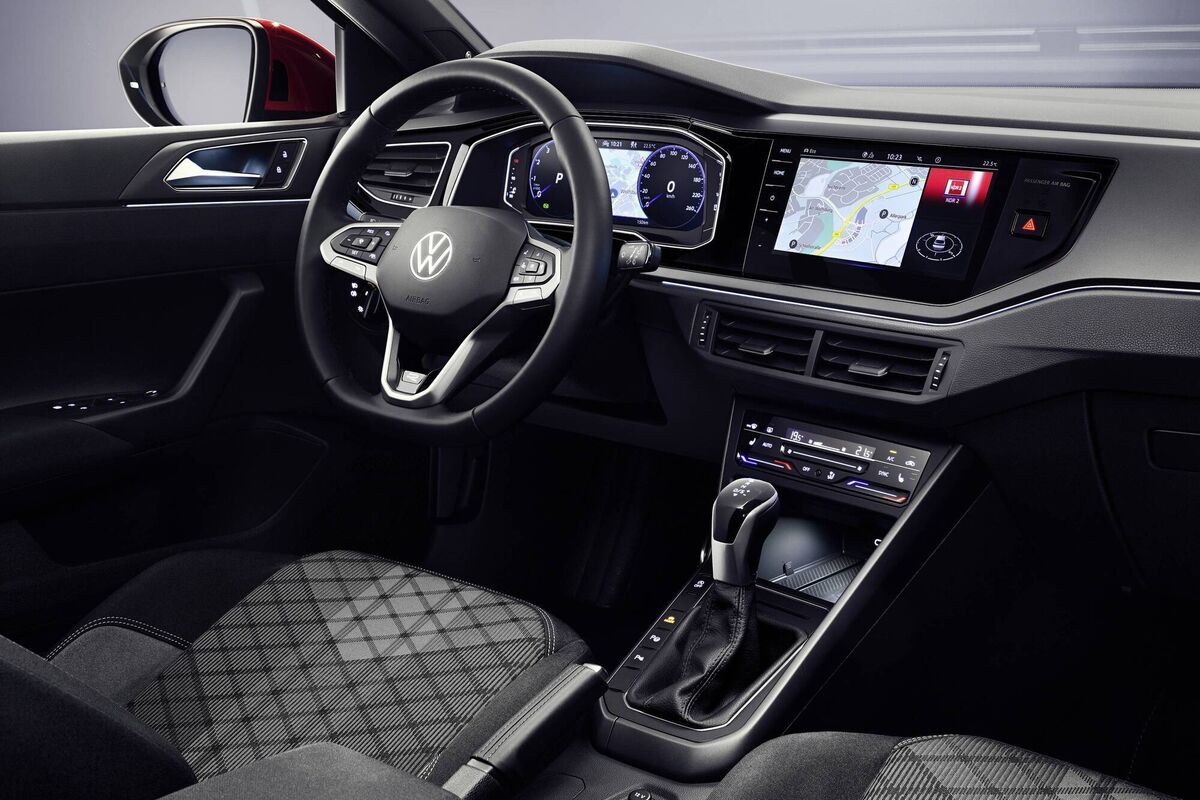
It is perfectly comfortable and roomy and all the stuff you expect from a car these days – an up-to-date infotainment system and excellent connectivity. There are also decent comfort levels and while the décor was a little dull, it was terribly functional and workmanlike.
Interior space too is generous and there’s plenty of room for five adults and their luggage and you’ll even get a couple of sets of golf clubs in there if needed. The fact it has a space-saver spare tyre is also a bonus.
On the road, it is a perfectly good companion and while the suspension layout – MacPherson front and torsion beam rear – is not exactly state-of-the-art, it provides a good platform for the car to endure the vicissitudes of the Irish road network and, as I’ve indicated, if you have young guns learning how to drive, this is a car that will suit the purpose perfectly.
But, having said that, the Taigo is still something of a pig in a poke, because there are plenty of other VW models, be they SUVs or hatchbacks, that will fit that bill also. That makes it, in my view, something of which Mary McIlgoney could be rightly proud.