Kia enter low-emissions game with the Niro
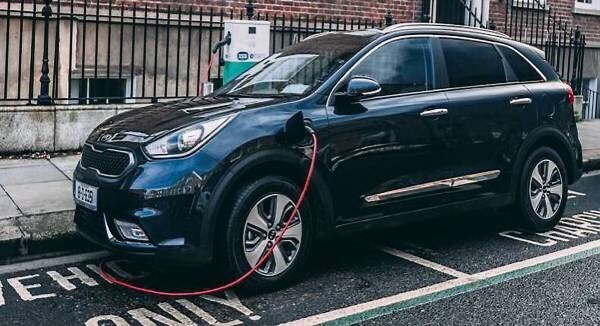
Another week, another hybrid. It seems that you cannot travel too far in the motoring world these days without tripping over one of these flavour-of-the-minute green machines.
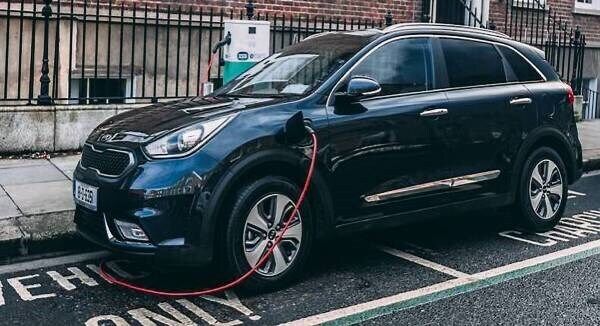
In this case it is the Kia Niro PHEV — that’s plug-in hybrid electric vehicle, for those of you not keeping up with the programme — and it is one of a slew of electric or faux electric vehicles coming from the Kia/Hyundai conglomerate in the coming two years, or so we’re told.
And, for those of you who are not keeping up with the programme, there was a very interesting insert on the RTÉ news last week when Donal Byrne did a piece about the growing influence of hybrids on the car sales markets around Europe and especially here in Ireland.
With the Government falling well behind in its commitments to lowering CO2 emissions and facing EU sanction as a result, mandarins from various departments are focussing on electric and hybrid cars as a means to achieving much better national emission figures.
Interestingly, however, when Byrne interviewed Mark Teevan, a Toyota Ireland corporate spokesman and thus the voice of the company which has championed the whole hybrid deal as being of massive import to the planet, he was not necessarily zeroed in on the future of hybrid as a totally clean fuel source.
What was evident from his words on the matter is that Toyota (worldwide and not just here on our rapidly scorched isle) view hybrid only as a step on the road to zero-emission motoring.
We know the Japanese giant is investing gazillions of yen on hydrogen research and it is doing so in tandem with a host of other corporate behemoths in Japan, including the electricity, railway and gas utilities, shipping manufacturers, oil companies and car makers, among others.
So, as a step on the road to cleaner motoring hybrid is only going to be with us for a comparatively short time as will electric vehicles, because neither, frankly, is the long-term answer to the problem.
But with us they are and the Kia Niro PHEV is as good an example of the genre as there is around right now.
All too many hybrids look like something left over on the soundstage of a Star Trek lot, desperately attempting to appear to be shinily futuristic and thrustingly modern, but ending up being gaudily anaemic.
The Niro, in fairness, is none of these things and in fact looks rather more like a C-Segment SUV should in this day and age — chunky and purposeful.
It is built on a new platform and fits somewhere into the Kia range between the Ceed and the Sportage, being bigger than the former and smaller than the latter, although it has a longer wheelbase than the Sportage allowing Kia to claim class-leading interior space for the car.
It is a decent enough looking thing, very well equipped, reasonably well priced (especially when you add in the government tax rebate and the SEAI grant you are entitled to) and is reasonably good to drive.
On the engine front, power comes from a mixture of a conventional 1.6 litre double overhead cam petrol four-cylinder engine and a lithium ion battery, the combination of which provides some 139 bhp to the driven front wheels.
Somewhat noteworthy is that the Niro PHEV utilises a six speed dual clutch automatic rather than the CVT transmission which seems to be de rigeur among hybrids and, to be honest, this gives an increased element of driveability to this machine, but still does not put it in boy racer territory.

With a 10.8 second 0-100 kph time and a top speed of 172 kph this is a car which will suit people for whom rushing around the place is not a priority.
Hefty applications of the loud pedal will be rewarded by the powerplant(s) striving manfully to keep up with what the driver wants.
On the whole, though, it is pretty refined by hybrid standards and nothing like as shouty as many.
On this note credit must be afforded to Kia for the amount of work it has done to dampen noise coming from under the hood; specially designed engine mounts, high density under bonnet insulation and a sound-deadening acoustic shield are among the tricks they have successfully adopted.
Interestingly, Kia has also adopted a new Predictive Energy Control (PEC) system which uses the navigation and cruise control systems to inform the driver when to coast or brake and thus maximise fuel consumption.
The utilisation of this sort of technology indicates further that the Niro is aimed squarely at more mature drivers who want efficiency more than they want showmanship.
And efficiency is plentiful here. Although many hybrid cars have dual personality on the economy front — you’ll more often than not only achieve the miles-per-gallon claimed by the manufacturer by driving like you were a complete numpty.
Not so here, as the Niro PHEV will actually return some 5.5 l/100 km (50.1 mpg) on a regular basis and better will be achieved if you’re really committed.
Thus it may be that stuff like all-round independent suspension is perhaps a bit wasted on this car as a majority of punters will never feel or credit the benefits in the ride and handling department, but the fact remains that the car is equipped with very decent suspension set-up which, oddly, is not really necessarily needed given the powerplant’s relatively weedy contribution to affairs.
Equipping levels are good and all the infotainment stuff needed by today’s consumers is to hand.
As for the interior in general, the feel, largely, is very plasticky, but at least the tactile element is good and overall quality is not bad.
It has taken other companies quite some time to get this hybrid business anywhere near to the point it provides a decent driving experience, so Kia are to be applauded for getting so much right so quickly, but there is still quite a lot of compromise on offer here and it will take time and patience for people to get to grips with it.
And, of course, it remains to be seen for how much longer the whole hybrid thing remains a viable low-emission alternative — just ask Toyota.
Colley’s Verdict
[rating]3[/rating]
€35,995 (including €2,500 VRT rebate, but excluding €5,000 SEAI grant)
a hybrid
impressive
not bad






