New, mid-size Velar gives Range Rover added range
What’s new?

New, mid-size Velar gives Range Rover added range

Now, there’s a fourth car in the family, the Velar. In between the Evoque and Sport, it’s a mid-sized SUV with a little more space and a little more luxury.

Featuring a Touch Pro Duo infotainment system comprised of two high-definition, 10.2-inch touchscreens, and fitted with the latest tech, it’s Range Rover’s most cutting-edge car ever. There are rivals — the Porsche Macan being the primary one — and the SUV segment is brimful.


Looks and image

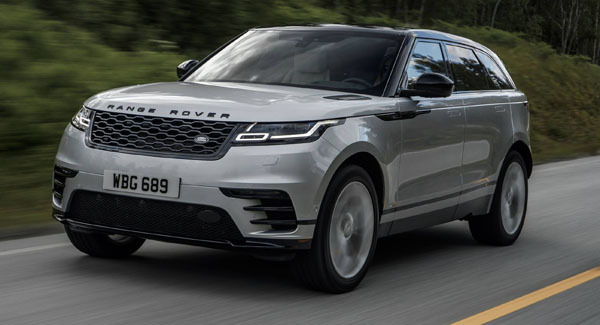
The front end of the Velar is unmistakably a Range Rover, but with a twist. It has full Matrix LED headlights that are razor thin, and which sit either side of a large, prominent grille.

The profile of the Velar is rather raked, though it still incorporates a ‘floating roof’ design, as seen on other cars in the range.

The extremely short overhang at the front is contrasted by a large one at the rear, which looks dumpy. That said, the door handles, which electronically retract to become flush with the car’s body, are an extremely neat touch, and the car looks more like a concept than a vehicle you can buy.

The cabin is dominated by the Touch Pro Duo infotainment system. The dual, 10.2-inch touchscreens give easy access to navigation, media, and phone functions, via the top monitor, or climate control settings and driving mode selections, through the lower one.

It’s a system that is just as good to use as to look at.

Space and practicality

To achieve in the SUV segment, any car needs to be practical. The Velar is a mixed bag in this respect. The boot, for example, is impressive. There’s 632 litres of boot space with the rear seats raised, rising to 1,731 litres with them folded.

It’s a huge load area, and because it’s square, it is very useable. The Velar is a high car, so lugging heavier items into the boot could be a challenge, but that’s eased by the small load lip.

In contrast, the rear seat legroom is mean. With two, average-sized adults sat up-front, there wasn’t much space in the rear, though head and shoulder room levels were just right.

A little more could have been taken off the boot capacity for the sake of more legroom, with the latter lacking for a car of this size. But the cabin feels spacious, while soft-touch materials and well-padded seats make it comfortable.

Behind the wheel

The Velar sits between the Evoque and Sport in the product line-up, and you’d expect it to drive less keenly than the car above it, but better than the one below it.

But when you get behind the wheel, and before you’ve started the engine, the Velar feels vast.

It’s impossible to see the very front of the car, and this can be a little disconcerting. It could be down to the cabin’s low positioning inside the car, combined with the vehicle’s sheer size, though we’d need more time on standard roads to find out.

After selecting ‘D’ on the car’s rotary gear controller, the Velar — fitted with the turbocharged V6 diesel in our test car — pulls away cleanly and with plenty of urgency for its size.

The eight-speed, dual-clutch gearbox shifts without fuss, and you can take manual control of switching cogs via the steering wheel-mounted paddles, though most drivers are likely to leave the gearbox in all-auto mode.

The impressive, 700Nm of torque makes for swift and easy overtaking, so the Velar never feels out of puff, even on extremely steep gradients, such as the ones along our Norwegian test route.

The steering initially feels distant, due to its lightness, but you become used to it. The only drawback is that because of the car’s size it can be cumbersome on single country lanes.

Our car was a HSE model fitted with the turbocharged V6 diesel, air suspension, and on 21-inch alloy wheels. We also tested a First Edition-specification car — limited to the first year of production — and the ride was noticeably firmer on this model’s larger, 22-inch alloys (we’d recommend the smaller wheel, as it does wonders for the overall ride).

The Velar is exceptional in tackling tricky conditions. It’s fitted with the latest Terrain Response system, so the car can scrabble up incredibly steep gradients, as well as handle all manner of slippery surfaces.

If left in full Auto terrain mode, it’ll happily tackle anything, even with standard road tyres. If you’re looking for a car for all conditions, this is it.

Value for money

Prices for the Velar start at €62,240. For that, you get a base-spec vehicle fitted with the four-cylinder Ingenium diesel engine. As standard, all cars get Terrain Response, 18-inch alloy wheels, and heated front seats, though they’re only manually adjustable. Cruise control, autonomous braking, and keyless entry are included, as is the Touch Pro Duo infotainment system. This base trim is available with the four-cylinder only.

Mid-range SE cars benefit from larger, 20-inch alloy wheels, a 360-degree parking camera, and a full, 12.3-inch screen in place of the car’s traditional dials. You also get leather seats, of which the front two are powered and heated.

Who would buy one?

The Velar will be perfect for those who want elegant looks and the latest tech wrapped up in a true go-anywhere package. It’s likely to be immensely popular.

AT A GLANCE

Model: Range Rover Velar

Base price: €62,240

Engine tested: 3.0-litre turbocharged diesel

Power: 300bhp

Torque: 700Nm

Max speed: 150mph

0-60mph: 6.1 seconds

MPG: 44.1

Emissions:m 167g/km

x

More in this section

Revoiced

Newsletter

Had a busy week? Sign up for some of the best reads from the week gone by. Selected just for you.

Cookie Policy Privacy Policy Brand Safety FAQ Help Contact Us Terms and Conditions

© Examiner Echo Group Limited

