It’s unlucky 13 as another driverless car crashes in tests
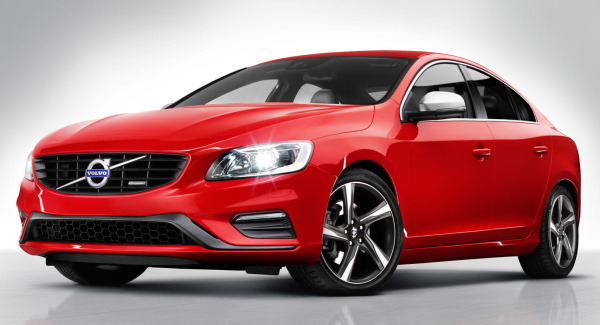
As companies such as Google, Mercedes-Benz and Volvo Cars race to develop vehicles that drive themselves, even the most sophisticated systems will sometimes be defeated by human error.
A Volvo employee demonstrating safety features ran into a group of people. He thought the car could detect pedestrians and brake automatically. It couldn’t, and even if it had been able, the way in which the driver gunned the XC60 sport utility vehicle would have overridden the function anyway.
The mishap wasn’t isolated. Another of Google’s driverless cars was rear-ended last week, one of 13 accidents over six years of tests, with nine from the rear. While smart cars aim to prevent accidents, the interplay between people and computers is a challenge.
Alternating control between the machine and a distractable human is “going to be a tough issue,” said Philippe Crist, an OECD economist who coordinated a May 28 report on autonomous driving.
That’s why car-makers won’t introduce automated cars any time soon. Plus, there’s a risk that such vehicles will have new types of crashes, he said. But manufacturers are adding more systems that can take the wheel in certain situations. Demand for features that ease the tedious aspects of driving, such as steering through stop-and-go traffic, could create a €40bn market by 2025, Boston Consulting Group estimates.
The accidents involving Google’s autonomous cars happened because they don’t bend traffic rules the way human drivers expect, says Crist.
“We were stationary” for most of the accidents, Astro Teller, head of the Google laboratory researching the driverless car effort, said at a May 29 developers’ conference. “The car wasn’t driving. The human wasn’t driving either. We were just rear-ended” by another vehicle.
With 94% of crashes linked to driver error, computers taking control might be a good idea.
“We strongly believe this technology will help reduce accidents,” said Eric Schuh, head of Swiss Re AG’s Casualty Center, which analyses risk for the Zurich-based company’s reinsurance business.
Volvo agrees, despite the embarrassing crash last month, which went viral on YouTube, with more than four million views.
“There was nothing wrong with this car itself,” the Gothenburg, Sweden-based carmaker said in a statement. “The unfortunate incident happened only due to human error.” Indeed, Volvo is banking on automated-driving technology eliminating deaths and serious accidents in the coming years. What the crash did show — besides the obvious fact that it’s not a good idea to drive straight into people — is that it’s critical to understand a vehicle’s safety capabilities, which can differ vastly from model to model.
“Does that car just adjust the speed when you drive on the motorway, or does that car, indeed, also know when a human crosses the street in front of it and put on the brakes?” Schuh said.
The most effective technology doesn’t require human interaction. Igor Kryuchkov, managing director of T3 Risk Management SA, a Geneva-based consultancy, knows first-hand.
He was driving his BMW 6-Series coupe on a French highway last month, returning from a weekend away with his wife and two-year-old son, when a Volkswagen Golf suddenly swerved into his lane. The BMW, which was equipped with a collision-avoidance system, tightened the seat belts and braked before Kryuchkov had time to react.
“You don’t really appreciate it until it becomes very useful,” Kryuchkov said. “It was kind of like the car braced for impact,” which it fortunately avoided.






