Audi A3 get ’ultra’ models
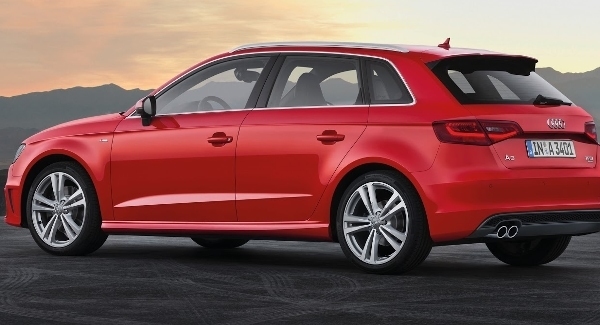
Audi is extending its range of fuel-efficient, low-emission ‘ultra’ models to the A3 car line. Equipped with the 150 bhp 1.4 TFSI engine, we are told they combine high performance with exemplary economy.

Audi A3 get ’ultra’ models

Boasting a top speed of 220 kph and acceleration from 0 to 100 kph in 8.1 seconds, the Audi A3 1.4 TFSI ultra is undoubtedly quick, but the four-cylinder version uses a mere 4.7 l/100 km over the combined cycle; this equates to CO2 emissions of 109 g/km.

The new offering of a 1.4-litre TFSI engine is available in combination with either a manual 6-speed transmission or a 7-speed S tronic. The power unit with cylinder on demand technology is available in all four body versions of the A3 car line — as a three-door model, a five-door Sportback, a Saloon and a Cabriolet.


Audi also offers an A3 ultra version with 1.6 TDI engine. In future, the A3 Sedan can likewise be outfitted with this 110 bhp diesel engine. It gets through just 3.3 l/100 km (85.6 mpg) and emits only 88 g/km of CO2.

Audi has already launched 12 ultra models with TDI and TFSI engines in its’ car lines and alongside the e-tron plug-in hybrid models, the ultra fleet is now the third production concept implemented by Audi for providing forms of sustainable mobility that are fully suited to everyday use.

RENAULT HITS CARBON TARGET

Renault has made good on its commitment to reduce its carbon footprint by 10% between 2010 and 2013 — an automotive industry first.

Renault says the policy is part of its determination to reduce the greenhouse gases (and CO2 in particular) emitted by its products and activities and to play an active part in the fight against global warming potential worldwide.

The company maintains it has led an environmental policy applying to all its business lines for nearly 20 years. And with a view to continuous improvement, Renault says it is committed to reduce its carbon footprint by an average 3% a year between 2010 and 2016 in line with its world sales forecasts.

To that end, Renault is rolling out action plans across the entire life cycle of its products and all its activities.

Particular focus is placed on the vehicle use phase, which generates a large part of the greenhouse gas emissions calculated in the overall carbon footprint. In 2013, Renault moved to the top spot in Europe as the carmaker with the lowest CO2 emissions in use, at less than 115 g/km of CO2, through an increasingly economical range of internal-combustion vehicles and the breakthrough launch of a range of all-electric vehicles.

The group’s plants are cutting their energy consumption and making growing use of renewable energies, as seen at the Tangiers plant in Morocco, designed as a ‘zero carbon emissions’ site.

In terms of logistics transport, fill rates are optimised to reduce the number of trucks chartered.

The group is also working to cut greenhouse gas emissions in its tertiary activities, notably through the introduction of more energy-efficient IT equipment and solutions for reducing professional travel.

FORD, GOCAR EXPAND DEAL

Ford Ireland and GoCar, the pay-as-you-go car rental company, have announced that they are to expand their successful partnership.

GoCar currently operates in Dublin and Cork and the expanded agreement means that 70% of the rental fleet are now Ford cars and vans. Described as the ‘car version of Dublin Bikes,’ the innovative rental service allows people to pick up a car when they need it — then drop it off where it suits. A key advantage of the GoCar service is that the cars can be parked for free at on-street parking spaces Dublin.

The partnership will see Ford continue to supply the majority of GoCar vehicles, with the current fleet including some of Ireland’s best-selling cars such as the Fiesta (GoCity Car) and Focus (GoTripper Car), plus Ford’s practical light commercial vehicle, the Transit Connect (GoVan) – International Van of the Year 2014.

OPEL AIMS FOR GROWTH

Opel has presented an update of its growth plan and by 2022 the company is aiming for an 8% market share in Europe, with the focus on profitable growth.

The company’s profit margin (earnings before interest and taxes – EBIT) is targeted to reach 5%. At the same time, the company plans to further enhance the quality of its products as well as the satisfaction of its customers and employees. Opel CEO Dr Karl-Thomas Neumann said that in the past months Opel’s management team had worked hard on advancing our growth plan, DRIVE!2022.

“The catalogue of strategic targets is the result of our efforts. We have already made the preparations for implementing the plan step by step. We have the full backing of our parent company General Motors,” Dr Neumann said.

Opel is focusing on three strategic priorities: models, brands and an improved market penetration. The model and engine offensive is continuing at a fast pace. A total of 27 new models and 17 engines are planned for the years 2014 through 2018.

The second strategic priority is the strengthening of Opel’s image as an emotional, approachable and German brand. The values are brought across by technical innovations, German engineering skills, and good value for money. Technical innovations, for instance, are exemplified by OnStar, the next stage of vehicle connectivity that will turn the vehicle into a Wi-Fi hotspot starting in 2015.

Market share and growth targets represent the third priority. By 2022, Opel plans to increase its market share in Germany from 7.2% to 10%. In Europe (including Russia and Turkey), the company aims to raise its market share from a current 5.8 to 8%. By 2022, Opel plans to become the number two in the European passenger car market together with its British sister brand Vauxhall.

x

More in this section

Revoiced

Newsletter

Sign up to the best reads of the week from irishexaminer.com selected just for you.

Cookie Policy Privacy Policy Brand Safety FAQ Help Contact Us Terms and Conditions

© Examiner Echo Group Limited

