Lexus GS300h review (20/03/2014)
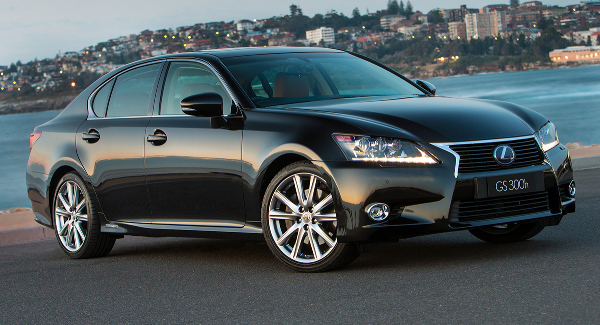
And you’d also have to think they have every right to be smug.
Toyota (and, by extension, Lexus) have pioneered the whole idea of the Hybrid, a car powered by a combination of the traditional internal combustion engine and a battery motivated secondary electric motor.
The determination of the Japanese not only to take a solo run on this technological course has been laudable, but to stick with it in the face of vehement and very vocal opposition — yours truly included, it has to be said — has transpired to be a defining era in the way motor manufacturers go about their business.
As is the case with all examples of extreme change, persuading Joe and Jane Public to row in alongside you is a difficult process, but for Toyota (and Lexus) a very rewarding one in the long run. And chief among their achievements in this regard is the fact that they have forced every other major car maker to follow their lead.
Even the Formula One boys are at it, with the season opening Australian Grand Prix last weekend featuring a new generation of hybrid turbo engines. And in Endurance racing (Le Mans 24 Hours, etc.) Audi has had massive success with hybrid racers with Toyota also utilising its experience to win races (and will be giving it another shot at the La Sarthe circuit in June) and this year Porsche too joins the fray with their own hybrid racer.
These guys are not in it for the fun of it and commercial progress is expected from all this endeavour.
So, getting back to normalcy and as I said when I reviewed the Lexus IS300h some time ago, the whole hybrid thing is with us for good.
This week’s tester is the new GS300h and I’d have to say, from my experience of the car, that possibly for the first time, Lexus now has a contender to take on the giants in the medium executive segment. Ok, you could say that the GS has always been a contender since we first saw one back in the early 1990’s, but is has never really been a volume seller in the same way as the BMW 5
Series, the Mercedes E-Class and the Audi A6.
The GS found buyers looking for something different, something emphatically luxurious and something that doesn’t have a whiff of diesel.
Given that each of its main rivals — particularly so here in Ireland — depend on oil burning engines for their volume sales, this has probably made selling the GS a much more difficult task that might have otherwise been the case. But Lexus has persisted with its vision and now that the GS300h has arrived with us, their perseverance might just be about to pay off.
However, at just shy of 50 grand the Lexus is still more expensive than the volume diesel sellers in the segment and even with the 1,500 you get back from the government for your environmental concern in buying a clean hybrid, it is still an ask for people to take the plunge and buy one.
For their part Lexus insist that their machine offers lower running and maintenance costs, as well as better residual values than its main rivals and they also point to the fact that as a fleet option, it has many benefits which should attract company car buyers, not least is the car’s new found economy which sees it able to return a figure of 4.8 l/100 km or 58.9 mpg in old money.
It will not matter to many that the driving experience is not a full-blooded one or that for many people the emotional connect with the car will be entirely absent. What will matter is the bottom line and in that regard this car delivers in spades.
I’m sure enthusiasts will be entirely familiar by now with the drivetrain technology on offer here, but for the rest of you the GS 300h is powered by a two and a half litre 178 bhp petrol engine and a 141 bhp electric motor which, when combined, provide a total output of 223 bhp.
This, in turn, makes for a top speed just shy of 200 kph and a 0-100 kph time of 9.2 seconds and it might just be that you will be underwhelmed by both those figures. In fact, neither figure is a match for any of the car’s main rivals, but the funny thing about this car is that at no time are you ever suspicious that it is gutless.
Indeed, even despite the eerie silence on start up, this car never feels like it lacks motivation. Quite the opposite in fact and during my time with it I always felt there was more than a sufficiency of grunt on offer and that there was plenty of pace to be found when it was needed.
And on the road too it proved to be a particularly pliant tool with bags of grip, a well planted feel, steering which weights up nicely (even if it is a little on the numb side) and an overall handling balance which is a credit to the suspension engineers. Further credit is due to them when you consider that the car does not suddenly lose its poise when switching from highway to byway driving.
Lexus has also become a watchword for luxury and in this regard the GS300h does not disappoint. The interior is truly well appointed and a very nice place to be — front or back.
It also has a very decent boot and standard specification is bang on with segment norms.
The GS300h is not yet a volume contender, but it is slowly getting there. This model will appeal to many more people than the last one did — even despite the lack of a diesel option — and is yet another example of why Toyota (and Lexus) should be feeling so smug right now.
from €49,950 - €54,950 as tested.
Not just one, but
two motors: one petrol and one electric. The thing is, though, that Lexus has turned this car into something which is very efficient and very tax friendly. Both factors will attract buyers.
Lexus has
become a watchword for craftsmanship and that is very evident in the cabin, which is not only really well made, but fitted as standard with plenty of toys.
Hybrid is here to stay and Lexus is at the top of the pile with that technology.
Also, the aggressive new look of the car will appeal too.



