Poles came to Ireland for work back in the 2000s, in their tens of thousands and built all around them, built around us. Many of the c 100,000+ stayed, integrated and put down Irish roots. Many others returned after our ‘crash’ and now we should return the favour, go to Poland to renew old acquaintances, have fun, and see how their beloved country (and especially its capital, Warsaw) has been transformed since the ebb and flow of that migration surge and Poland’s EU membership over 20 years ago.
Poland is used to ebbs and flows over more than 1,000 years of statehood, including wars and invasions, partitions, holocaust horrors that saw its Old Town all but razed to the ground, with gritty stories of resilience and recovery and rebuilding.

It came under Soviet control for almost half a century…and still feels threats from the east, grateful for Nato membership.
Today, on its latest chapter as one of the most historically and culturally engaging of our EU cousins, Poland, led by Warsaw, has now clearly emerged from Eastern European shades of grey to stand out in vibrant Central European technicolour.
An accessible, cultural and vibrant European capital, Warsaw shows it all so well, with its metropolitan area population at two million, roughly equivalent to the Greater Dublin Area, only far less of a sprawl, while its skyline is on a 21st century upward trajectory, emblematic of its recent economic and employment successes.
A long and languid holiday weekend in Warsaw proved an up and down experience in the best possible way, rising to an observation deck for horizon-scanning from the top of the recently completed Varso Tower, the tallest tower in the European Union, with an observation deck at 230 metres up in the sky.
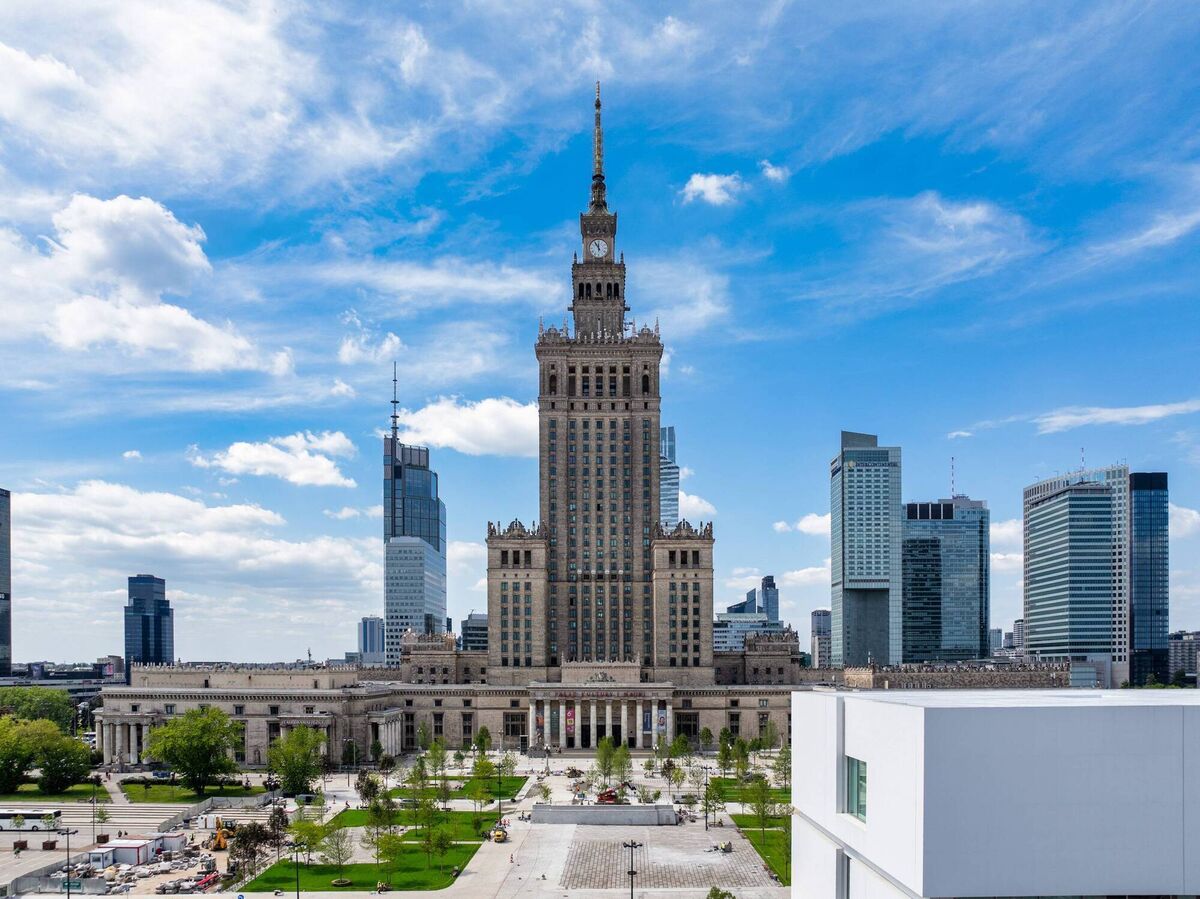
The Foster + Partners designed edifice stands in marked, stark contest with the adjacent monumental Soviet-era Palace of Culture and Science, with an internal array of galleries, museums, exhibition halls, libraries, swimming pool, and more across over 1,000 rooms. (Do visit the Neon Museum on floor four too, for a rare glimpse of colour advertising and neon signage from the Soviet era.)
Over at Varso, a literal high point, it takes just half a minute to ascend to the 53rd floor of the Varso Tower via an external glass elevator (your ears will pop) and there’s also access to a slightly lower garden bar/restaurant, for an entry online booking reservation of about €11, or 47 PLN/Zloty (Poland isn’t yet in the Euro zone, despite EU membership since 2004.)

From this Varso Tower sky-high eyrie, you can look down on the darker, grimmer days of the early 1950s to the Palace of Science and Culture, a building gifted to Warsaw by Josef Stalin as a statement of power and authority as the Polish capital started to rebuild after the devastation of the Second World War by Nazi invaders.
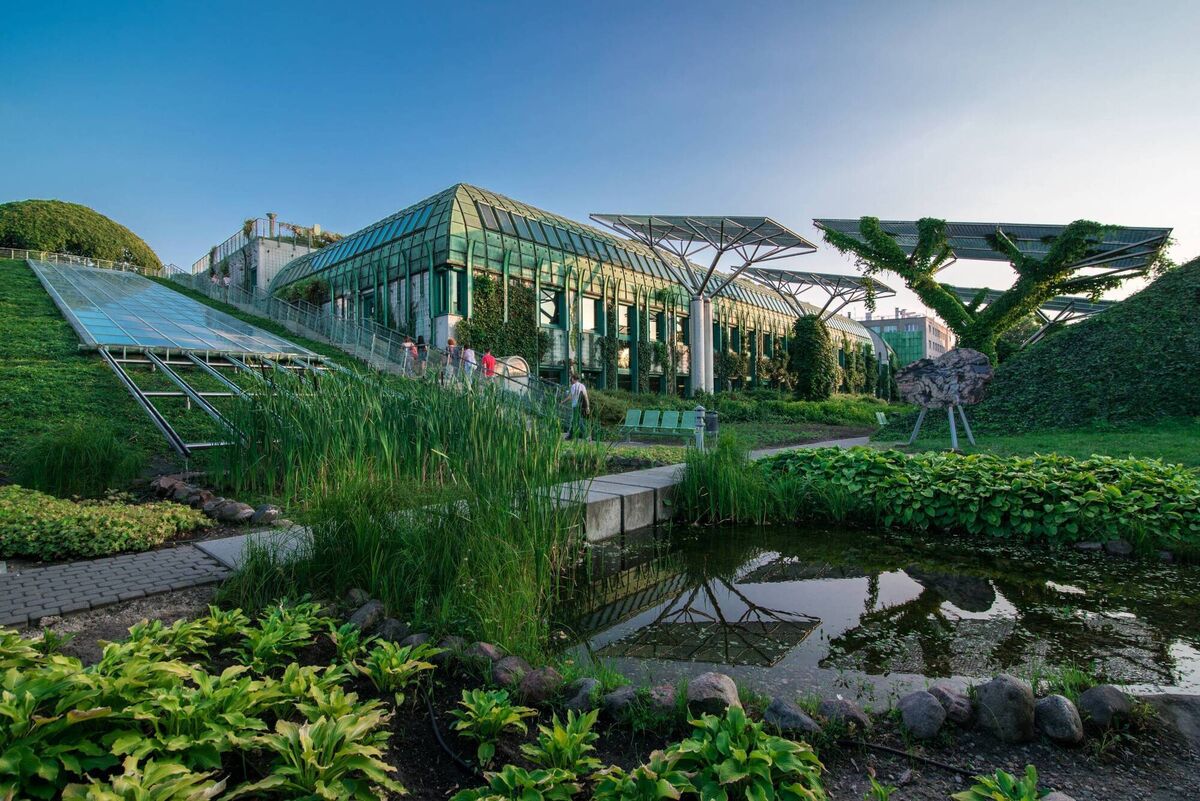
Also worth ascending to are the seeming acres of layered green space up on the roofs of the early 2000s-built Warsaw University Library (also called the BUW Gardens), near the Vistula river in the Powiśle district.
BUW Gardens are a living, breathing urban public park with massed planting, paths, ponds, stepping stones, pergolas and photo opportunities, and the clamber includes the chance to peer down into the library’s reading rooms through glass ceilings.

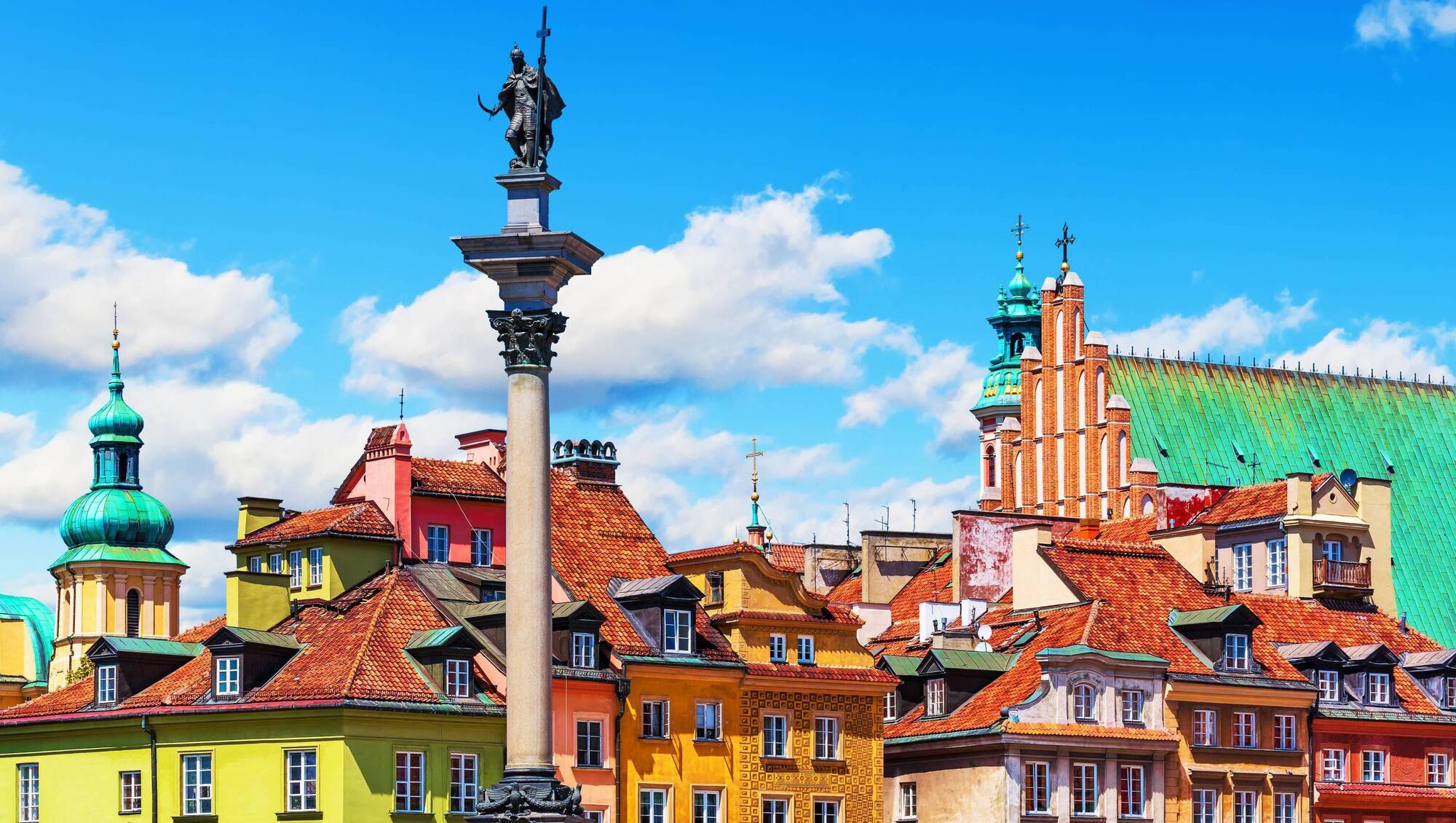
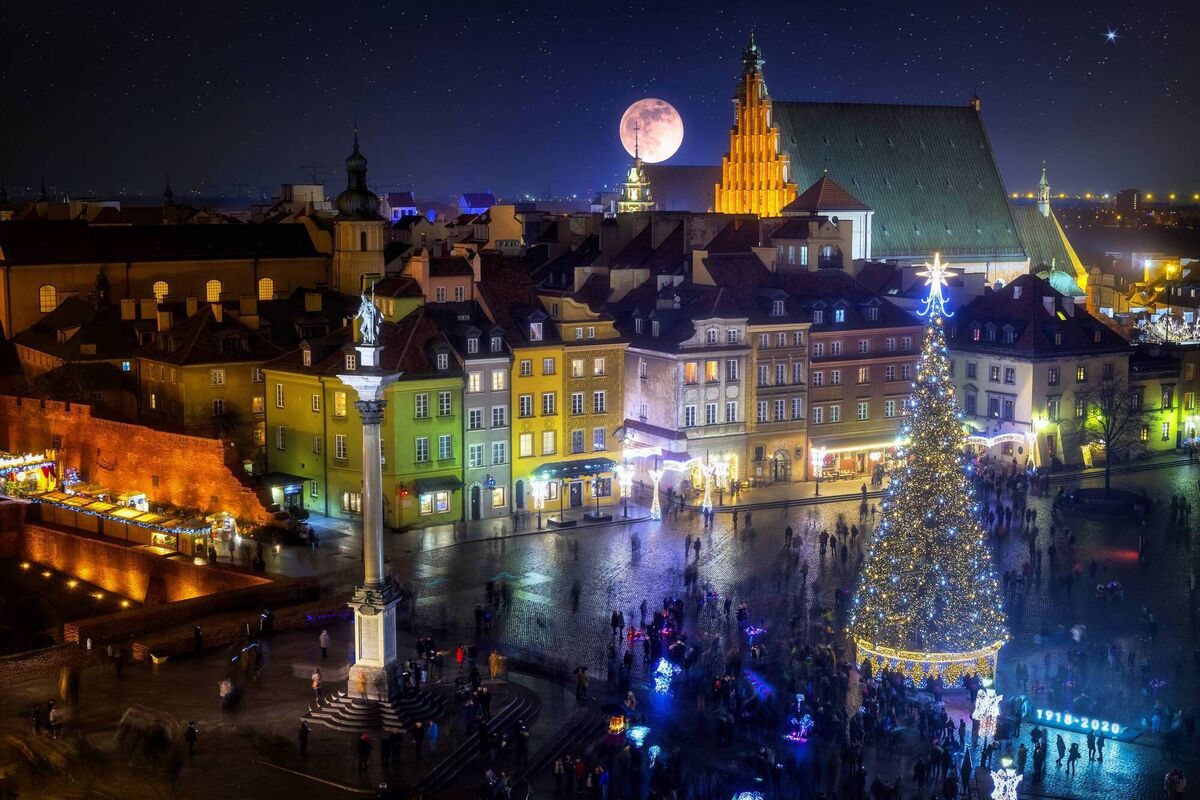
A city skyline scan includes the National Stadium with its distinctive cable-masted fringe like a crown of thorns, and its red and while clad livery, depicting the colours of the Polish flag. (It co-hosted the 2012 Uefa Euros along with Ukraine, and holds concerts for up to 80,000 under a retractable roof.) Also ‘new-ish’ is Warsaw’s Old Town, painstakingly rebuilt to its 17th and 18th century layout and feel after wholesale destruction in the Second World War, which saw 85% of the city obliterated. The scale of it makes the Burning of Cork look like a candle flicker by comparison.
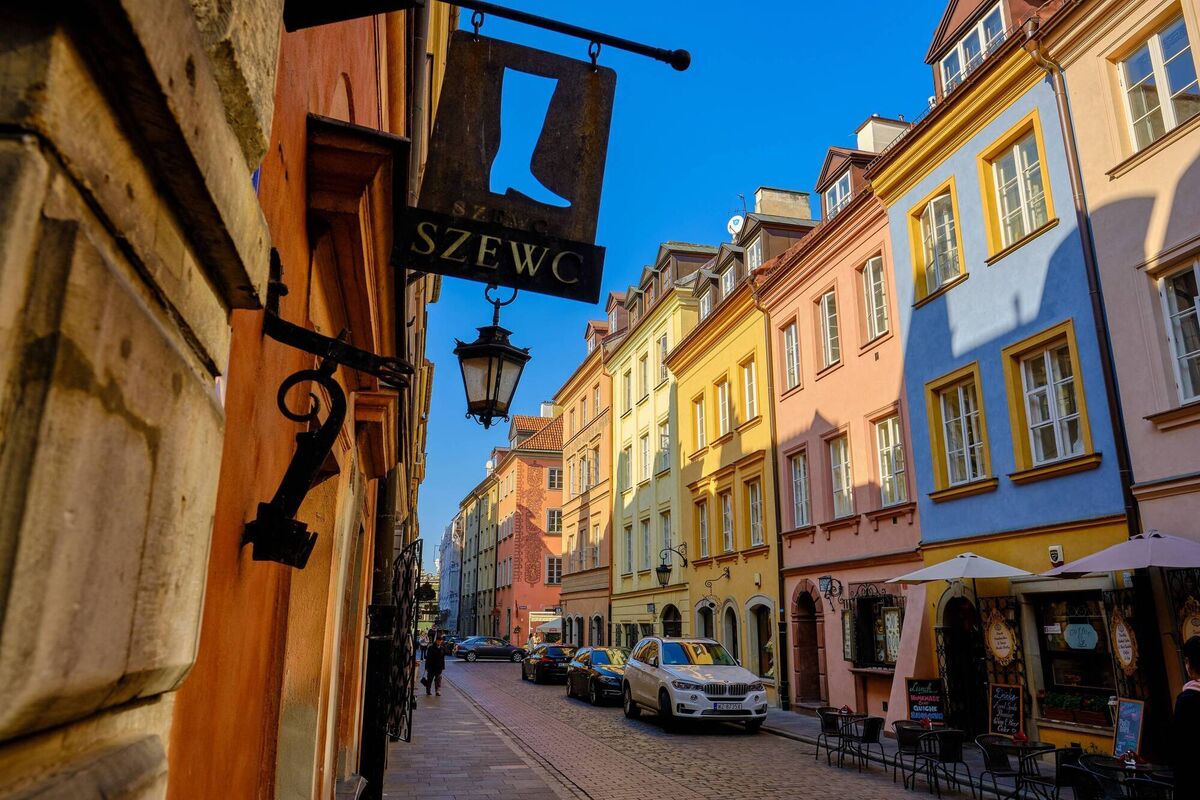
The Old Town’s churches, streets, houses, and defensive walls were painstakingly rebuilt as of old over the next 20 years as planners and architects used old photographs, maps, architectural and engineering drawings and as reference points to reproduce the historic appearance.
Incredibly, also vital were painstakingly detailed paintings of the city, its streetscape and citizenry done 250 years earlier by the Italian painter Bernardo Bellotto (‘Canaletto’), such as his painting of the original town’s Market Square, helping to reconstruct the façades and proportions of the surrounding buildings. Many of Canaletto’s paintings are in Warsaw’s Royal Castle, also a convincing rebuild, finally finished in 1984 just as Poland’s communist era came to an end after the Rise of the Solidarity movement and, like the adjacent Old Town, are utterly convincing, symbols of pride rather than a Disneyfication.

In 1980, the Old Town was rightly added to the Unesco World Heritage List, as an exceptional example of the comprehensive reconstruction of a historic city, Phoenix-like, after catastrophic destruction.
Getting about today, Warsaw has a public bike rental (known as Veturilo,) with 5,500 bikes across 380 stations via a mobile app; two Metro lines; trams, buses and night busses, with integrated ticketing. My weekend unlimited public transport pass cost 24 PLN/zloty, or €5.60 (a pint, meanwhile, is about €3.) Walkable Warsaw wears its history well, with the elegant surviving architecture of Nowy Świat street and the so-called Royal Route a must-stroll promenade past palaces, the university campus and with 15 black streetside benches with inset buttons playing snippets of music by Frédéric Chopin at points related to his early life here in the city before moving to Paris in 1830.
Chopin’s heart is now entombed in a pillar in the Holy Cross Church here in the city that holds him as dear as they hold to heart Pope John Paul ll, whose almost iconic image graces many city settings: each summer, free open air live concerts of Chopin’s music are held by the Royal Łazienki Museum and Palace on the Isle at the Royal Gardens, in the shadow of a large monument to Chopin.
Sitting out on the grass, I was among some 4,000 rapt by a performance in July sunshine, most appeared to be local city residents (Varsovians, so to speak) and families, and personally I was far happier to be with Chopin rather than shopping focused of a Sunday afternoon.
(If you do want to shop and drop some zlotys, try Elektrownia Powiśle, a former electricity generating plant to the city from 1904 to 2001, now an energetic lifestyle hub, with offices, food hall, bars, café and eateries, boutiques, brands and a beauty zone.) Much favoured by residents and visitors alike are the promenade and urban beaches along the banks of the Vistula river, and the new 450m pedestrian and cycling bridge to the up and coming Praga district, where a giant former vodka distillery is now the Koneser Centre complex, which — for those who still might need to shop will find it holding designer shops, cool eateries, a Google campus/business centre, bars, the Museum of Fantasy Art and, oh, the Polish Vodka Museum.
At the latter, I came across a 1660-dated recommendation for gorzalka (the Polish word for vodka) that exhorted “Here in Poland gorzalka is good for everything, for sleep, for pangs of conscience, worry, appetite, better looks and boldness. For infectious stench, it is a special cure….” And the best we can do is come up with ‘Guinness is good for you’?
CONNECT WITH US TODAY
Be the first to know the latest news and updates