This is my fourth visit to Canada — but here's what it's like to visit Quebec for the first time
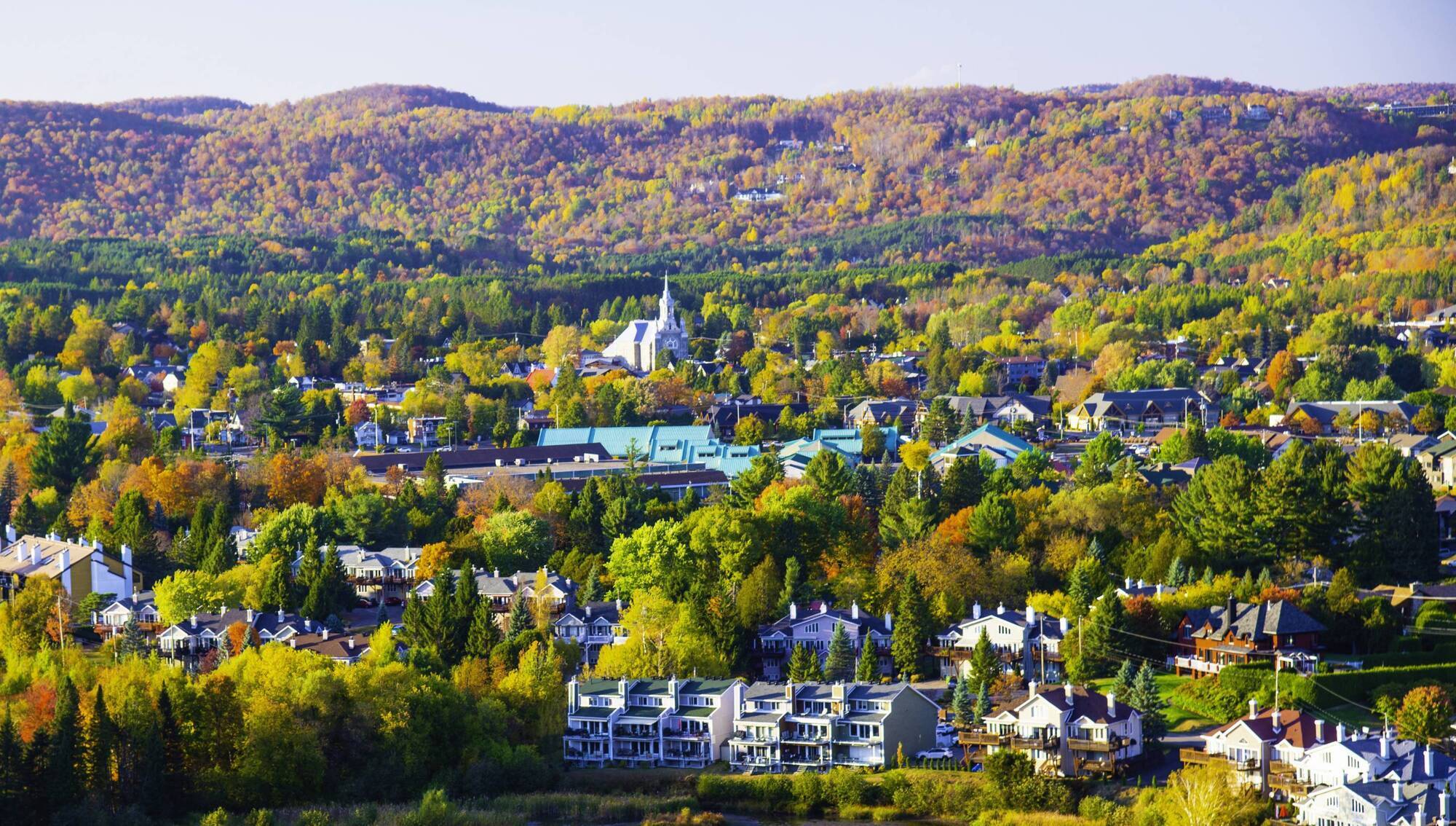
The splendid autumnal foliage enjoyed from the top of Saint-Sauveur mountain in Quebec
It's a dark evening when we encounter Marie Rivière in the courtyard of a historic building in Old Québec. Chatty, she shares with us that she
originally moved here from La Rochelle in France, met her husband, and they went on to have six children together.
It’s only a few minutes in, when she mentions that she has been dead for 322 years, that it clicks. She’s a ghost.
With a deathly pale face and hands, Marie tells us she was born in France in 1646 and was sent by the King of France to ‘New-France’ at the age of 25, to marry. She is the character leading the ‘Crimes in New France’ guided tour and she will bring us around the oldest part of the city this evening, telling us stories of gruesome crimes and executions of the old city. “I’ve been haunting the place for 323 years, so I have come to learn a few things about Québec,” she jokes.
This is my fourth time in Canada and first time in the French-speaking part, which I am here to explore for the week, taking in Québec City, Montréal and Québec province. Québec is considered the most European part of North America, but I wasn’t sure if, to a European, it would still feel like a Canadian city. What I encounter is a pleasant surprise – it is steeped in history and I love the old feeling.
As soon as I arrive in Old Québec, it’s like going back a few hundred years to an old part of France. There are cobbled streets, historic stone buildings, and street lamps which give it atmosphere, especially by night. It does feel a little like the older parts of Europe – the narrow, stone streets in the lower town are pedestrianised and full of small cafés, restaurants and artisan shops. I don’t spot any high-street fashion or fast-food chains. The old part of the city has been well preserved and like many of the ‘old towns’ in European cities, it’s charming to wander around, but there are probably more tourists than locals.
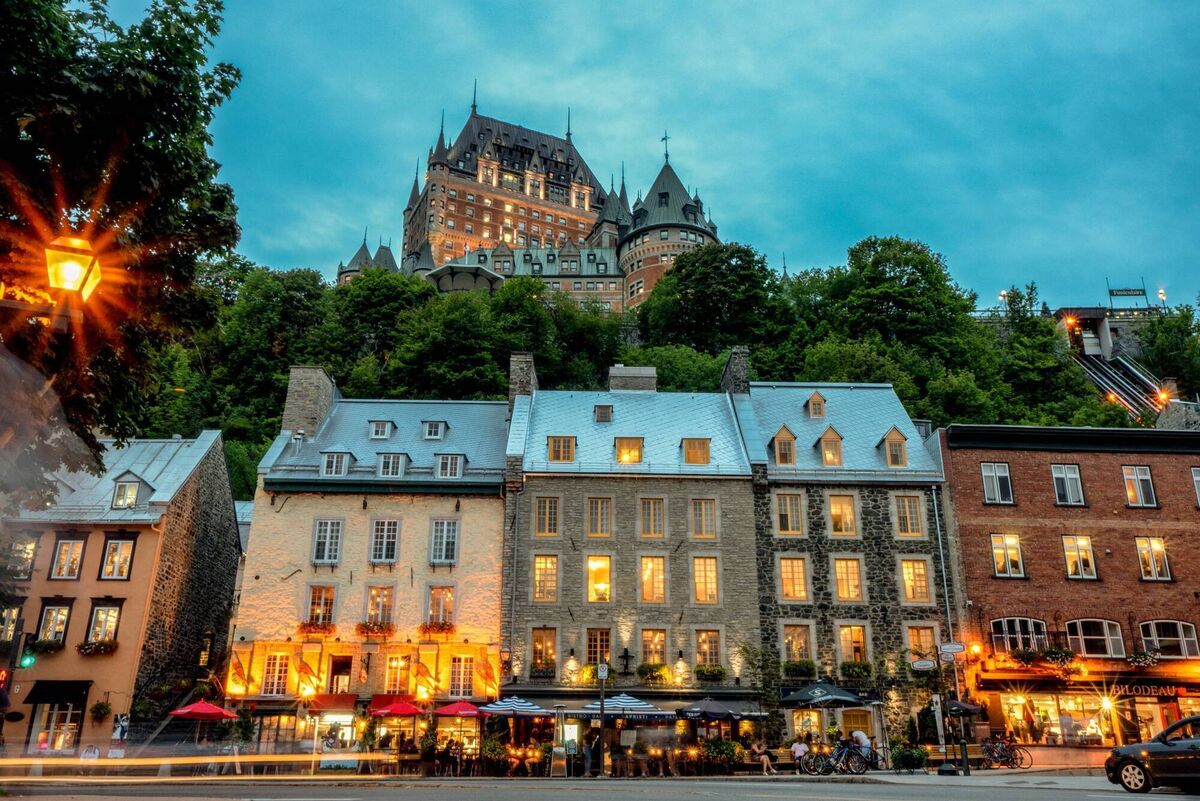
Québec City was founded in 1608 by French explorer Samuel de Champlain and it is one of the oldest European settlements in North America. It was also under English rule for a time, and Irish people came here from the 1760s onwards – many as soldiers in the French army or British garrison – so there was an Irish influence in the mix when society was being built up.
On a sunny afternoon, walking guide Xavier Chambolle from Tours Accolade points out where St Patrick’s Church was built in the Irish neighbourhood in 1832 – the first wealthy Irish to arrive lived in the upper town. During the Famine in the 1840s, thousands more arrived via La Grosse-Île on the Saint Lawrence River, and while many moved on to other areas, by 1871, around 12,500 citizens of Québec City were of Irish origin.
Placenames today include Shannon, Mayo, Coleraine and Armagh. Even in the city, we come upon a Celtic Cross, given to the city’s people by the National Famine Museum at Strokestown Park in Co Roscommon.
As well as exploring shops and cafes, I enjoy walks on the long boardwalk overlooking the Saint Lawrence River, and admire Le Château Frontenac, a huge French-style château which dates back to 1892. The magnificent hotel is a focal point and sits overlooking the old town. I also walk the walls of the Citadelle of Québec and soak up more river views.
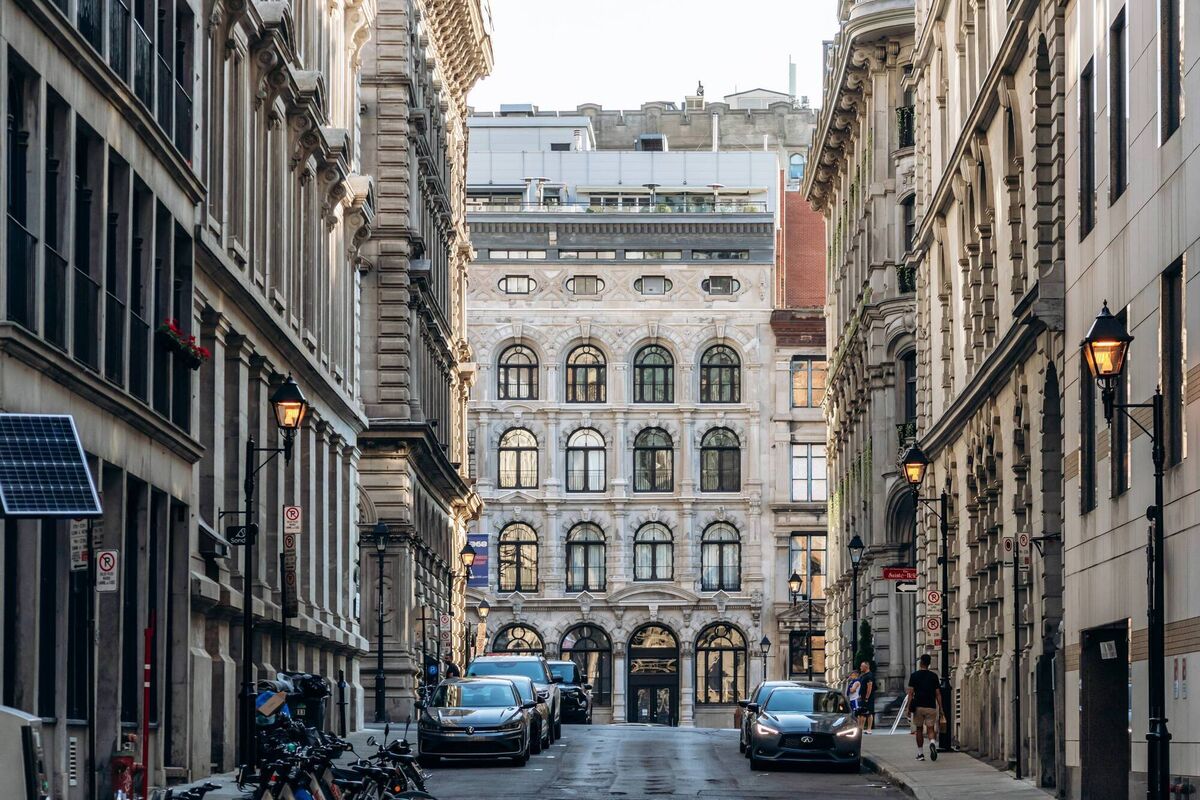
I had started my week-long trip in the city of Montréal – as you can fly direct from Dublin to Montréal with Air Canada. There are trains between Montréal and Québec but if you rent a car, it’s easy to get out into the wilderness in Québec province on the way.
Montréal city is larger than Québec (the population is around 1.7 million, compared with Québec’s 555,000), and the city has a ‘grand’ feel, with lots of historic buildings such as old merchant banks, and parks with fountains and statues. There are lots of churches too – including the Mary Queen of the World Cathedral, a copy of St Peter’s Basilica in the Vatican. A nice feature – especially for cold or hot weather – is Montréal’s Underground City, the RESO network, with 33km of underground pedestrian passageways which run under the city streets and have shops and restaurants. They connect to metro stations and even to hotel lobbies.
Venturing from Montréal into the province of Québec, the first stop is the town of Saint-Sauveur, in the Laurentian region. It is full of cute wooden buildings with shutters and flower boxes, home to artisan shops and boulangeries. In one white wooden building, exhibits at the Musée du ski des Laurentides – the Laurentian Ski Museum, tell the story of how the sport arrived here in 1949. The town is surrounded by ski hills, and the museum has all sorts of fun ski-related artefacts, from the little skis on wheels that fanatics used to practice the sport on the hills during summer, to a ‘snurfer’ – a cross between a skis and a surfboard, which later became snow boarding. There are great cross-country ski trails here in winter, as well as night skiing.
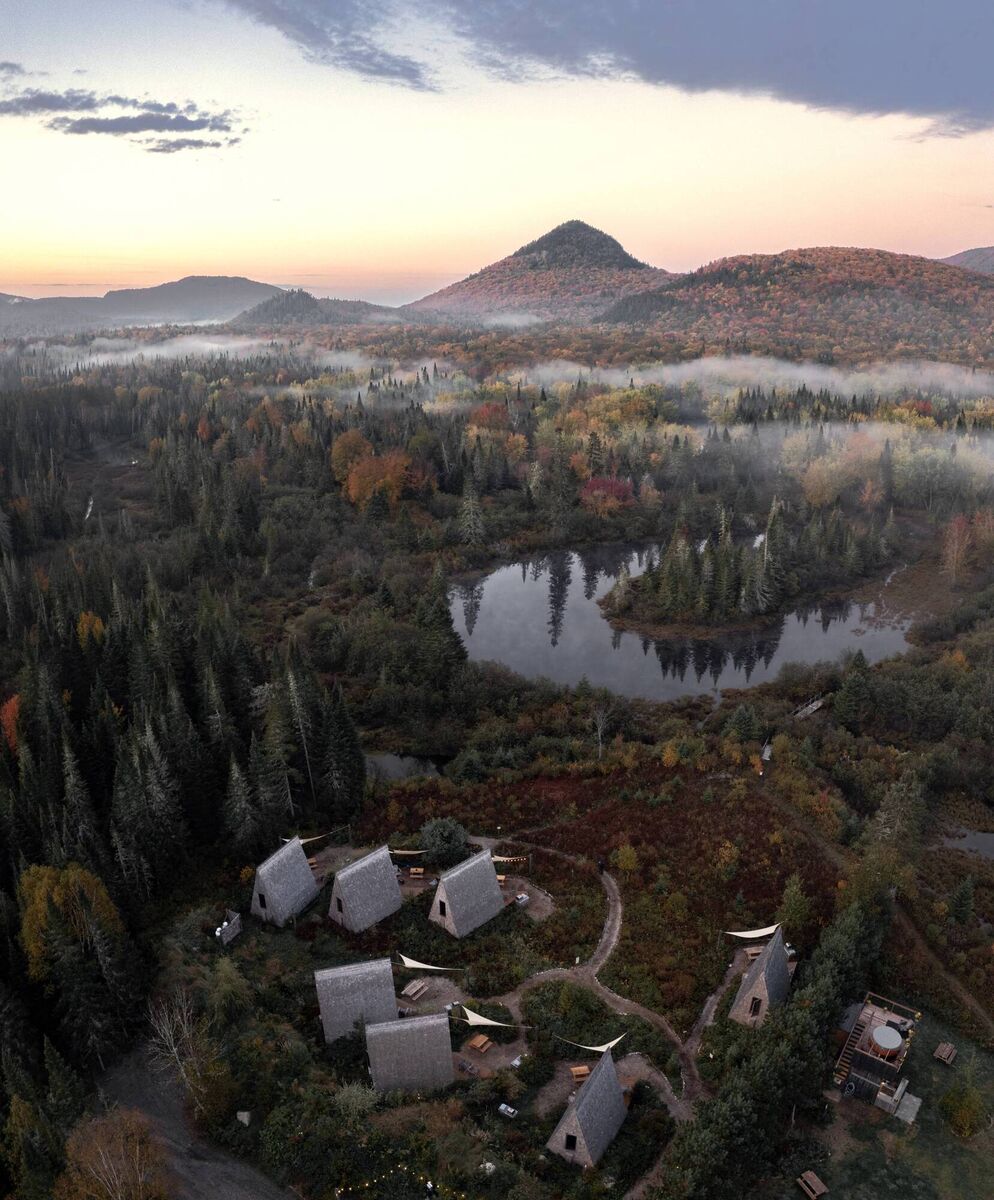
To get the true wilderness experience, our home for the night is La Farouche, a ‘nature hotel’ set on 135 acres beside Mont-Tremblant National Park. There are seven A-frame cabins and each sleeps two, with luxuries like underfloor heating and gas stoves. Each has its own deck and barbecue, and from here I soak up restful views across the fields to the Laurentian mountains.
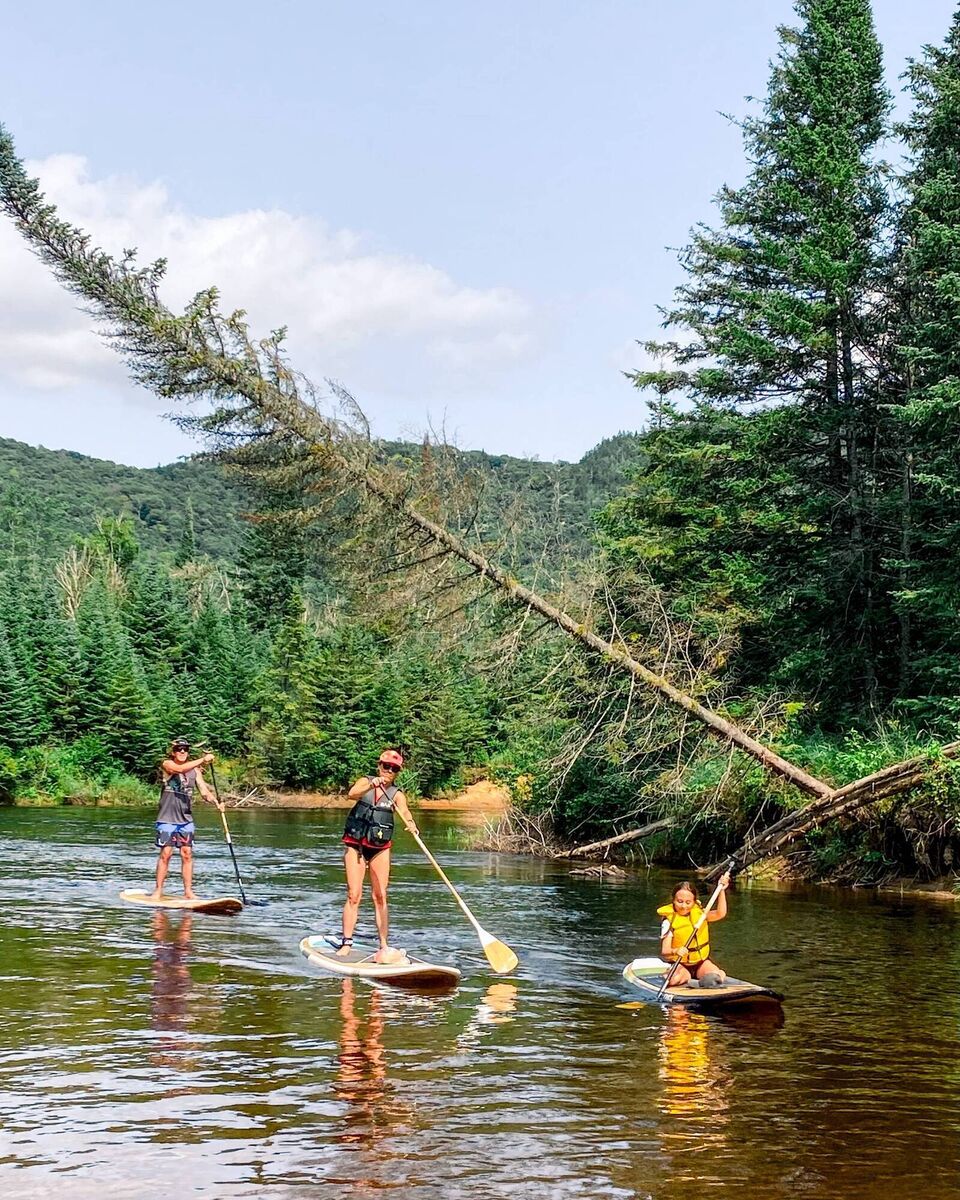
Activities at La Farouche include walking and cycle trails, there’s a lovely winding river for paddleboarding, a hot tub, and a fire-pit area for sundowners. Breakfast and aperitifs are served in the La Buvette farmbar – the owners Geneviève Côté and Jonathan Casaubon grow much of the produce in the farm across the road.
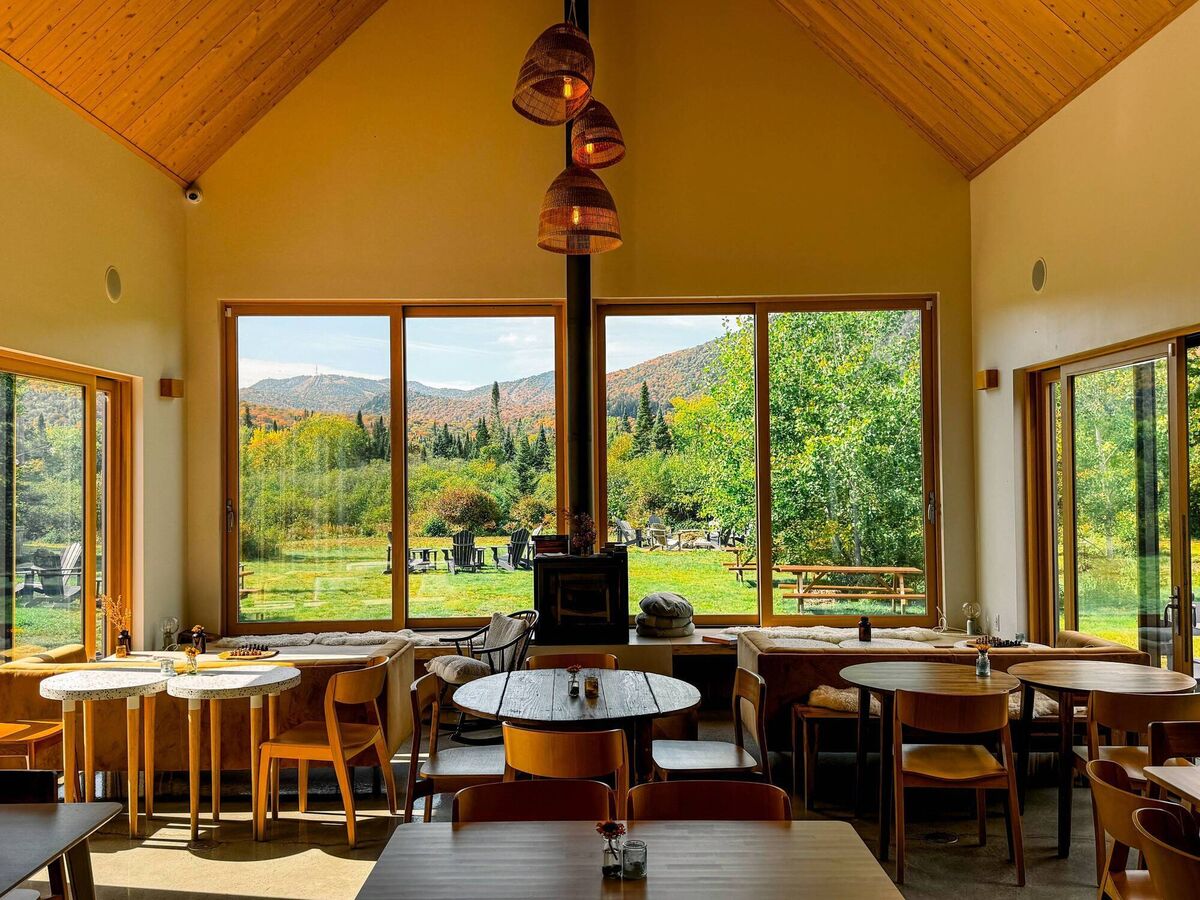
When you think of wilderness in Canada, you think of trees, lakes and rivers, and Mont-Tremblant National Park, next to La Farouche, has 1,510 square kilometres of this, with six rivers and more than 400 lakes. There’s hiking, biking, fishing and canoeing in summer, and cross-country and backcountry skiing in winter.
An easy way to experience the forest is the Treetop Walk at Sentier des Cimes Laurentides, where elevated walkways lead to a 40m-high wooden observation tower. It opened in 2022, the same year Avondale Treetop Walk opened in Wicklow – and looks similar as it was designed by the same German company. It has plenty of information panels about the local wildlife and trees – such as spruce, white birch, white pine and the sugar maples, which give the area the dramatic orange and red colours in autumn.
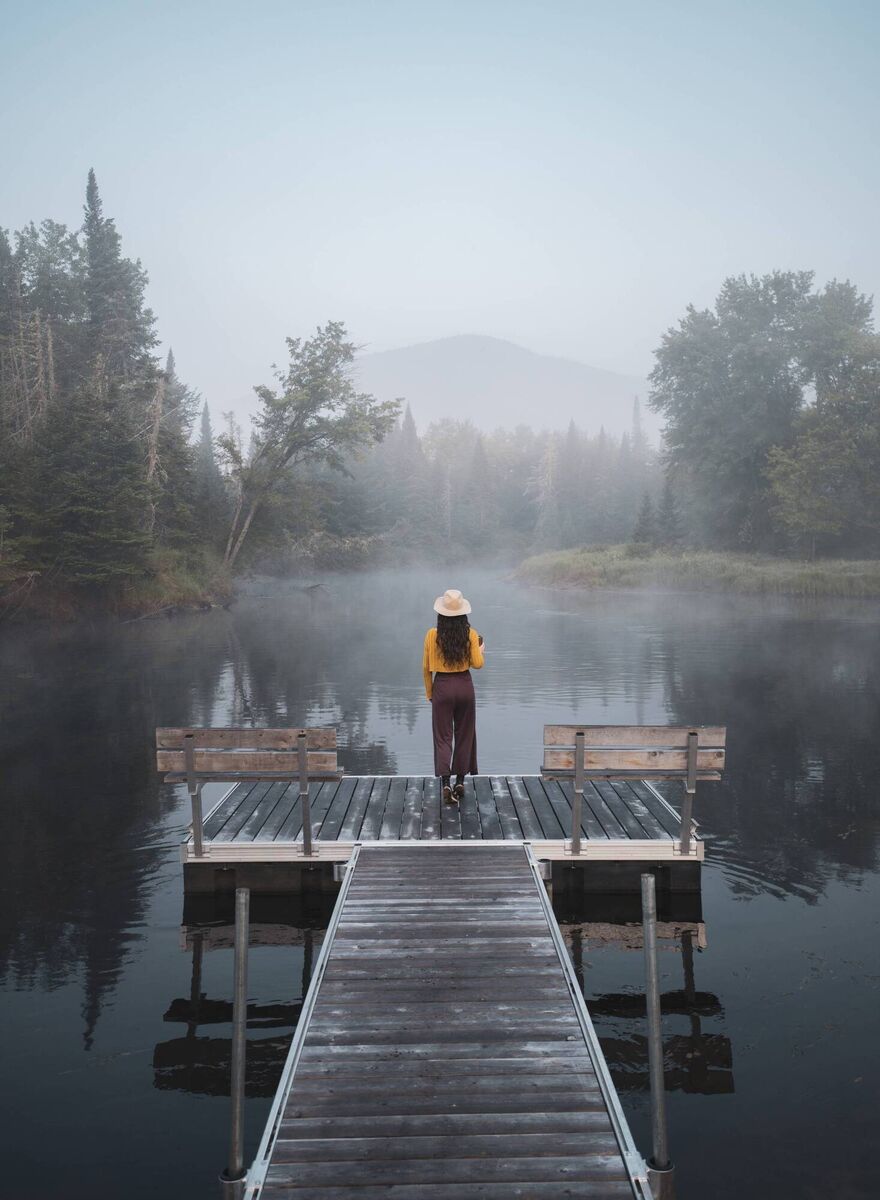
For more activity in the forest, we head to Gatineau Park, in the Outaouais region in Western Québec. This is Canada’s second most visited park (after Banff) and just ten minutes’ drive from Ottawa city. Covering 361 square kilometres, it is open year-round for biking and hiking and has more than 200 trails. In winter, it’s popular for cross-country skiing and snowshoeing; in summer there are lakes to swim in, waterfalls and camping.
You can rent a bike from two hours up to seven days, so on a crisp day with blue skies, we take to bikes and explore for a few hours, cycling the trails and roads through the trees and stopping at lookout points and picnic spots like Fortune Lake and Pink Lake to take in the views.
Our last overnight is at the Fairmont Le Château Montebello, another ‘château-style’ hotel. The world’s largest log cabin, it was originally built in the 1930s as a men’s club – a luxury wilderness retreat. The log cabin’s design was inspired by chateaux in the Swiss Alps. It became a hotel in the 70s, owned by the Canadian Pacific Railway.
It’s a fascinating place, the huge dark red cedar wood interior is still the original. With luxuries like indoor and outdoor pools, it’s no longer a wilderness retreat but it does have lovely forest trails along the Ottawa River.
There are photos on the walls of how it looked in past times too. It’s another slice of the history that weaves through this fascinating province.


CONNECT WITH US TODAY



Be the first to know the latest news and updates