Discover the many sides of Egypt: Sun, sand, and great wonders of the world
Cairo and Sharm El Sheikh offer visitors contrasting experiences of Egypt, writes Isabel Conway
Discover the many sides of Egypt: Sun, sand, and great wonders of the world

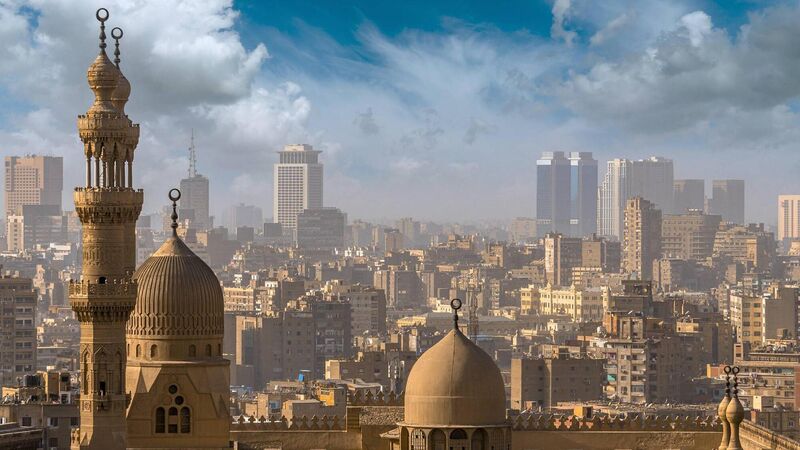
A view of the Mosques of Sultan Hassan and Al-Rifai in Cairo.

In Cairo’s famed Khan El Khalili market there’s a thin line between pestering and persuasion.

We run the gauntlet of pashminas and jangling belly dancer costumes, scrolls of fake papyrus scripts, piles of plaster pyramids, and the Sphinx in stone, amid the bewildering assortment of souvenirs.

Pausing by a stall or catching the seller’s eye is enough to ignite a relentless sales pitch. Cairo’s largest and most vibrant tourist souk and bazaar sits at the epicentre of Al-Qahirah, a colourful, noisy, spice-engulfed maze of shops, stalls, cafes, and hidden corners where hawkers flog dodgy merchandise.

Think of tourism in Egypt, and crowded bazaars such as Khan El Khalili, splendours of the pyramids and nearby Sphinx, Luxor and the Valley of the Kings and Abu Simbel have drawn travellers for centuries.

Tourists have been visiting Egypt for 2,500 years, starting with Herodotus (480-420 BC), followed by Greeks and Romans who were raiding tombs and stealing whatever they could carry away. Huge obelisks were also pilfered, shipped, and re-positioned abroad as familiar national landmarks.

Cairo’s main sights require at least three to four days to do them justice. But pressed for time we explore at a breakneck pace.

The National Museum of Civilisation is the first stop at mummies ‘Grand Central’. Visitors file through a dimly lit, climatically controlled hall, designed to feel like a tomb.

Here you’ll come up close to Thutmose (1479-1425 BC) who made Egypt an international superpower among those who walked the earth over 3,000 years ago.

A favourite is mummified Queen Tiye with her fine bone structure and long curly tresses. Stories of conspiracies, power struggles, complicated relationships, and jealousy accompany each mummy, showing that little changed through the ages.

Soon a huge new museum close to the pyramids will open to incorporate the treasures housed in the colonial-era Egyptian Museum of Antiquities that contains 120,000 artefacts. Upstairs we marvel at the main attraction, the King Tutankhamun collection from the tomb of the most famous pharaoh that includes his coffin weighing 110 kilos of solid gold.

From traffic-choked, bustling Ta Hrir square, the very centre of Cairo, scene of protests during periods of political upheaval, we move on to the Coptic quarter where for 600 years Christianity held sway. An estimated 10% to 20% of Egypt’s population, depending on who you ask, is Christian. The cellar of St George’s Church reputedly was a hiding place for the Holy Family after the flight into Egypt.

A view of the Pyramids from the Giza Plateau - there is three pyramids popularly known as Queens' Pyramids on front side; next in order from left: the Pyramid of Menkaure/Mykerinos, Khafre/Chephren, and Chufu/Cheops - known as the Great Pyramid.

Egypt’s capital is best known for preserving the last of the Seven Wonders of the Ancient World. Far from rising dramatically in the depths of empty desert, the three Pyramids of Giza are in fact beside a suburb of Cairo to the west of the Nile. Queues of school kids, families, and a sprinkling of foreign tourists converge on the site. We join those climbing the rough steps towards the entrance to the Great Pyramid, one of the greatest ever feats of engineering.

Some of us venture inside the steep low-ceilinged tunnel leading to the king’s burial chamber. Not for the weak-kneed, or those who suffer from shortness of breath or claustrophobia, you must bend almost to the ground on the narrow wooden walkway that leads up into a bare room with an empty sarcophagus.

Finally, standing in the centre of a pyramid so large that until the Eiffel Tower was completed in 1889, this was the tallest structure on the planet, surrounded by 2.3m blocks of granite, each weighing over two tons, it feels surreal to be at the very spot where King Khufu was laid to rest 4,500 years ago.

In the shadow of the pyramids, camel owners wander about offering rides for about €30, though Micky, a young healthy looking male, was offered to one of our party without any mention of money. Later, a $10 tip was accepted with a smile and bow by the owner, at odds with his neighbours offering rip-off camel and pony trap rides.

Sharm El Sheikh on the Red Sea, a one-hour flight from Cairo, offers an ideal contrast in tempo and experience. Spectacular diving and snorkelling among an abundance of undersea life — over 1,000 species of fish and 200 species of coral — as well as guaranteed winter sunshine, generate more foreign income than the pyramids at Giza or Tutankhamen’s mask and the Sphinx.

Sharm has survived more tourism setbacks than most. Now tourism interests down here hope that the rich and diverse marine life and golden sand beaches of the Red Sea, with stricter environmental controls, including a ban on single-use plastics, will boost tourism in a country of 100m people whose international image as a safe destination has suffered in the past by attacks blamed on radical Islamist militants.

The resort, which includes nine towns, underwent a big makeover in preparation for November’s Cop 27 climate summit.

New hotels were completed and a magnificent new museum showcasing mummies among the collection of over 5,000 treasures was added.

Our base for two nights in south Sinai is the all-inclusive Royal Savoy hotel resort, the centrepiece of glitzy neon-lit Soho Square, a five-star luxury complex with three swimming pools and a private beach, numerous dining out possibilities, boutiques, bars, and night clubs.

A curious sea turtle swims right up beside me off the lovely stretch of beach where snorkelling equipment is on hand and a giant aquarium of multi-coloured fish are spotted. Most visitors opt for a day-long excursion (costing around €60 including lunch) on board a motor yacht with awesome views of the remote Sinai coastline and huge Ras Mohamed National Park away from resort developments. 

Flotillas of big and small yachts and other craft fan out across the horizon like in vintage film reels showing the Dunkirk evacuation. We exit our boat named Rehab via the rear steps and drop into the water where the coral reef offers the best snorkelling and diving, especially at a spot called Stingray Station. Nothing prepares you for this underwater fantasy world and cascading jewel box of marine creatures inhabiting it. I had expected to admire a few passive enlarged versions of tropical tank fish, not this teaming kaleidoscope of colour weaving in and out of the coral.

The brilliantly coloured Arabian angelfish scouts alone, scissortail sergeants in disciplined schools, others just like humans are individualists, a few shy, the majority curious.

An undoubted highlight of any visit to Egypt this... nevertheless, to my mind, they can’t compete with Osiris, God of the underworld who was found guarding Tutankhamun’s opulent tomb.

Don’t miss: In Cairo, the pyramids, the Sphinx, and the ultimate — a Nile cruise southwards to Luxor and The Valley of the Kings (on my bucket list for a future visit).

The world’s biggest archaeological museum, the Grand Egyptian Museum, a stone’s throw away from the pyramids at Giza, will finally open this year, covering 199 acres, showing off many never before seen treasures from the storerooms at the Egyptian Museum of Antiquity in central Cairo.

All the Tutankhamun collection will be on display in the new museum that was supposed to open in 2022, marking the centenary of archaeologist Howard Carter’s astonishing discovery of King Tut’s tomb, jewel in the crown of ancient Egypt.

Getting to Egypt

  • Direct flights from Dublin to Cairo four times weekly. See www.egyptair.com; return fares from €550-€700 economy and from €1,000 return business class. 
  • For information on travel to Egypt, see Egypt Tourism Authority, www.egypt.travel
  • Your local travel agent can help with Irish tour operator combined packages that include Cairo and other key tourism experiences such as Luxor and Aswan, plus sun-kissed Red Sea resorts for relaxation after all the sightseeing.
  • Avoid summer when temperatures can reach an uncomfortable 40C. To get the best out of your visit to Cairo, enlist a registered guide and driver rather than going it alone.

More in this section

Lifestyle

Newsletter

The best food, health, entertainment and lifestyle content from the Irish Examiner, direct to your inbox.

Cookie Policy Privacy Policy Brand Safety FAQ Help Contact Us Terms and Conditions

© Examiner Echo Group Limited