Is the full Irish cooked? Hotels ponder the future of our beloved breakfast
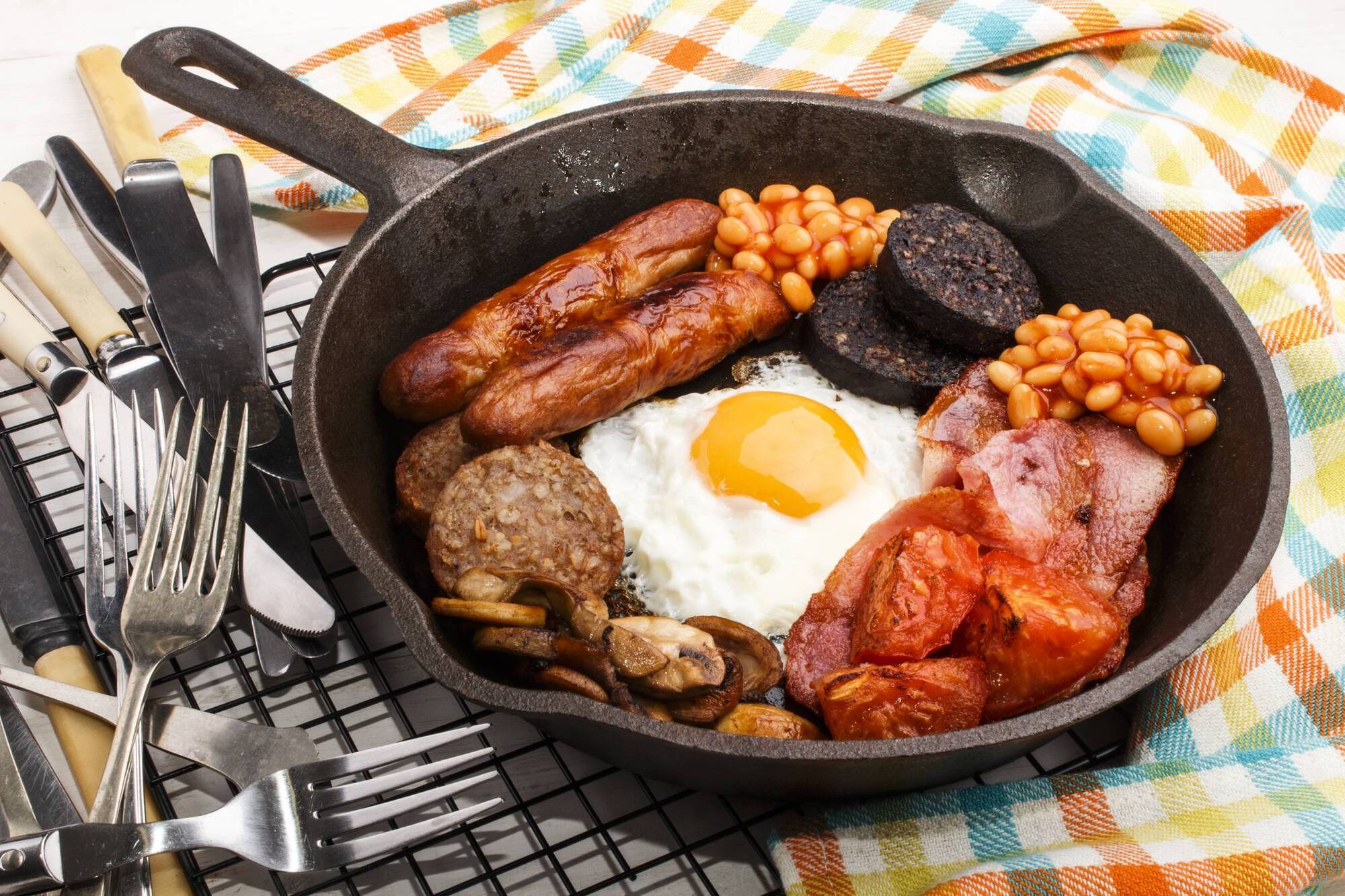
Has our national culinary treasure that is the full Irish breakfast been left sitting on the sustainability back burner?
It was the full Irish experience. Growing up in East Cork, one of my simplest pleasures as a youngster was feeding the neighbours’ sow and her squeal of banbhs, who lived the rustic good life in a sty across the bóithrín. Thirty years on, I’ve hardly seen a pig since. Truth is, while Ireland’s beef and lamb industry enjoys an open-air lifestyle by default, it’s remarkably less so with pork. And, despite folksy advertising campaigns of beardy hipsters traversing lush hillsides to hail the versatility of ham, it’s rare you’ll ever see an oinker foraging in their wake. So, as our eating preferences shift towards the slow food movement in Ireland, the question arises: Has our national culinary treasure that is the full Irish breakfast been left sitting on the sustainability back burner?
To get a better understanding of our beloved bricfeasta, this week I chatted to food historian Regina Sexton, who is also the programme manager for the postgraduate diploma in Irish Food Culture at UCC.
“The history of the full Irish was really framed in the legacy of the aspirational, big house breakfast,” she tells me.
“This came to the fore with the emergence of tourism in the 1960s, where B&Bs striving to get off the ground, offered visitors an experience of enjoying a top-heavy plate which was almost a representation of the farm they were staying on. You had this rural formula of eggs, rashers, sausages, puddings — and maybe a tomato, that’s debatable — but all centred around an animal of huge historical importance, the pig.”
The irony, however, is while Ireland’s tourism identity was rooted in a homely product, the food industry back then was accelerating beyond it.
CLIMATE & SUSTAINABILITY HUB
“Irish agriculture was moving towards increased productivity at this time, so collecting your own eggs or curing your own rashers was almost a sign of underdevelopment,” explains Regina. “Nowadays, that’s very much changed and the traditional breakfast is facing competition as people align to alternative food systems. The big issue is the fact that you no longer see pigs out in the field — they're gone,” she adds.
“So you’ve questions of husbandry surrounding animals: How is the pig reared? On what scale? Is it free-range? Is it naturally cured? That all means that alongside the taste of the product, there’s very much a local, small-scale mantra nowadays, where those aspects are forming the criteria of what makes a quality breakfast. Last but not least, of course, you’ve the question of whether the product we’re eating is actually Irish.”
That offered food for thought. And, according to pig farmer and member of the IFA's National Pig & Pigmeat committee, Shane McAuliffe: “The IFA would estimate, based on the recent years of DNA sampling, that approximately 50% of the 'full Irish' breakfasts served in hotels are not indeed Irish."
“Many of the larger hotel chains do not commit to buying Irish, while some do. Many hotels also perceive using a local supplier as 'buying local' while the product may not be Irish pork,” he adds.
“My advice to consumers is to always look out for the Bord Bia Quality Assurance logo, and when eating in a restaurant or hotel, to ask if the pork or bacon is coming from a Bord Bia approved supplier.”
As for my observations about the lack of pigs in those Irish pastures nowadays, Shane points out the difference in nature, if you will, of pig farming: “All commercial Irish pig farms are Bord Bia approved, which signifies that pork has been produced to the highest standard and is Irish. There are also strict standards around animal health and welfare, food safety, and care for the environment."
“Pigs are a completely different animal to the likes of cows, and that is why in Ireland, like most other places around the world, they are reared indoors, in a controlled environment where they are healthier because they are protected against soil-borne and wind-borne pathogens — and any pathogens carried by wildlife is also eliminated. Mortality rates are lower in an indoor system compared to outdoor systems," he explains.
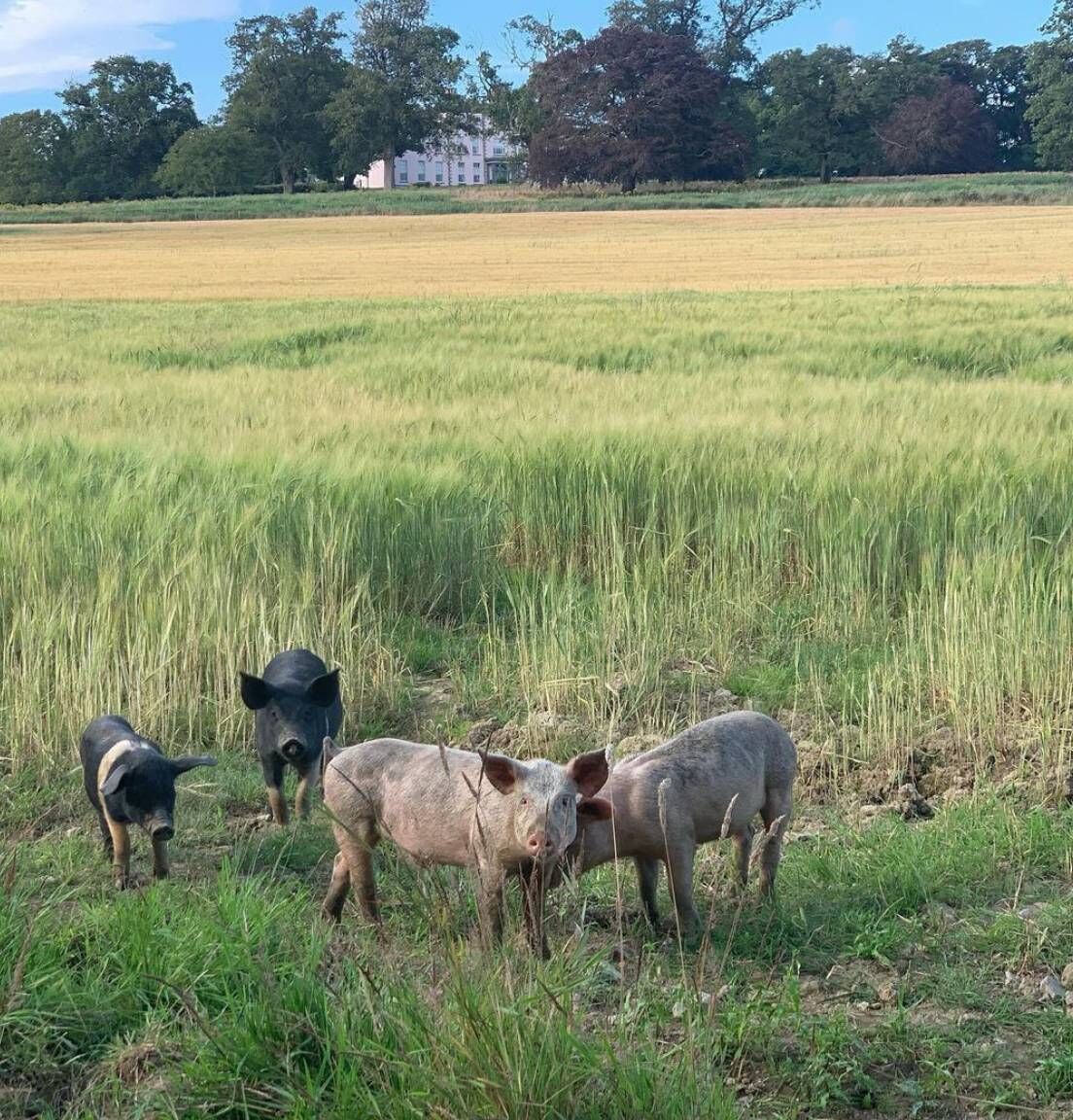
In fact, with pork being so notoriously pricey and laborious to produce al fresco, few Irish accommodations actually offer a wholly free-range full Irish (beyond eggs, of course). Longueville House in North Cork, founding member of Ireland’s Blue Book collection, and a long-time pioneer of the slow food movement, comes close.
“From my own father, to his father before him, we’ve always kept pigs,” explains owner, William O’Callaghan.
“I started when I was given a black sow: She had a litter, dug a big nest, and it went from there,” he adds.
“The pigs are great to manage the woodlands here, from tearing out briars to keeping the young oak plantations clean — they even feed off the acorns too.”
When slaughtered, Longueville’s pork is brined in water, salt, cider, herbs, and spices to create their distinctive free-range pork. “We don’t offer a full Irish as I find them a bit tiresome and you often don’t know where it’s coming from, so for breakfast, we offer dishes liked our sliced woodland ham with poached free-range eggs and wilted spinach. It all created from ingredients right here and there’s always a great response from our guests.”
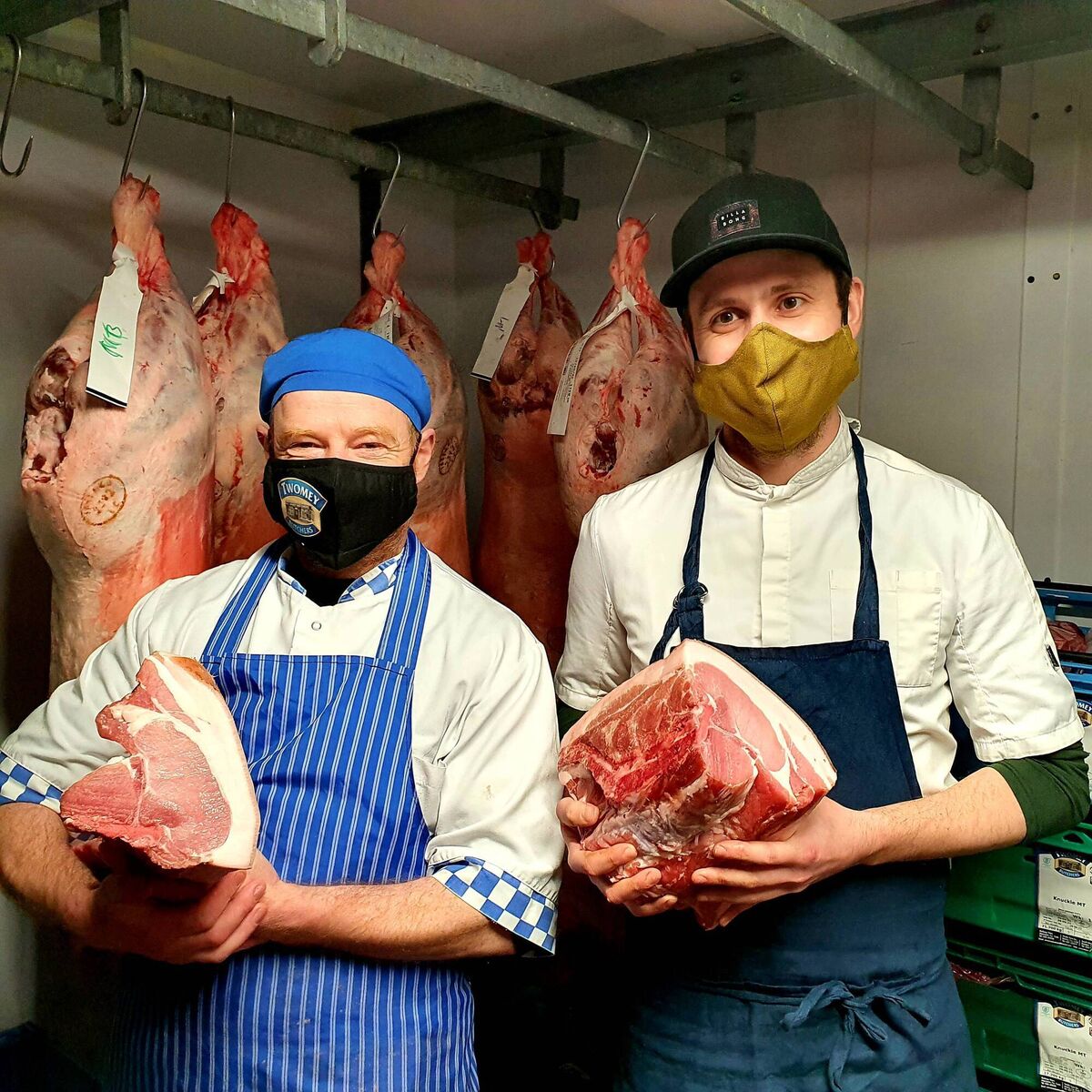
Down the road in Macroom, Ballymaloe-trained Jack Buckley, chef and manager at the Castle Hotel, also works a strong ethos of sustainability. Like scores of accommodations across the country, he’s sourcing from small-scale, Irish craft producers, which brings a quality — and a story to the table.
“When I joined here over four years ago, I wanted to get to know and befriend every producer and be in a position to tell a story about every single product. I think that's what makes us unique,” he says.
“We’re proud that all of our breakfast ingredients are sourced within a short spin from our door, from Gubbeen farm and Tim and Jack McCarthy Butchers in Kanturk, to Macroom oatmeal porridge from Donal Creedon's nearby mill,” he explains. “We’re working on a free-range pork breakfast with our butcher, Mike Twomey, who supplies us with free-range West Cork pork for all of our other menus, too.”
But while sustainability is perhaps very much a buzz word in the media — and on social media — right now, it may not always be a bread-and-butter issue when it comes to bookings, as Jack explains. “At the Castle, we cater for a wide range of guests, from construction workers, who are keeping us afloat right now, to our international visitors, to our newly-established staycation market. To be honest, I think about 5% of guests seek out the sustainability angle, but for me, exceeding the expectations of those 5% is what makes it all worth it.”
Just last month, Fáilte Ireland launched a new breakfast toolkit to offer hoteliers ideas “to innovate breakfast for a new era”. Tips include offering smaller, but higher quality, meat portions, and suggesting making use of abundant seasonal dishes such as tasty potato hash or pan-fried field mushrooms. It’s clear our breakfast palette is diversifying but it’s worth highlighting the pitfalls of planting all our menu greenwashing on greens themselves.
“Large-scale pork production is problematic from an environmental, health, and ethical standpoint,” adds Regina Sexton.
“But you also have a hornet's nest of complexities when you think of meat alternatives. Ethical principles in many instances are undermined by options, like soya, whose production is also problematic.”
So, amid the quagmire of sustainability issues, looking to the future, the full Irish breakfast may well flourish albeit with an increasingly local flavour. With good, fresh, local ingredients that spin a more appetising scéal. For, while what many of us would consider ethical practices may not always be sustainable, you can surely argue that sustainable will always be ethical.
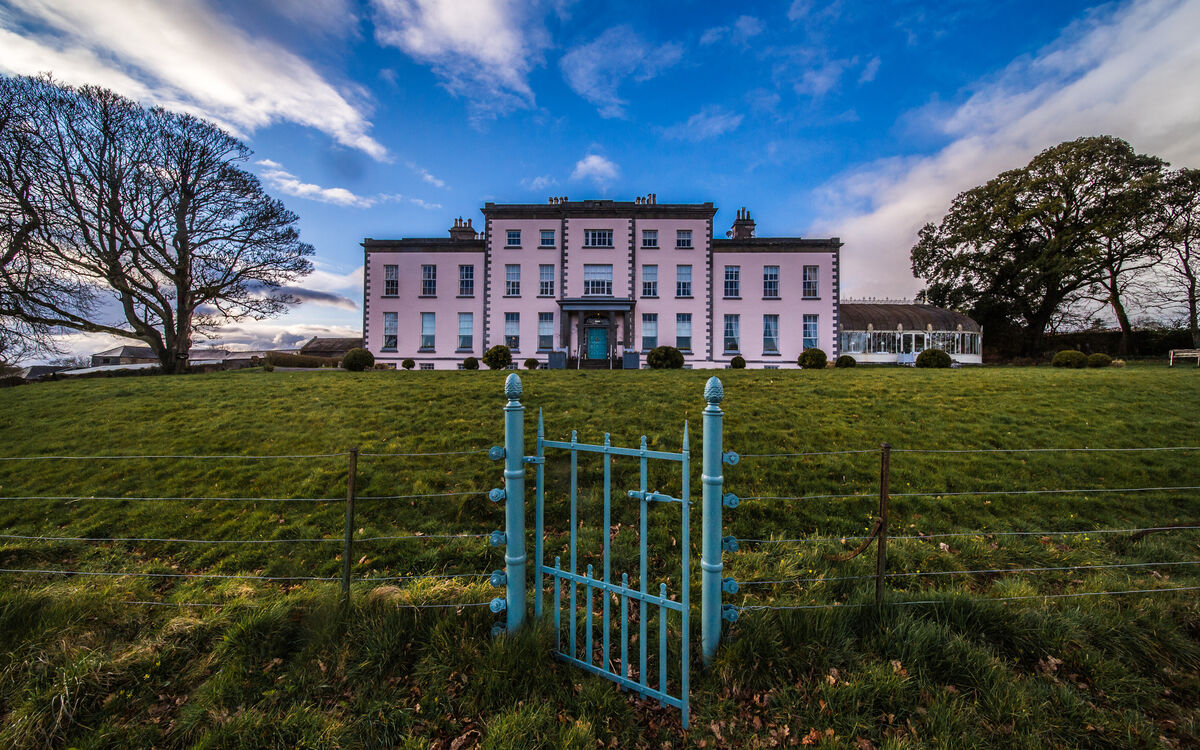
Longueville House (longuevillehouse.ie) was one of my highlight stays of 2020. Rates here start from €330 per couple which includes that free-range breakfast, dinner, and complimentary afternoon tea. If you're looking for a dream reunion of family or friends, Longueville House is available for exclusive private hire/takeover from €1,800 per night (sleeps 18) while their gorgeous self-catering Courtyard Mews is available from €550 per night (sleeps 10). Minimum stays apply.
In Macroom, the Castle Hotel (castlehotel.ie) makes a great gateway to discover West Cork and beyond with rates, including their delicious country breakfast, from €120 per night. Bon appétit!
CONNECT WITH US TODAY



Be the first to know the latest news and updates