Discovering the hidden gems on Cork's doorstep
When Joe O’Shea returned to his native Cork after decades abroad, he was blown away by the hidden treasures he discovered right on his doorstep.

Discovering the hidden gems on Cork's doorstep

When Joe O’Shea returned to his native Cork after decades abroad, he was blown away by the hidden treasures he discovered right on his doorstep.

There's nothing quite like looking at a place with fresh eyes, especially if it’s your own native place and you have been away for decades.

If that region is as large, as varied and as characterful as Cork, coming home with a new perspective and the urge to explore can reveal hidden gems which are often overlooked by the locals.

Having left Cork city in my teens, for Dublin and more recently London, coming home to live on Leeside for the first time in decades has been strange and stimulating. So much is familiar and yet unfamiliar.

Living back in the Barrack Street area, I pass my old primary school most days. What was Sullivan’s Quay CBS is now a bar complex with a big beer-garden and on the weekends, my old school playground is packed with sports fans enjoying a pint and the hurling or football in front of a TV screen the size of a gable end of a house.

It’s a strange sight, watching lounge girls deliver trays of pizzas and pints in a place where the Brothers would sting your hand with the leather on freezing mornings.

The city seems balanced between rapid growth and slow decay. St Luke’s and Montenotte are once again fashionable, but old haunts like the North Main Street feel half-abandoned. Further out from the city, west Cork retains its international glamour, but east Cork has a new story, with a thriving food culture and fresh life in half-forgotten old places like Ballycotton and Youghal.

Working and writing a lot in the areas of food culture, travel and tourism, I’ve trekked across the county in the year and a bit since we have been back. I’ve discovered some real hidden gems and people doing all sorts of amazing things with food, drink and what we now call “visitor experiences”.

However, I’m constantly amazed at how unfamiliar these places and people are to the natives of Cork. I’ll mention an amazing place for food or to visit and four out of five Leesiders will shake their heads or say, “Oh yeah, I think a guy in work might have mentioned that place.”

Cork people have historically been accused of making too much of their city and county, as if the ‘Rebel County’ is basically the South Of France, Venice and the Rocky Mountains all rolled into one big red and white package. But for me, we don’t know or say enough about what we have.

In a bid to redress the balance, I’ll share some of my favourites of Cork’s hidden gems, big and bijoux. Places and experiences I’d always recommend to friends. I could give you one hundred, I’ll limit myself to eight.

And they are:

Deasy’s Harbour Bar

West Cork has an amazing concentration of what we now call gastropubs. There’s Poacher’s Inn in Bandon, Hayes’ in Glandore, Castletownshend’s Mary Ann’s and my own favourite, Deasy’s of Ring — just outside Clonakilty.

At Deasy’s, Chef Caitlin Ruth takes local produce from field and sea, adds some exotics and creates amazing dishes in what is — and I mean this as a compliment — a classic, shabby west Cork harbour pub.

Deasy’s, lauded in every guide going and a magnet for foodies from all over the world, is pure west Cork. The chef is from New England, the spices and coconuts from Thailand, the main ingredients from local fields and waters.

Put them together in an old pub on a tiny harbour wall and you have got something special. It’s about a 50-minute drive from Cork city centre. And you’d be well advised to make it.

Currach rowingon the Lee

Every Saturday morning, anybody who wants to can jump into a traditional Irish currach (built in Cork) and row up the river from Shandon Boat Club to see the city from the very best vantage point, our epic river.

For just €10, you get some basic tuition, a life-jacket and the chance to join a team taking a wood and hide boat out onto the river. It’s a fantastic, unique way to see the city, meet new people and try your hand at powering a craft that’s almost as old as the idea of Ireland itself.

The views, of the city, the upper harbour, our open docks and the great houses on the steep hills around Montenotte, are fabulous. The pace is slow and there’s always a stop for a cup of coffee and a chat with your fellow adventurers.

This is an easy, fun and cheap way to have a unique Cork city experience. As they say themselves, you don’t need any experience in a boat, just a sense of adventure and humour.

For more details, go to the Naomhóga Chorcaí Public Rowing website (www.naomhogachorcai.com/public-rowing.html).

Kanturk Castle & McCarthy’s Butchers

Cork is, as the locals might tell you, lousy with castles. Blarney has, of course, the most famous, but in the ancient north Cork town of Kanturk, there’s one of the most unusual and perhaps under-visited castles in the country.

It’s a great example of a late 16th century fortified Chieftain’s stronghold, a house that was built (in the Tudor style) for living and entertaining as well as for keeping the neighbours out. Kanturk has a unique history in Ireland. Built for his Gaelic Lordship McDonagh-McCarthy but never finished due to the intervention of Queen Elizabeth I, it had a troubled history before being placed in the hands of Britain’s National Trust in 1907.

The castle stayed with the Trust — despite Irish independence — until it was finally handed over to the Irish people (with President Mary McAleese accepting the keys) in 2000.

It took an act of Parliament in Westminster for the property to be transferred. Today, you can visit Kanturk Castle, and if you do, make sure to drop by McCarthy’s Butchers, the town’s famous, multi-award winning family butchers that produces some amazing cured meats, black and white puddings (some claim they are the best in the county) and even hampers to take away.

In a county with many fine artisan food producers, McCarthys, in business since 1892, are something special.

Camden Fort Meagher

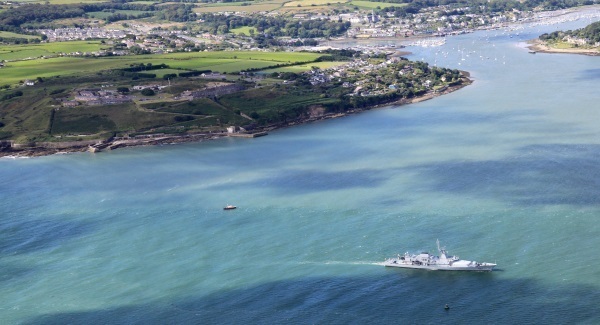
Spike Island (rightly) has been getting all the international plaudits. But on a cliff above the harbour in Crosshaven, you’ll find its sister-fort —- one of the most awesome feats of military engineering to be seen anywhere on these islands — the fearsome (and mostly hidden) fortifications of Camden Fort Meagher.

There have been fortifications on this strategic point guarding Cork’s epic harbour for more than 400 years. But it was the Victorians who built what has been called “one of the finest remaining examples of a classical Coastal Artillery Fort in the world”.

As kids on holidays in “Crosser”, we would climb into the fort and explore its complex of underground tunnels, hidden gun emplacements and bizarre torpedo tubes (some of the earliest examples in the world).

Today, after the heroic work of local volunteers, this amazing fort is open to visitors again. It commands majestic views, has amazing wildlife and stands as an epic memorial of Cork’s importance to the British Navy and Empire.

Just 40 minutes or so from the city, Camden is a must see in Cork.

L’Escale — French Fish & Chips On The Pier

In Schull Leesiders may be unique in harbouring violent loyalties when it comes to Fish ’n’ Chips. In the city — you’re either a Lennox’s or KC’s family (imagine the Montagues and Capulets except with battered cod).

But in west Cork, on the pier below the gorgeous village of Schull, you’ll find L’Escale, where a French family have been serving up fishy delights like battered Monkfish and Langoustine and Chips for more than a decade.

They also have very decent wine. There are few better accompaniments to a lazy summer evening watching the sun go down over Roaring Water Bay.

After L’Escale, you might want to visit Hackett’s Pub on the main street in Schull — tiny, eccentric, one of the best small pubs in west Cork

(and they also do great soup and sandwiches).

Callanan’s Bar — The quintessential Cork pub

I’m a great fan of what I call Survivor Pubs, traditional boozers that somehow escaped the ravages of modernisation in the ’60s and ’70s. Cork City has some amazing old pubs, like the Castle Inn on the North Main Street, Henchy’s in St Luke’s or the gorgeous Abbey Tavern in the shadow of St Fin Barre’s Cathedral.

But if I had to pick one, it would be the very homely, the very tiny Callanan’s Bar on George’s Quay, right in the city centre.

This is, for me, one of Cork’s national treasures, a traditional Leeside bar that retains that ’50s aroma of Flypaper, Beamish and Brylcreem (Proust may keep his madeleines).

It’s a very friendly, cosmopolitan kind of place, with a snug so tiny, you’ll need a shoe-horn to get into it. Still family run, with a ring-board, card nights and no TV, Callanan’s is just quintessentially Cork in all its rickety-table, plank-panelled glory.

Iyers and Miyazaki — Cork’s twin stars of take-out

While living and working in London, I met the CEO of one of the biggest catering concerns in the UK, a man who really knew his food and the international food business.

On hearing I was from Cork he immediately started rhapsodising about two little Leeside café/take-outs — Iyers and Miyazaki. He couldn’t stop talking about them. And this guy was just back from opening a five-star restaurant in Singapore.

Of the two, the little Japanese street-food café and take-out at the bottom of Barrack Street is perhaps the best known right now, thanks to chef Takeshi Miyazaki’s recent opening of his new restaurant, Ichigo Ichie, on Fenn’s Quay in the city centre. However, his original Cork venture, Miyazaki, is still drawing people from all over to patiently queue for one of the six seats inside, or take away some amazing Japanese dishes, at lunchtime or in the evening.

Across the city on Pope’s Quay (just below Shandon), you will find Iyers, a tiny café that offers incredible southern Indian vegetarian food — all made from scratch by chef Gautham Iyer (a former aeronautical engineer) to an adoring and loyal clientele.

I am constantly amazed by the number of Cork people — who will often claim to be “foodies” who haven’t even heard of one or both of these amazing little cafes.

I don’t say that in judgment or the spirit of one-upmanship — I just feel sorry for anybody who lives in or has visited Cork and has not tried either. If you haven’t yourself, make good on that as soon as possible.

The Workshop — Tea, Cakes and Curios At the End of the Runway

The Workshop, hidden away on a country boreen at the end of the main runway of Cork airport, is one of the most characterful, fun and intriguing places to have weekend brunch, tea and cake or a light lunch in Cork.

Run by two brothers, they have taken their dad’s old wood-working shed and turned into a combination of country café and antique shop.

The food is top quality, the tables are surrounded by shelves and walls of curious and antiques, all for sale and reasonably priced, anything from old delph and tea sets to oil paintings and upcycled furniture.

The workshop is just 20 minutes from the city centre and a great, fun place to visit at the weekend, a real little gem and right on our doorstep.

Just go past the airport and look for the signs or check out theworkshopcork.com.

More in this section

Lifestyle

Newsletter

Eat better, live well and stay inspired with the Irish Examiner’s food, health, entertainment, travel and lifestyle coverage. Delivered to your inbox every Friday morning.

Cookie Policy Privacy Policy Brand Safety FAQ Help Contact Us Terms and Conditions

© Examiner Echo Group Limited