Is Google better than a guide book and phrase book?
We stood on a hilltop in Rome: a group of journalists from around Europe gathered in the Eternal City to see how it can look through the eyes of Google applications.

Is Google better than a guide book and phrase book?

Below us, the Italian capital buzzed with life.

It looked dream-like in the late autumn sunshine, with its dizzying myriad of architectural jewels from every era in history.

I’m a little bit wary of gadgetry and the omnipresence of the internet.

Maybe it’s my age, but I pine for the world before this one, when navigating involved bringing along your trusty guide book and maps and engaging with people to ask for directions using a mixture of hand signals and random words from a phrase book.

With Google apps , you need never ask for directions.

You simply can’t get lost.

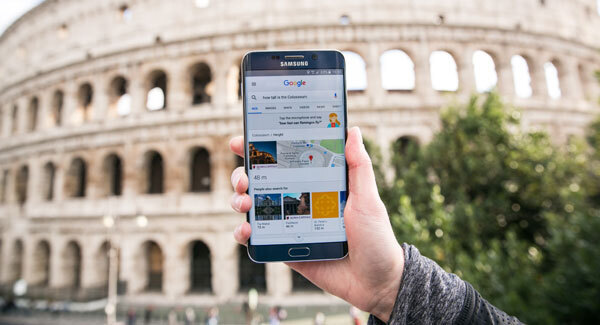
You can just stand in a square anywhere in any city and, by saying the magic words “Okay Google, what is this building?” into your smartphone, you will get an up-to-date comprehensive historical on it.

With Google apps, you don’t need a guide book to find where the nearest local bakery is, where the nearest butcher’s shop, pub or supermarket is.

Then, when you’re in such an establishment, you don’t need to worry about communication difficulties because you can use Google Translate to burst through the language barrier by translating your question from English to Italian and then translating the rapidly-spoken answer from Italian back to English.

You can even hover the smartphone over a shop sign or a lunch menu and it magically translates it on the screen before your eyes.

The first day of the tour involved driving around the city in tiny electric cars — so small that they made the Smart Car look like a limousine.

They were also worryingly light.

I had driven in Roman traffic before and I wouldn’t have given these little golf buggies much chance of survival.

We were paired up and I was the designated driver in my car.

It wasn’t great over the cobblestones.

My bones got a bit rattled and it felt like the little car might tip over every time we went into a pothole.

However, after those first few nervous seconds, it felt like the ultimate plan for getting around Rome, whether it was driving right up to the Trevi Fountain or the Colosseum.

The top speed was around 45kph but you could drive them almost anywhere.

Also, the notoriously fearless and ruthless Roman drivers seemed to be genuinely apprehensive of our strange vehicle (maybe they thought they’d knock us over if they even touched us) and tended to give us a wide berth.

Although you normally follow a set route when you hire these cars, our Google hosts had designed an interesting treasure hunt for us, with a series of cards on which were printed tasks to make the most use out of Google apps on our phones.

“Go to the nearest icecream shop and order your favourite flavour in Italian using Google translate” or “where did the Ancient Romans hold their chariot races?”

It was a really fun curiosity- inspired way of exploring the city and you could park up virtually anywhere, safe in the knowledge that even the most desperate thief wouldn’t be tempted to steal your car.

The whole thing became so enjoyable, in fact, that we completed very few of the tasks at hand.

The route to find the various sights that were sent to our Google Maps to find brought us to some of the most beautiful parts of this endlessly impressive city.

Cruising along above Piazza del Popolo was a highlight for me.

The next day, we were up early to get to Piazza Camp de’ Fiori where we met entertaining celebrity chef Fabio Bongianni.

With laconic Roman humour, he began by getting us to first find a bakery using Ask Google and then using Google Translate to order the things required.

He then brought us back to his Cookery School on the Isola Tiberina, taking us through the old Jewish ghetto of Rome en route and pointing out various fascinating sights along the way, finally crossing the oldest bridge in Rome (did you know that it dates back to 62BC? Google told me that), the Ponte Fabricio.

We also had a lecture on using Google Maps from one of the first people to get involved in the very comprehensive and mammoth task of mapping the entire world that Google is seemingly intent on doing.

It was very useful from a practical point of view, with plenty of tips to show how to get the most out of the online navigation system.

It was also interesting to hear from someone who invented the notion of mapping.

There were other younger members of the Google team who couldn’t actually remember a time when Google Maps didn’t exist.

Overall, I’d have to say that the Google apps were wonderful travelling companions that helped enhance the experience.

Even from the time you begin your journey, Google apps are already assisting in letting you know very useful stuff that makes it easier — reminding that you should leave now to get to the airport; informing you how long it will take you to walk from Terminal 2 to Terminal 5 in Heathrow and even telling you which gate your plane will depart from.

It does have suggestions on where to go out to eat or what to see or any number of other things, but I have a problem in trusting the reviews that are submitted in an unfiltered fashion by a variety of people.

I’d like a bit more expert guidance but then there are no better experts on this kind of thing than the locals.

And Google Translate makes it easy to communicate with locals.

The Maps is probably the most impressive app of all.

Roaming data charges have become cheap nowadays (around €2.40 a day, depending on your provider), but you can also download maps of a particular city before you go there if you wanted to avoid paying data roaming charges and still use Maps.

What it gives you is the freedom to wander around a strange city, always confident in the knowledge that you can dig out the phone again at any point and it will let you know where you are and how to get back to your hotel either on foot or by public transport.

So is Google better than a guide book and phrase book?

Yes and no.

Yes because it can do an awful lot packed into a really light device that sits in your pocket.

Then again, you’re stuck with a piece of technology and denied the pleasure of a more relaxing read.

A well-written guide book will, I believe, guide you better through a city in selecting the right choices for eating out and things not to miss.

Overall verdict?

For going out and about and engaging intimately with a city, Google is superb.

For getting the more in-depth strategic guide to a place, bring the guide book and consult it in peace and quiet of your hotel room, then leave it there for the roam around town.

GETTING THERE

FLIGHTS

Aer Lingus (www.aerlingus.com) flies daily from Dublin to Rome Fiumicino.

STAYING THERE

We stayed at the 4-star Leon’s Place on Via XX Settembre (Tel +39 390 689 0871, www.leonsplacehotel.it) close to the British embassy. It’s an 18th century grand palazzo that has been entirely refurbished and fleshed out inside in stunning contemporary design that loses none of the grandeur but adds lots of fun.

GETTING AROUND

The electric cars were a fun and efficient way of getting around Rome. Rates start at €35 for a two-hour tour and the same company also rents classic Vespa mopeds for the slightly more adventurous. For further information: www.buzz4tours.com

x

More in this section

Lifestyle

Newsletter

The best food, health, entertainment and lifestyle content from the Irish Examiner, direct to your inbox.

Cookie Policy Privacy Policy Brand Safety FAQ Help Contact Us Terms and Conditions

© Examiner Echo Group Limited