Enjoy the northern lights of Glasgow
THE biggest challenge awaiting visitors to the Turner Prize exhibition in Glasgow is distinguishing between what is art and what is merely part of the furniture. In one room are set a series of plastic chairs with fur coats stitched to the backs.
In another, four flickering screens squat on a table, next to a photocopier.
Both arrangements are, it transpires, finalists for the 2015 Turner — the British visual art prize that became simultaneously famous and notorious when awarded to Tracy Emin and her unkempt bed in 1999.
A fire extinguisher in a corner of the gallery, on the other hand, turns out to be merely a fire extinguisher — which will surely come as news to the chap looming over it taking pictures.
Hosting the Turner — the four finalists can be seen at the minimalist Tramway Gallery (25 Albert Dr, tramway.org) until mid January — is a big deal for Glasgow.
With its traditional industries in long-term decline — all but extinct in the case of shipbuilding — the city is working hard to find a new raison d’être.
Avant-garde art is an important component of this reinvention.
Indeed, with the Glasgow School Of Art (167 Renfrew St, gsa.ac.uk) supplying an outsize percentage of Turner winners — four in the past 10 years — and creative spaces popping up in former factories, the city is pushing London for the title of modern art capital of the UK.
There are artist studios under motorways, in old whiskey warehouses — anywhere with cat-swinging room and cheap rent is ripe for reinvention.
Still, the old grittiness endures alongside this influx of new ideas.
The tension between the opposing forces of modernisation and rust-belt decline is made clear as you take a walking tour of Glasgow, such as that offered by the School of Art.
Pausing to admire suburban graffiti outside a small park or to inspect the art deco exterior of the Glasgow Film Theatre (167 Renfrew St, glasgowfilm.org) it becomes apparent that this is a city of contrasts, in which post industrial bleakness and a new optimism circle one another uneasily.
That is also the impression created as you negotiate Argyle Street, a rugged half mile of prime retail space where trendy burrito restaurants coexist with old pie shops and people in business suits sip coffees shoulder to shoulder with pint-swigging men in Glasgow Celtic soccer jerseys.
Here, you can visit an art gallery such as Veneer (1184 Argyle Street,veneergalleryglasgow.com), peruse the usual British main street stores or descend to the city’s small but perfectly formed underground — a 10.5 kilometer loop fondly referred to as the Clockwork Orange.
Before you laugh, consider that, in making a full circuit of the city, it trumps Dublin’s disjointed Luas.
In Glasgow they see parallels between the city’s ongoing gentrification and the Irish capital’s reinvention across recent decades.
In truth, the Celtic metropolises differ profoundly. To begin with, Glasgow is proudly unpretentious — on my visit I was told that citizens were perfectly happy that their town lacked a Michelin star restaurant.
Ostentation would not set well with Glasgow’s perceptions of itself — a bashfulness from which Dublin does not suffer.
Furthermore, the influx of a new creative class of artists, musicians, DJs, etc, has conspicuously failed to rob Glasgow of its traditional spit and sawdust character.
This is obvious as you visit the supposedly trendy Sauchiehall Street area.
In a window seat at Ox and Finch, a new opening specialising in tapas-style mini dishes (920 Sauchiehall Street,oxandfinch.com), you can’t help noticing the lack of hipsters, with their annoying hair and stupid fixed-gear bikes.
N DUBLIN or London, the “craft beard” set would surely be swarming.
In Glasgow, the absence of pretension is striking, with the lunchtime crowd matter-of-factly chomping down tartare of roe deer, braised ox cheek and roast skate wing.
The truth is that Glasgow’s contemporary charms are indelibly linked to its gritty past.
This remains a Victorian city, its grand, grey boulevards attesting to the wealth that flowed through its veins when it was an industrial hub of late 19th century Britain.
Nowhere is this faded grandeur more in evidence than Kelvingrove Art Gallery and Museum (Argyle Street, glasgowlife.org.uk), a hulking gothic pile that dominates the West Side and houses a diverse selection of exhibitions.
Simultaneously an art space and museum it says something for Kelvingrove’s higgledly piggeldy appeal that it is home both to Salvador Dali’s famed Christ of Saint John of the Cross and a Spitfire fighter-plane hanging over a stuffed African elephant.
There is also an ante-chamber crammed with swords, a replica of the skull of highland rebel Robert the Bruce and a basement area that has hosted Dr Who and Victorian fashion exhibits. That, surely, is the dictionary definition of eclectic.
Internationally, Scotland is arguably most famous for its whisky (though the resurgence of Irish whiskey may soon call into question its claim to be market leader).
As with coffee and beer, whisky has attracted a new generation of connoisseurs, who treasure the specialist single malt as the purist manifestation of the distiller’s art.
An introduction to whisky might be regarded as surplus to requirements by the Irish visitor.
Still, it’s amazing how perspectives and preferences can contrast between the two countries and, to that end, it’s worth checking tasting sessions such as those offered at the Good Spirits Company (23 Bath Street, thegoodspiritsco.com).
In a special tasting room, you can gain first hand understanding of the difference between single and blended malts — and the ways in which peat flavored whiskey stands apart those distilled by more traditional methods.
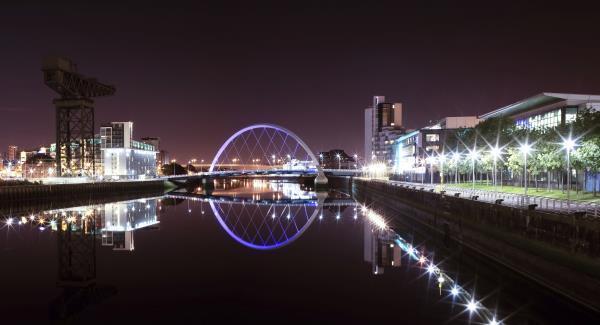
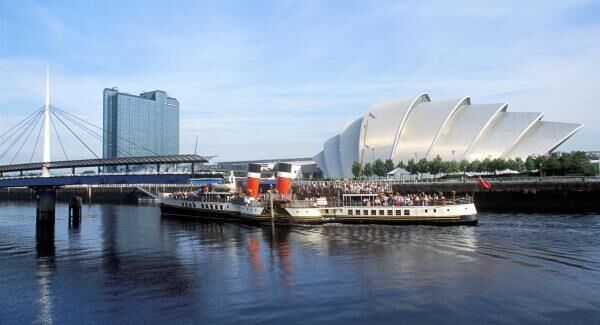
Back at the Turner, the post-industrial landscape outside the exhibition centre echoes the stark eloquence of the exhibitions within.
A double-lane elevated section of motorway that crosses close-by seems to offer its own commentary on Glasgow — a city that will never be mistaken for beautiful but, after its own, severe fashion, is deeply beguiling.
CONNECT WITH US TODAY



Be the first to know the latest news and updates