Great taste destinations across the world
From breadth and variety of food to budget range, New York has it every which way but loose, and while we’re loath to define any city by its food, it’s fair enough to say that natives and visitors alike go for one of two options — fine dining and pizza. That there is a multitude of each goes without saying — here, however, are our two current favourites.

Dirty French is a sharply executed twist on the French brasserie; classic dishes here receive a right good seeing to, as the menu’s duck a l’orange, served with Moroccan spices, testifies. Ludlow Hotel, 180 Ludlow Street, East Houston Street, Lower East Side; www.dirtyfrench.com

You want pizza? Try the rather stylish Marta, which reinvents cracker thin-crust pizzas.
How? Its vegetarian pizza boasts toppings of pickled chili, cauliflower and Brussels sprouts. Only in New York, eh? Martha Washington Hotel, 29E 29th Street; www.martamanhattan.com
It would be foolish to advise you to ignore the foodie cultures of Sweden and Denmark, but there’s little doubting that the restaurant/café scene in Helsinki has developed enough of an envious reputation in recent years to rival any other favoured international city.
Yes, it boasts its share of Michelin-starred restaurants, but coming up on the inside with perhaps more simplicity (and, by extension, less egotistical) are a wide range of community-oriented and ethically based eateries.

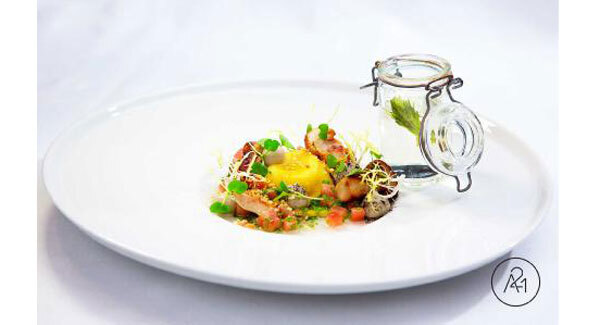
A21 Dining — experience a highly inventive (some might say literary) themed menu that is accompanied by a mood-setting introduction to each course.
Example: Baltic herring, fennel and birch accompanied by cucumber & rye cocktail. Kalevankatu 17; www.a21.fi
The second-largest island in the Mediterranean, the Sardinian coastal areas may have opened up to tourism, but the interior belongs to the natives, who remain bound to customs and food.
Typical Sardinian cooking uses many bean varieties, including fava, lupine, chickpeas and lentils.
Cheese is also used extensively in local cuisine, and is a steadfast ingredient in stews, soups, ravioli, and desserts such as pardule (baked buns of semolina with saffron) and sebadas (semolina, egg and cheese fritter).
Located in the centre of Olbia (Northeastern Sardinia), Dolceacqua blends native and Ligurian cuisine.
The restaurant’s menu is contemporary and innovative, and includes trenette al pesto, fresh fish, and desserts such as zabaglione (Italian custard made with egg yolk, sugar and sweet wine). Via Giacomo Pala 4; www.ristorantedolceacqua.com
Basque cuisine is sandwiched (so to speak) by produce from the sea on one side, and food from the Ebro valley on the other.
In other words, think an abundance of seafood and freshwater fish slipping and sliding with vegetables, legumes (dry fruit contained within a pod or shell) and cured meats.
Over the past 40 years, French novella cuisine has proven to be a strong, almost trenchant influence, and most good tapas bars, especially in San Sebastian and Bilbao, create contemporary-style pintxos with snazzy panache and interesting (read non-traditional) ingredients.
On the one hand, don’t bother — just bar hop. On the other (and why ever not?), head to Mandoya, located in the Old Quarter, which features a renowned Basque menu. C/El Perro, 3-5; www.restaurantmandoya.com
You’d think we’d choose Paris, wouldn’t you? Well, no, but only because in the country whose cuisine is regarded as the finest on the planet, one of its overlooked cities is viewed as its gastronomic centre.
Lyon’s cuisine is noted for its blend of simplicity and sheer quality, while Lyon itself has one of the highest concentrations of restaurants per capita in France — more than 1,000!
Bouchon Le Jura has apparently remained unchanged since it first opened in 1867, and over the past 40 years it has been overseen by the mother/son team of Brigitte and Benoit Josserand — Brigitte learned her cooking skills from her mother-in-law, who once created amazing dinners for the city’s wealthiest families. Benoit, meanwhile, is an assured chip off the block! 25 rue Tupin; www.bouchonlejura.fr
There is a certain degree of haughtiness about France and its notorious self-awareness about its reputation for quality food.
Italy, meanwhile, is a country that takes its food very seriously but there is a more down-to-earth approach.
And none more so than in Bologna, whose chamber of commerce has preserved centuries-old recipes that have become famous all over the world.
Specialties such as mortadella, tortellini and, naturally, Bolognese sauce are part and parcel of Bologna’s appeal. And where do you get the best Bolognese sauce? Simple…
Located in a tiny street All’Osteria Bottega is a small (25-seater) place that gently boasts about its slow-cooked ragu alla Bolognese.
It’s also renowned all over Italy (and beyond) for having the best cured meats (from Emilia Romagna) and perfect cotechino (similar to salami, but requires slow-cooking). Via Santa Caterina, 51; no website
That which fades away can return stronger and with more substance.
Such is the case with San Francisco, which has benefitted tremendously by an upsurge in culinary treats — since last year, the Bay Area boasts up to 40 Michelin-starred restaurants.
From the vendors at Ferry Building Marketplace to high-end restaurants, all tastes, flavours and likes are catered for.

Saison is defined by its translation from French — season.
This means that its evening menu changes on a daily basis as the chefs work to reflect change and evolution. And the dress code for this incredibly expensive 3-starred Michelin restaurant?
There isn’t one — if you’re paying almost $400 for its set multi-course tasting menu, they’d hardly insist on polished shoes, a smart jacket, a crisply ironed shirt and a bow-tie, would they? 178 Townsend Street; www.saisonsf.com
From silver service to sticky fingers, from establishments that define the zeitgeist to chefs that define food, from Michelin stars to affordable eats, London has it all:
Ember Yard is one of London’s new-style tapas bars — this place also utilises Italian food and cooking techniques (and its charcuterie and cheese platters are sectioned between the two geographical areas).
As for its bar snacks — they’re probably the best in Soho. 60 Berwick Street; emberyard.co.uk.
Fancy a burger/vodka fusion experience? Head to Little Water in Covent Garden — it matches food with a suitable vodka flavours (including coffee & orange, horseradish & honey, and charred rosemary)
Beat that, New York! 19 Catherine Street; www.littlewater.co.uk