SRI LANKA ... Enjoy the tranquility, while it lasts!
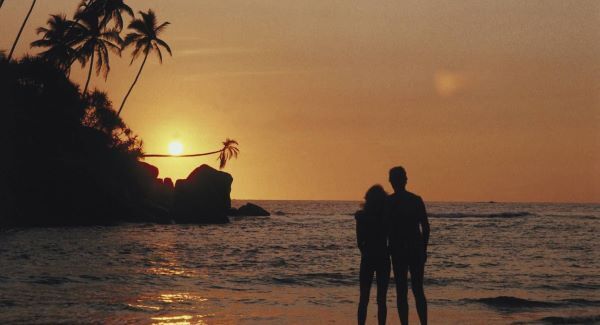
I felt like I’d found it — though the Portuguese probably have a stronger claim to that having docked here 500 years ago — so why should I share it?
Well, it’s simple, this place won’t be bypassed for long more at the rate it’s going, so take this advice — go now.

Drinking in the sights, wallowing in the sounds, and basking in the smells is what Sri Lanka is all about. The assault on your senses comes from all sides so when you step into the arrivals hall of Bandaranaike airport, you sure better be ready.
Expect to be offered ‘best price’ on just about everything.
Colombo, the capital, is like Las Vegas on speed so if that’s your thing, get amongst it.
A little less conversation is what I’m after.
Less of the turbulent and tumult; more of the tranquil and turquoise.
Step forward southern Sri Lanka and the 110km stretch of coastline from Galle (110km south of Colombo) to Tangalle. It’s not all beautiful, mind you — and the train journey down (less than 50c) will remind you of the tsunami that flung itself at the country to devastating effect just eight years ago.
Galle hasn’t forgotten that epochal nightmare and prepare to be approached with horror stories in broken English from locals at the chaotic rail and bus terminal. Many are probably genuine, sadly, because this place got it as bad as any other, and as hard as it is to wave them on, it’s probably for the best.
Having visited the country twice, I can say with authority that Galle Fort is my favourite place. The Dutch built the streets and buildings in the 17th century, the Sri Lankans added the colour and style, and today, the place has been recognised by Unesco as a world heritage site.
Big enough to walk in a day but small enough not to get lost in, the place is crammed full of boutique shops, outdoor cafés, art galleries, libraries, curry houses, guesthouses, and little wonder such a haunt has attracted painters and poets from all over.
But there’s an authenticity about the locals, too — they don’t haggle or hassle you in other words, and Pubudu was one such man I met while trying to decipher my way out of the place. He suggested accommodation, which, surprise surprise, is the ‘best I’ll get’, and a restaurant where I can buy ‘chicken like you get at home’.
That’s comforting, I muttered.
Funnily enough, he was true to his word and the New Old Dutch House where I bedded down for the night — so called because it was old when bought but restored to look like new; the owner almost falls out of his hammock with laughter when he describes this to me — was sparklingly clean and top value at €12.
One thing to note about Galle, however, is its complete absence of nightlife and after dark you won’t find a bar or even a whisper of noise. If you go to Mama’s Galle Fort Roof Cafe, though, you will get the most sensational curry — five different plates, a Lion beer to wash it back, for less than a tenner.
You’ll have the lighthouse towering over you and the sound of waves lashing off the rocks below.
The following day, I headed along the coast towards Mirissa.
You’ll have to zoom in at least eight times to find this place on Google Maps.
That journey was taken in one of the million tuk-tuks that bump and grind their way around the capillaries that make up the country’s road network. Three-wheeled motorised tin cartons of panic is the best way to describe them. Think the next model up from Fred Flintstone’s vehicle.
I was taken 45km (top speed 60km/h) to Mirissa for 1,200 rupees (€6) but we stopped first at a turtle hatchery to see five of the world’s seven species of hardbacks bob and duck around a giant concrete tank.
As exciting as that sounds, things soon cranked up when I was told a stick fisherman was waiting further along the coast in Weligama for me.
Great! Oh wait, isn’t that where locals are perched precariously on sticks as thin as themselves for hours on end, 200 yards from shore and catch anything with scales naive enough to bite? That’s the one.
“Grab that there,” smiles Neebraka as he wraps my head in a scarf.
He then places live bait in a plastic bag, tucks it inside the scarf, and hands me my rod. He senses my trepidation and smiles again, “no worry”. The last time I was here, in 2006, I was caught in a rip, almost drowned, and vowed never to get my big toe wet here again.
The plan now is to swim out to the stick in the middle foreground holding a rod in one hand above water, keeping your head above the water, too, because the bait will only fall out, and when you get to the stick, climb it, cling to it like a limpet and start hunting dinner while 7ft waves pummel from all sides. They won’t even be able to hear me when I scream for help.
Ten minutes later I feel a tug (gentle, I might add) and my work is done. Something that resembles a fish is snared and this excuse for adventure can end. I thrash wildly to get back to shore, helped by one big wave which spits me back on terra firma.
Mirissa is the next stop 20km further on. Here, the best advice is ‘forget about time’. Crack open a coconut, slip into a hammock, and rock the day away outside any one of the beachfront guesthouses that won’t cost you much more than the price of a happy meal.
It’s utter bliss. Sleepy, granted, but with enough going on to fill a day.
Go any time except for September and you can get a boat charter from any of the numerous tour operators who’ll take you whale watching. The waters off the south coast are home to the planet’s biggest creature, the blue whale, and a six-hour excursion with breakfast will cost you €40.
Sri Lanka continues to be a gem — a largely unspoilt island with some of the finest and most varied landscape on the globe.
Few places in the world can boast such diversity — culturally, geographically, biologically.
Matara, 10km further on, ticks the first box and though it owes nothing to tourism it’s still a cool hideout for a few days.
My last stop was in a place squirrelled away down a muddy dirt track called Talalla. This place, 5km beyond the country’s most southerly point (Dondra), was designed for sitting and being, not for doing.
To get there, I even had to pay a local; such was his insistence that the place remains a secret. And who’d blame him? A crescent-shaped beach of golden sand washed by lazy azure waters in the middle of nowhere is the epitome of those unspoilt tropical sandscape postcard clichés.
Through some sort of perverse irony, part of what preserved this charm over the past few decades up until now, in contrast to the rapid over-development that tourism has brought to, say, India or Thailand, was the ongoing internal conflict. That, however, is changing with peace having been restored in 2009. This is visible on the ground with the growing number of tourists I encountered. So, in many ways, there has never been a better time to visit Sri Lanka than now. Few people are going, hotels are offering exceptional rates and your safety is ensured.
But one more nugget of advice. Don’t try and cram too much in. With the roads congested and slow due to the endless twists and turns, getting around is still a major obstacle if you are time-pressed like I was.
For a two-week break you have to be selective. Though it’s smaller than Ireland, it has five times the population. But that’s a good thing, because you can go back again and again, right? Sit back and enjoy the ride!
In Galle you could easily spend a day ambling through the cobbled streets inside the fort. There are souvenir shops selling batiks and wood carvings, coffee shops, curry houses and book shops to get lost in. Take a sunset walk along the perimeter of the Dutch-built fort walls to witness this architectural work of art. Here you’ll see hotly contested cricket games below, stick fishermen, the bedlam of Galle rail and bus station and more than a few locals lazing about. In Mirissa you can rent surf boards, snorkelling gear, scooters, go fishing or whale-watching. Boats depart from the beach every morning in season. €30–40 for six hours.
Galle lags behind its capital for shopping but for those trinkets, you won’t beat the Dutch market on Main Street. Check out the Barefoot chain of shops in both Colombo and Galle. Embroidered goods that are hard to put back on the shelf.
Emirates fly daily to Colombo via Cork (or Dublin), London Heathrow and Dubai for around €872 per person return. Etihad Airways will get you there for around €100 cheaper and they fly daily via Cork (or Dublin), London Heathrow and Abu Dhabi but with a slightly longer connection time. Note the flight time in total is around 16-17 hours. Qatar Airways go daily via Doha from London Heathrow for €750.
Discover Travel (Part of the East Cork Travel Group) organise beach holidays and private tours of Sri Lanka and The Maldives. They can now offer flights from Cork, Dublin and Shannon via London to Sri Lanka with Sri Lankan airlines. www.discovertravel.ie or 1850 200544.
In Galle I stayed at the New Old Dutch House who claim to have the cleanest rooms in all of Sri Lanka. It didn’t disappoint. Perfectly situated inside the fort and the creaky, polished wooden floors, A/C, soft beds and courtyard out back give it an authentic feel. €12 a night will cover you. In Mirissa, the Coral Reef guesthouse at the far end of the beach is more than adequate. Hammocks, A/C, beachfront view, tasty breakfasts, excellent staff. €12 for a night is a steal.