Red Sea by day? Don’t delay
“Yep,” confirms his gran, with a giggle. “No more rain.”
Granny and grandson are two of hundreds of holidaymakers off the latest charter into the Egyptian resort of Sharm El Sheikh, and its baking 35-degree temperatures.
I’m another. Unable to take a full week off, but eager to see how Sharm is faring (during the 2011 uprising, hotel occupancy plummeted to 8%), I’d been able to book a dynamic package with lastminute.com, a global operator whose Irish site is licensed and bonded with CAR, and which promises savings of up to 30% on traditional packages.
The upside was flexibility to travel for four nights, with flights, hotels and transfers on the same ticket. The downside was a Gatwick connection. Either way, five hours total flying time from Ireland, dull weather is a distant memory. The plane descends over the Red Sea, its azure waters brushing against the arid desert landscape of the Sinai Peninsula.
No more rain, indeed.
I still plan on getting wet, of course. By 7.30am the following morning, I’m several metres below the surface of the Red Sea, staring a parrot fish in the face.
My hotel is the Stella di Mare in Na’ama Bay, a five-star offering half or full-board from a decent, if completely soulless, buffet. But you don’t come to Sharm for the food. Like many other resorts, the Stella di Mare fronts onto a house reef with gin-clear visibility and 25-degree waters. It takes 45 minutes of swimming before I’m even remotely cold.
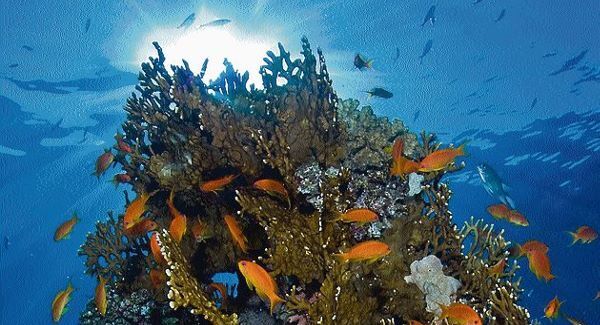
I love snorkelling — hanging there on the surface, watching a supermarket of fish flitting about the coral. There are literally thousands of species in the Red Sea, from clownfish and surgeonfish (think Nemo and Dory) right up to manta rays and whale sharks. Diving is big business here, and boats run daily to the marine national park of Ras Mohammad.
Even if you can’t swim, it’s worth pulling on a buoyancy aid and taking a look. Diving down, I find two lion fish lodged in a rocky outcrop. On another dive, a moray eel peers out like a pantomime villain. When I surface, sound and oxygen burst back into my senses. It’s like being in another world — if I had gills, I’d happily spend the entire holiday underwater.
Not that you have to snorkel or dive to enjoy the sea, of course — there are plenty of beaches (most hotels have private stretches of sand), and you can take tours in glass-bottomed boats, or pick and choose from watersports like paragliding and water-skiing.
In contrast to the water, Sharm hasn’t exactly been paradise on dry land. The former fishing village found itself under Israeli control from 1967 to 1982, suffered terrorist attacks in 2005, and was reportedly the spot where former President Hosni Mubarak fled during the 2011 uprising — a time when Egypt’s tourist industry was losing $1bn a month.
Despite all this, the message is clear: Sharm is open for business. “Why you Irish come no more?” asks a vendor in Na’ama Bay. Political uncertainty, a spate of shark attacks in 2010, and ongoing incidents on the Sinai Peninsula are three reasons I could have offered.
Whilst the Department of Foreign Affairs advises “extreme caution” when travelling outside the main resort areas, however, Sharm itself seems safe. Its tourism industry is a significant source of revenue for Egypt, and police checkpoints and gated resorts are standard.
“It’s a weird place, isn’t it?” says one British holidaymaker.
He has that right. Sharm is literally plonked at the edge of a desert. Arid mountains punch up around it. The Red Sea twinkles against its beaches. Between the two, you have a series of resort compounds — oases of greenery, palm trees and swimming pools — and the downtown areas of Old Sharm, Na’ama Bay and Shark’s Bay.
I bus into Na’ama Bay one evening, spending a couple of hours sifting through its surreal collection of shops (Lionel Richie No 1 Perfume Shop was my favourite). Soccer shirts, souvenir Sphinxes, carpets, handbags and spices compete for my custom. The sweet smell of shisha pipes wafts about; TVs and thumping music abound. On another trip, I spot a man riding a camel past a casino, chatting away happily into his mobile phone.
Moses might have parted the Red Sea, but I’d like to see him try Na’ama Bay’s main strip. Every bar and restaurant has a gregarious host urging you inside.
“My friend! How are you! I am happy now that I see you! Where you from? Germany? Russia? Hallo! Horosho! Wie geht’s? Welcome!”
Depending on your humour, the hustle can be frustrating, or great fun.
Escorted daytrips are also an option. You can travel to Mount Sinai, where Moses reputedly received the 10 Commandments, or St Catherine’s Monastery — believed to stand around the sight of the biblical burning bush. You can take camel rides in the desert, dine out in Bedouin tents, or take flying visits to Cairo or Luxor, departing in the wee hours and returning the same day.
Through all of this, and for all our complaints about Irish weather, the Sinai Peninsula can throw up stinging heat — averaging over 40 degrees in August. Sunbathing kicks off at 7.30am during peak season in Sharm El Sheikh.
Still though, sunshine is what you come on a package holiday for. That, and the water. Life begins at the water’s edge on the Sinai Peninsula, and when it comes to the Red Sea, the coral reefs I encounter knock the socks off anything in the Med. My highlight comes midway through the trip, when I’m in the water with a group of freedivers from the Only One Diving Centre in Sharm Club Resort. I’m sitting on the pontoon, watching the divers following their lines deep into the ocean, when a shout goes up: “Manta!”
It’s as if someone has shouted ‘ice-cream’ in a playground. I race to pull on my mask and fins, joining the shoals of divers as they kick down deep, chasing this beautiful creature.
Suddenly, I see it.
About 10m down, with the black-and-white colouring of a killer whale, the manta ray is gently moving its wings, dancing balletically in the blue.
It flips over, pirouettes and passes below me as it moves along the reef. I follow for as long as I can, until it becomes a ghostly image, and disappears completely.
No more rain, then. But so much more than sunshine.

CONNECT WITH US TODAY



Be the first to know the latest news and updates