'As a new refugee in Cork, I had to find purpose after my wife died'
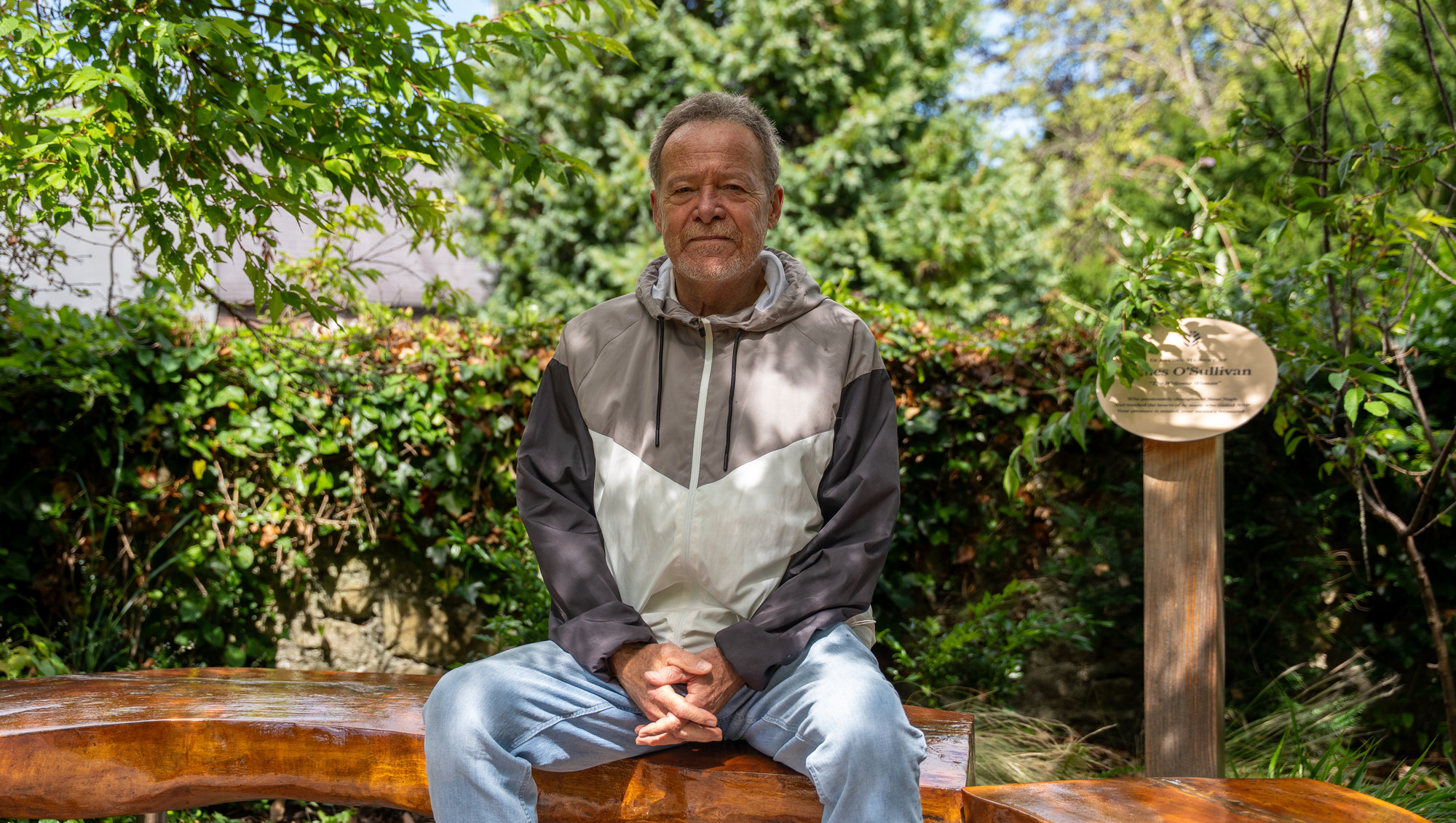
Leonid Dobrionski, who fled the Russian invasion of Ukraine, at Nano Nagle. It was soon after arriving in Cork that his wife died. Pictures: Noel Sweeney
The day of the full-scale invasion of Ukraine is the pivotal day from which everything flowed. How I changed my life, or how life changed me.
I was 70 the day before the invasion, but I was sick, so we didn’t celebrate my birthday. February 24, 2022, the war started. My son and daughter came to where my wife, Olga, and I lived in Kyiv. They said we had to go. Olga hesitated. She didn’t want to leave. Our children persuaded us.
In two to three hours, we sat in our car and moved to the countryside, 10km from Kyiv, to my wife’s sister. So we watched the situation.
Nadia, my daughter, had friends in Ireland who offered to let her come to Ireland with her family. It was a different direction — our opportunity to come to Ireland as refugees.
We drove from Ukraine to Kraków and flew to Dublin. Volunteers met us, brought us to Conna near Fermoy, where we lived for two months.
May 2022, we moved to accommodation in Cork City and Olga and I started English classes at Cork Migrant Centre. It had been my dream to speak English fluently. I learned it four times in Ukraine — at school, university, as a postgraduate student, and later in a speaking club. But all the times I forgot everything... lack of practice.
During this time, in the fifth month of the war, Olga died. She was depressed… the war… my son — he went to the territory’s defence… maybe her thoughts couldn’t bear the situation and she died.
There was the funeral, the crematorium, and now her ashes are not far from me. We are waiting for the war to end to bury her in Ukraine. So it was another life now. I started different activities. It helped me bear the loss.
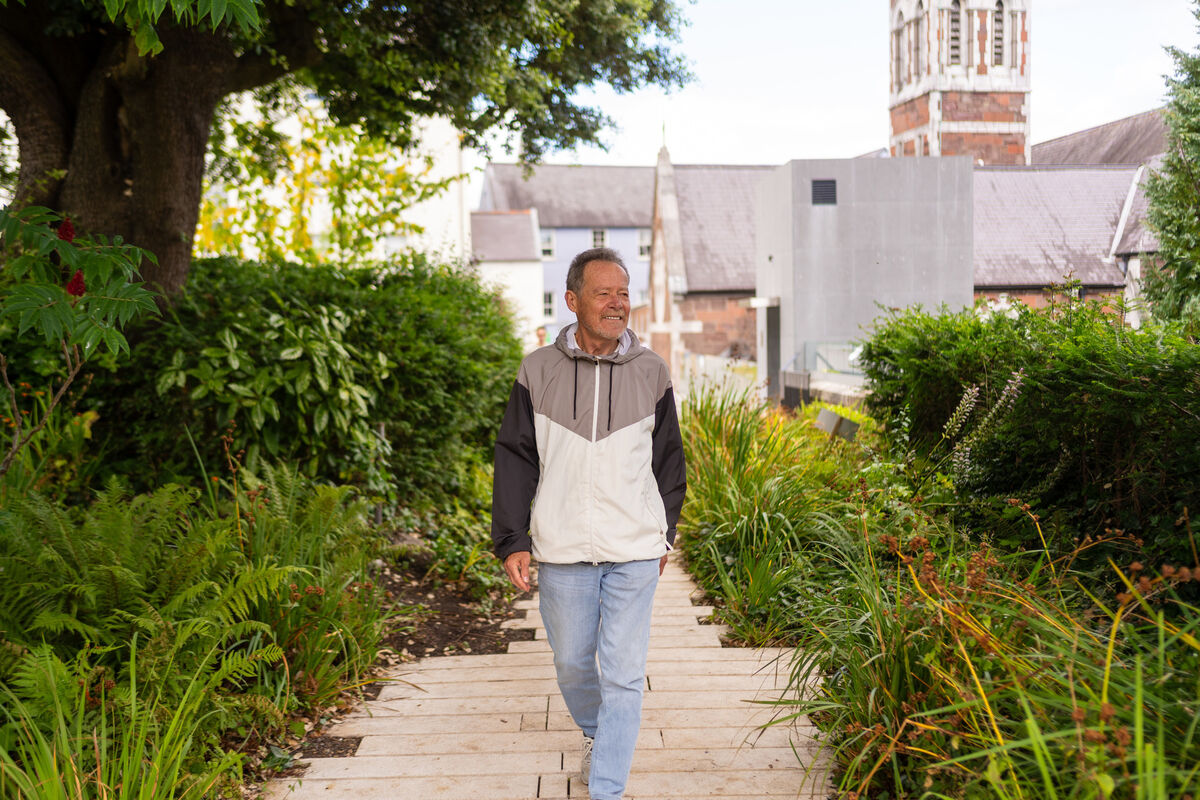
My English teacher, Fabrice, we became friends. He is originally from France and he has lived here for more than 30 years. He has four children; I know them all.
When I started learning English, I also started exploring my family’s past again. In my childhood, I spent a lot of time with my grandfather, Petro. He fought in the First World War on the side of the French against the German army. He told me a lot about his friend, Stepan, who fought alongside him. My grandfather was wounded but later came back to Ukraine — Stepan didn’t; he stayed in France.
Stepan came to Ukraine once, in 1968, with his small grandson. I didn’t meet them, but I saw photos. My grandfather met Stepan in Ukraine then. I had a special envelope from when my grandfather corresponded with Stepan — I had his address in France. Fabrice’s sister helped me find this address in Paris, but nobody there knew Stepan.
Later, through relatives of Stepan in Ukraine, I got a new address. I wrote a letter in English, Fabrice translated it into French and I sent it to the new address.
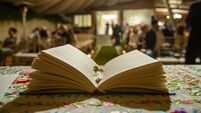
It was successful — we found Stepan’s grandson, Olivier, the grandson who had been to Ukraine in 1968 when he was seven. And I discovered Stepan’s daughter, Marusia, had written a book about Stepan and about his wartime experiences.
Olivier told me: “I remember your grandfather; I saw him.” It was at a gathering of relatives. And Stepan came to this party with his grandson, which was organised in the home of my grandfather.
It was really some connection between the past and nowadays! I had heard a lot about this wartime friend of my grandfather and I was always interested in his destiny.
But I didn’t imagine that I could find not just relatives of Stepan, but that his daughter would have written a book — amazing for me, to find a book about Stepan. My life in Ukraine… I was retired. I lived with my wife. I spent a lot of time gardening — we have land in Ukraine — I grew vegetables and fruit.
I’m fond of running. That’s how I found Sanctuary Runners. I run every week along the Marina; I ran 10km in the Cork marathon. Running helps keep me in good form. I sing in a Ukrainian choir. I’d never done this type of singing before, but my voice has become stronger, better. I’m happy with it.
In my life here, Cork Migrant Centre is like a platform, a basement. If I want to find new activities, I know I can ask and they will help. It’s a new type of life now, and I love this life and I’m going to build it more.
- The Cork Migrant Centre, part of Nano Nagle Place, is a psychosocial hub where cultures meet, stories are shared, and belonging is built. Through creativity, learning, cultural expression and practical community supports, it empowers migrants, refugees and people seeking international protection to overcome everyday challenges, celebrate their identities, and build meaningful connections within Irish society.
- Visit corkmigrantcentre.ie

CONNECT WITH US TODAY



Be the first to know the latest news and updates