Annmarie O'Connor: Parkinson's is progressive — for me that means meeting it halfway

Annmarie O'Connor on Parkinsons. Picture Chani Anderson
Lip tremor. Drool. Fatigue. Night sweats. Foot cramps. Waking up in pain. Stiffness — hands, feet, and calves.
Well, this is new.
I update my Notes app before meeting with my consultant this afternoon.
Lip tremor and drool? The universe clearly wishes me single.
I remind myself that Parkinson’s symptoms are subject to change. Over time, they are likely to progress in frequency, type, or speed. Five years on average, I was told. That’s how long the proverbial honeymoon period lasts: when things seem manageable, when you are delusional enough to mistake the present for the future.
By definition, Parkinson’s is progressive, meaning it develops gradually. My honeymoon period ended two weeks after my diagnosis (I was never lucky in love) when I began to experience dyskinesia in my left shoulder – a common medication side effect, while not typical in the early stages of Parkinson’s. A fifteen-month medication odyssey then followed before we found the right combination to suit my iteration of the disease. It was exhausting. Every drug I tried that didn’t work out left me back where I started.
Like an iceberg, always quietly moving; by the time you spot it, the damage has already been done. You’ve lost approximately 60-80% of the dopamine-producing nerve cells in the brain. With Parkinson’s being progressive, you will probably lose more. Rigidity, slowness, and tremor will make their presence felt. You might be feeling apathetic, too tired to do anything about it. If you’re like me and find yourself mid-sentence when drool escapes down your chin, remember dopamine also regulates saliva glands. My gallows humour: it’s not for everybody.
The alternative? You learn to adapt to the physical changes, to commit to a rigorous medication and lifestyle regimen, and to inhabit a condition that never stays still. The emotional and mental labour of the administration itself (I am on a first-name basis with my pharmacist) is enough to wear you out. That said, it’s a small trade-off. The way I see it, I can either move through the world steadily or complain about my twitchy lot. As I said, small trade-off.
Later that day, in our outpatient session, I describe my recent onset of pain. “It’s more like discomfort; a two, at most, on a scale of one to ten.” I like to give figures. Neurologists like to get them. It provides context for the situation and makes it scalable. Within a month, the pain becomes a four. Stabbing sensations in my legs, what feels like electric jolts in my feet, plus a redux of painful restless legs – all on my right side. I’m relieved it’s not bilateral, a sign that the disease progression is in its earliest, slow-moving stages, even if it feels otherwise. I could have my dosage increased or give the medication more time before making any decisions.
Reported side effects, such as impulse control disorders, are common with the drug in question. Approximately 1 in 6 people may experience behaviours like hypersexuality, overspending, or addictions to hobbies or habits. As an all-or-nothing overthinker, this gives me pause. And so, I do.
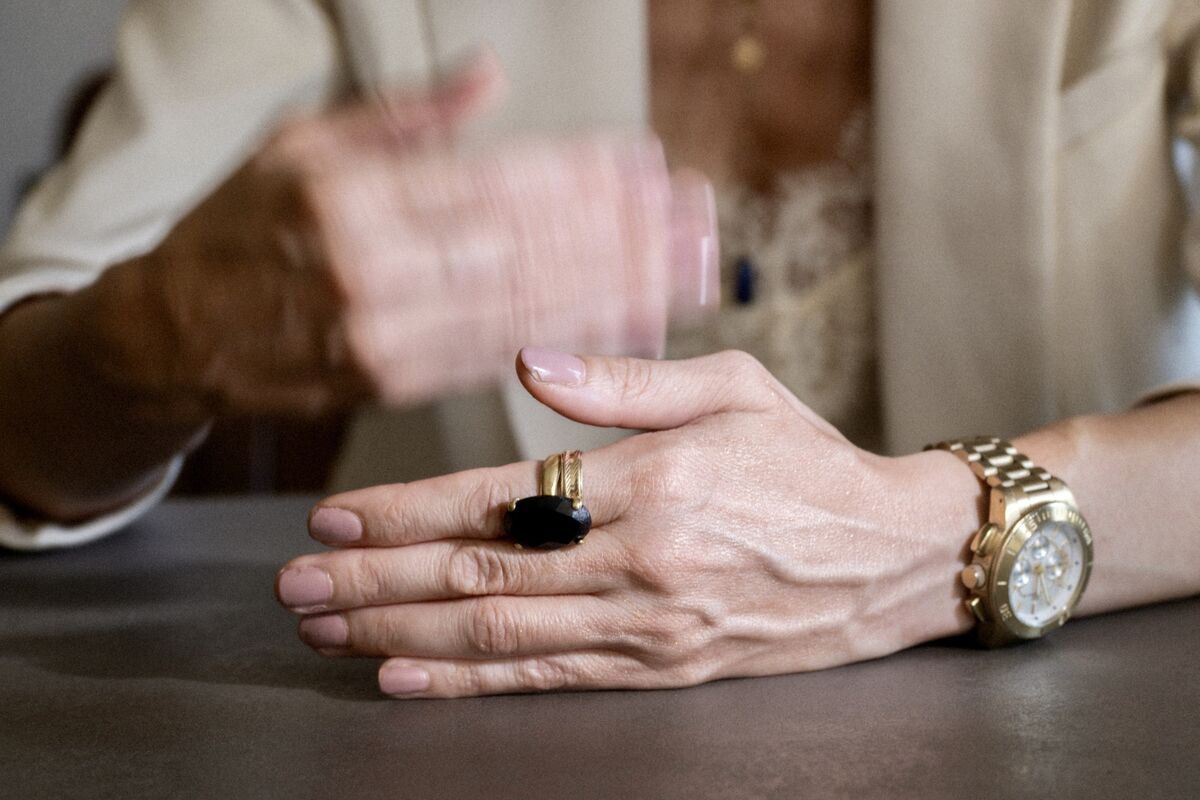
That’s the thing with Parkinson’s: even a small change can have huge consequences. Like a risk manager, I consider every choice through the lens of uncertainty.
What’s the likelihood of this happening?
How can I minimise its impact on my life?
Can I add this under ‘skills’ on my LinkedIn profile?
Standard Thursday afternoon stuff.
Futureproofing, I like to call it, even though ‘micromanaging’ is more accurate. I wonder if this predilection has become a coping mechanism, a way to exert a modicum of control over the chaos of living.
I mean, can we ever really be certain of anything? Death and taxes, according to my mother, ever the fatalist. At times, I’m too short-sighted, failing to see what’s ahead of me. Not that anyone could have predicted this. Parkinson’s doesn’t call in advance. It just arrives: the uninvited houseguest who overstays his welcome, then rearranges the furniture, eats all the food, and claims squatters’ rights.
Being early onset, I’m among the estimated 10% of the Parkinson’s population who’ve been diagnosed under the age of 50. The upshot? This uninvited houseguest now has a longer opportunity to claim adverse possession of my body and mind. I also have a longer lead time in learning how to deal with it. Hot water bottles for leg pain, Deep Heat massage for dystonia, and DM me with suggestions for restless legs. Maybe Michael Flatley has some insight.
Here’s the thing. Life doesn’t do timelines, and I don’t do guessing games. For every risk assessment I make, there’s some pre-destined cosmic plan underwriting my policy. Call it chaos theory. Call it fate. There are things in life we can’t control, even when providing figures.
Parkinson’s is progressive, sure, but a definition can have many meanings. For me, 'progressive' also means 'proactive' and 'forward-thinking'. Whether that’s the drive to improve social systems or a shift toward better medical conditions, its meaning stems from a desire for change. Stasis, as we know, doesn’t solve anything. It’s too busy lying on the sofa. And so, ‘progressive’ also demands something of me: namely, open-mindedness and curiosity, qualities that are both impervious to uncertainty. No matter how much we know, there are things we’ll never know. No matter how cautious we behave, there are risks we’ll be forced to take. The way I see it? If I’m going to go the distance with Parkinson’s, I need to meet it halfway.
- Annmarie O'Connor's memoir Twitch: My life with Parkinson's is available now. Annmarie's five-part series on living with Parkinson's continues next week.
CONNECT WITH US TODAY



Be the first to know the latest news and updates