I'm a sex historian — here's what we can learn about female pleasure from history
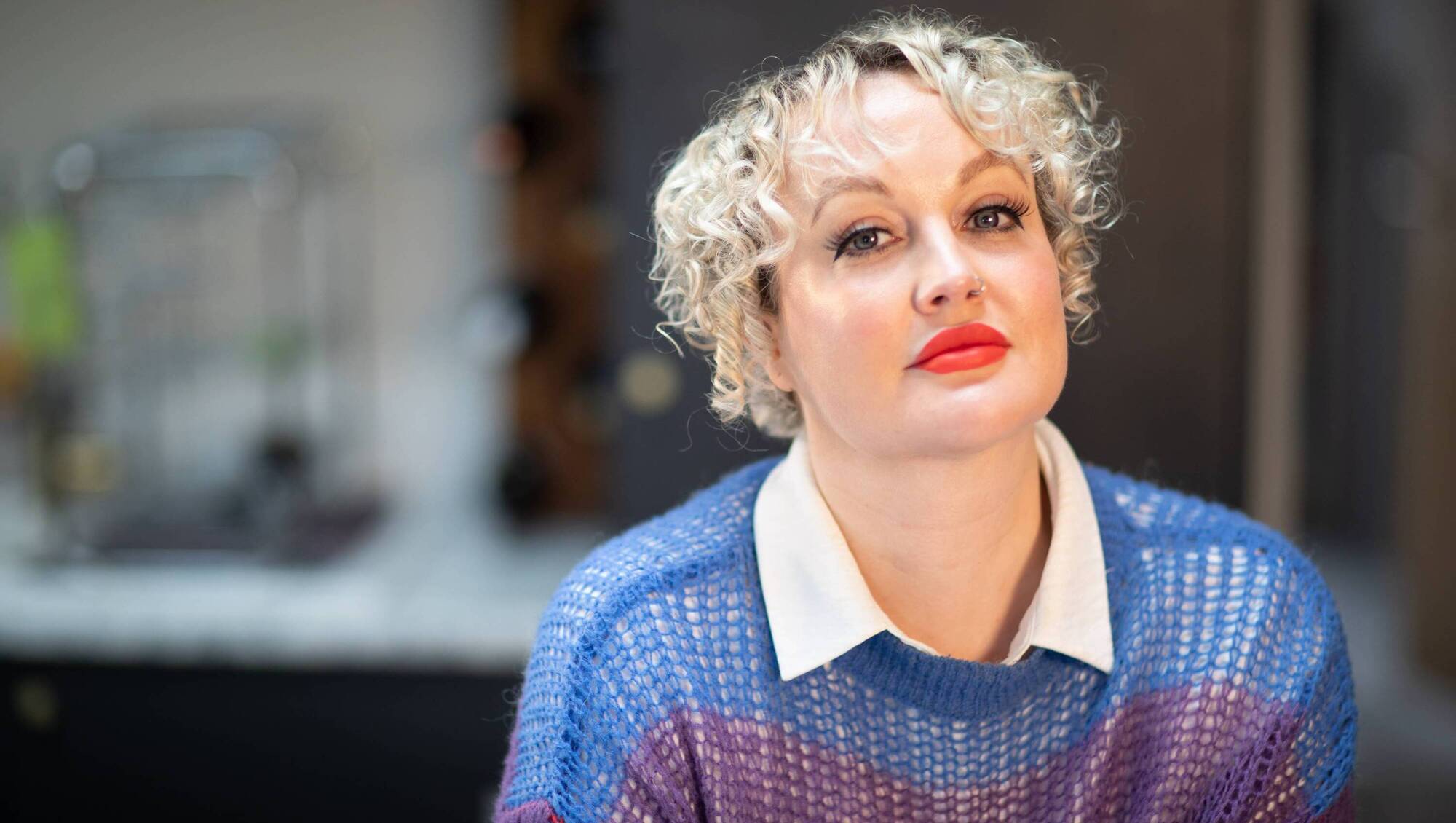
Dr Kate Lister author of Flick, a book on the story of female pleasure
When a sex historian writes how “I have scoured the historical records for cunnilingus-positive cultures, but they are few and far between”, you know you’re in for a cracking read.
Kate Lister, who has dedicated her new history of female sexual pleasure to “all the men who didn’t make me cum”, does not disappoint.
From the fierce goddesses of ancient Sumeria to 21st-century conservative moralising, she takes us on a fascinating, frequently infuriating, trip through female sexuality and the centuries of cultural nonsense that has been superimposed over it and presented back to us as “normal”.
Namely, that women aren’t that bothered about sex. That we don’t have that much desire. That we can take it or leave it. And worse, how we seem to have internalised that message.
This lack of lady lust is two things: (a) A relatively modern idea; and (b) fake news.
“For most of our history, women were thought of as much more highly sexed than men,” says Lister, via Zoom.
“Pre-18th century, it would have been strange for people to think that women didn’t experience desire the same way as men — this is quite a recent twist in our history.”
We can thank the Victorians for pathologising sex, although they didn’t start the trend for elevating female virgins, chastity, and modesty which still clings today. Men are not expected to be any of these things — as Lister points out, a comedy about a 40-year-old virgin only works if its punchline is male.
“This idea that women don’t experience as much desire as men has been incredibly damaging,” she says.
“This idea that we are weak and fragile, that our desires are delicate and mood-dependent — it’s always annoyed me that we’ve stopped questioning it.
“Why is the dominant narrative that women go off sex, or don’t want as much sex as men do? Why aren’t we questioning the kind of sex that we’re having?”
She says that a pivotal theme of the book is how “the script for most heterosexual sex is terrible” — it’s not me, it’s you. Figures confirm this — lesbians orgasm 86% of the time, gay men 89%, bisexual men 88%, straight men 96% of the time. And straight women? 65% of the time.
“Our obsession with sex meaning penile penetration has been with us for a very long time, yet only about 18% of women orgasm through penetrative sex. We’ve set up this system where the penis gets to start and end sex. And then we’re surprised when women go off it,” she adds.
“Women’s passions, desires, and want of sex is equally as strong as men’s — it’s cultural issues which deny us the space to explore it, and the right to enjoy it.”
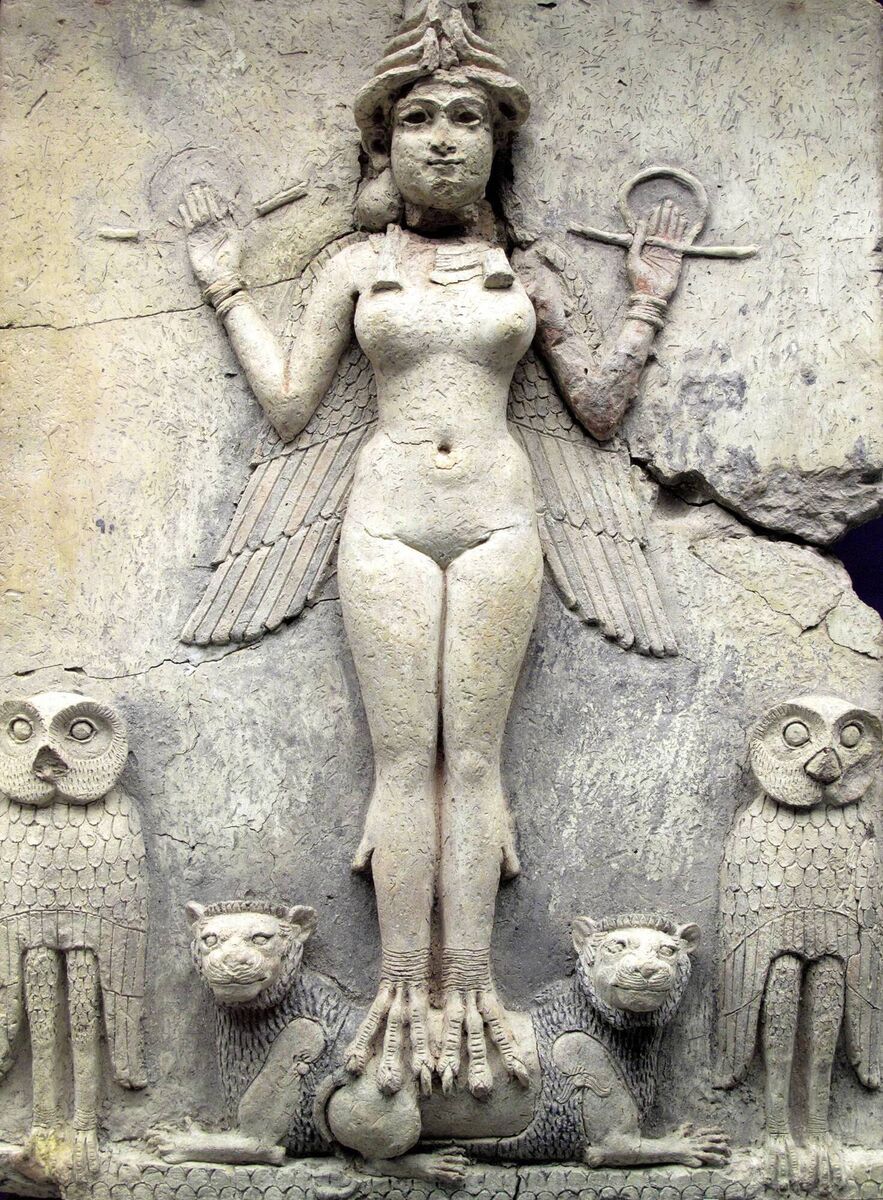
Before the Abrahamic religions — Christianity, Judaism, Islam — introduced ideas of sexual shame, lusty goddesses were worshipped. (The Babylonian goddess Ashtaroth took on every man in the ancient city of Uruk “without tiring”).
“For thousands of years, worship of powerful goddesses of sex and pleasure was commonplace,” writes Lister of Aphrodite, Venus, Ishtar, Inanna, Kali, Freyja. “Today, religion and sexual freedom seem to be perpetually at odds with one another.”
In Ancient Greece and Rome, women were considered incomplete men “prone to all manner of derangements”, wayward, and lust-driven.
“The shaming of women’s sexuality was frequently deployed in an attempt to malign them,” notes Lester of a trend which ran and ran.

In early Christianity, Adam’s first wife Lilith was thrown out of Eden as a demon for demanding sexual equality with her husband (“we are both from the Earth”) while early Church patriarchs declared all sexual pleasure a sin, even the kind when you were married and trying to make babies.
The medieval Church divided women into virgins and whores, another idea which persisted like a stubborn stain: “Women were severely punished for the kind of sexual transgressions a man would call a slow Tuesday”.
(Although the first person to offer a written
description of the female orgasm was a 12th century nun, the polymath Hildegard of Bingen.)
By 1857, a Victorian doctor, William Acton, was declaring how “the majority of women (happily for them) are not very much troubled with sexual feeling of any kind”.
Lister attributes this plot twist to the earlier rise of two things — Protestantism and the middle classes.
As did the idea of nymphomania, where anything beyond “moderate desire for your husband was framed as a medical condition that required intervention”.
This condition, which in 1775 a French doctor suggested “renders these wretched sufferers furious and ungovernable”, was endemic in widows, virgins, and women who enjoyed “luxurious novels”, “strong wines”, or “an excessive use of chocolate”.
The cure? Cold baths, vaginal douches, exercise, and plain diet. Oh, and female genital mutilation.
Desire was pathologised as a mental illness — in 1899, another doctor, James Foster Scott, wrote how society depended on women’s “docile sexuality”.
As for lesbians, “Victorian lawmakers were so entrenched in their phallocentric culture that they could not conceive how ‘real’ sex could happen without a penis,” recounts Lister.
That’s why lesbianism was not outlawed alongside male homosexuality. A popular idea from the olden days was that in order to have sex, lesbians “grew” a penis from their clitoris — a medical nonsense which persisted to 1969, when David Reuben wrote in Everything You Wanted To Know About Sex how “lesbians with this anatomical quirk are in great demand”. Less than 60 years ago, people.
But the doctor who perhaps did the most damage in terms of making stuff up about female sexuality was Sigmund Freud, who told us that clitoral orgasm — the normal one — was “immature”, and unless you experienced vaginal orgasm — with a penis — you were “frigid”.
Lister recounts how Freud framed “women’s sexual pleasure as entirely passive and dependent on men”. In 1917, sexologist William Robinson urged women not experiencing vaginal orgasm to fake it — “an innocent deception”. We are still, says Lister, “living with the legacy of this today”.
In 1936, two other psychoanalysts, Edward Hitschmann and Edmund Bergler, published Frigidity In Women, in which they claimed “the sole criterion of frigidity is the absence of vaginal orgasm”.
As late as 1953, if a woman preferred clitoral stimulation — which unfailingly makes us orgasm — she can be, said noted psychiatrist Frank Caprio, “regarded as suffering from frigidity and requires psychiatric assistance”.
Thankfully, sex researchers Masters and Johnson finally debunked this. Turns out there is no such thing as a vaginal orgasm. And the G-spot is “actually the clitoris being stimulated from within”. Also, Lister gives us a satisfying factoid to deploy “the next time someone talks about ‘big dick energy’” — the clitoris is bigger, at four inches in length, than the average penis, which is 3.5 inches. And unlike the penis, it exists for no other reason than to provide us with multiple, repeated orgasms.
Hence, says Lister, the importance of masturbation as a tool for self-education and liberation, despite still being framed as second best, something a woman will do only if there isn’t a man available: “That narrative is still very much with us. It’s still a source of conflict in relationships, and still a source of shame for women. We don’t acknowledge it even to each other. Yet it’s so important to learn about your own body.
“There’s a reason women have been shamed for masturbation in a way men haven’t — the idea was that women should be kept sexually ignorant until they got married. But it’s how we learn about our bodies, what turns us on, what we like. Otherwise, we’re just outsourcing our pleasure to someone else.”
Nowhere is the importance of sex education more starkly highlighted than by the lived reality of past generations on the remote, formerly inaccessible, Aran Island of Inis Oirr. Its population of 350 were the subject of ethnographic research between 1958 and 1966 by anthropologists John Messenger and Betty Messenger, who wrote in their 1969 book, Inis Beag: Isle of Ireland, how Inis Oirr was “one of the most sexually naïve of the world’s societies”.
“The idea that women would enjoy sex at all was really confusing to the islanders,” says Lister.
“They were surprised at the idea that women could orgasm. It just shows the direct correlation between sex education, what we know about our bodies, and wider social issues.”
“Repressing sex never makes it go away, it just makes people far more likely to experience shame, stigma, ignorance around their own bodies, and not wanting to speak up. It’s not sexual innocence, it’s sexual ignorance, and it perpetuates the myth that women aren’t supposed to enjoy sex.
“It’s all down to your husband — he’s going to sort it out for you, and don’t worry, you’re not meant to like it anyway.”
Today, we inhabit a very different sexual landscape. Unless, as a woman, you make the mistake of getting old. Old lady sex gives society the ick — still.
“Down through the centuries, the sexuality of the older woman is framed as deviant, unnatural, and predatory,” writes Lister. “She is beyond the male gaze … desexed, undesirable, and ignored.” And prone, according to an 1857 treatise on menopause, to a range of symptoms from “apoplexy” to “hysterical flatulence.”
In 1966, keen to shame women into buying newly invented HRT products, American gynaecologist Robert Wilson, in his book Feminine Forever, described menopause as a “galloping catastrophe”. Without HRT, ageing was “the death of womanhood”, a “castration”.
“It’s a nasty narrative reinforced, born out of the old idea that as soon as you are no longer fertile, you’re redundant,” says Lister.
“But if you enjoy sex now, chances are you’re going to enjoy it when you’re an older person as well.”
Our cultural messaging around sex remains a work in progress. Even in contemporary sex education — which these days includes contraception, STIs, consent, same-sex attraction, as well as basic biology — there’s still no mention of pleasure.
“Pleasure is really important,” Lister says, “it’s at the heart of bodily autonomy and being able to advocate for yourself.
“A lot of women perform sex, rather than actively enjoying it. It becomes a self-fulfilling prophecy.”
We need, she says, to have a lot more conversations. Intimate, detailed, forthright conversations, and prioritise our pleasure.
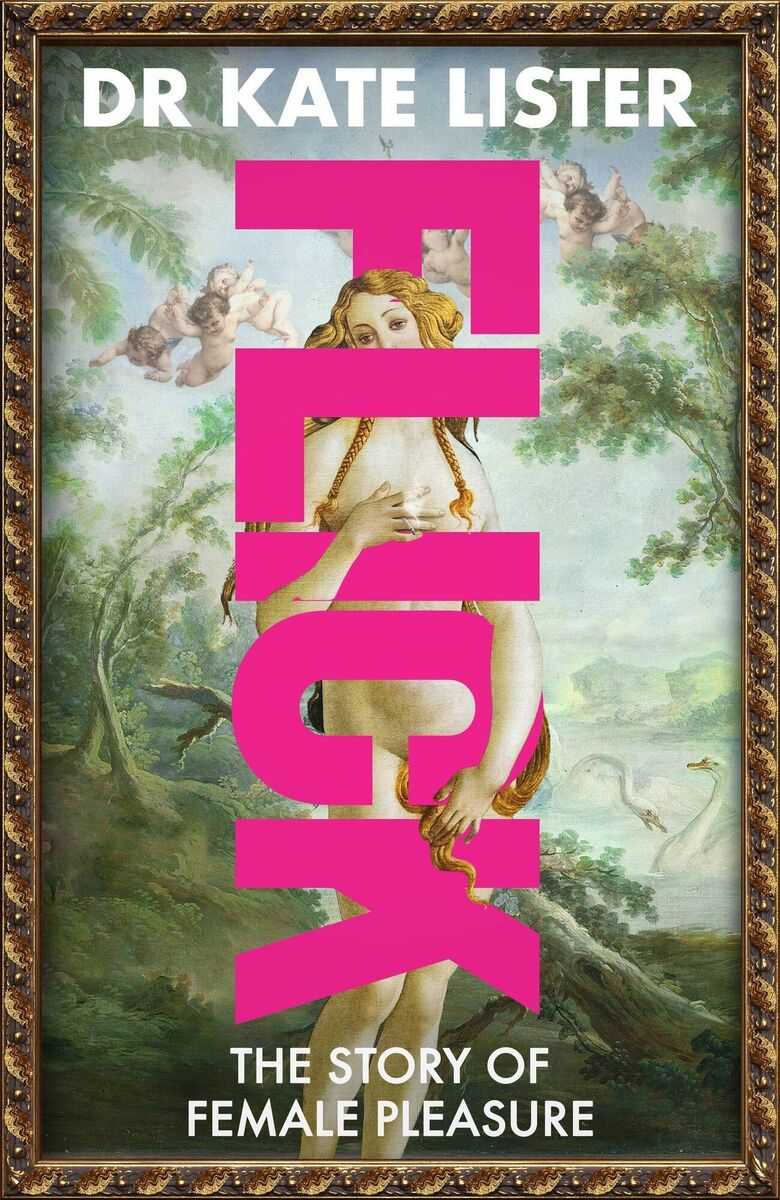
- Flick: A Brief History of Female Pleasure by Kate Lister, published by Transworld, is out now

CONNECT WITH US TODAY



Be the first to know the latest news and updates