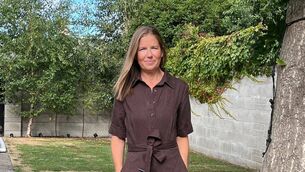
My Life with Olympian Aileen Crowley: Most people retire in their 60s — I was 27
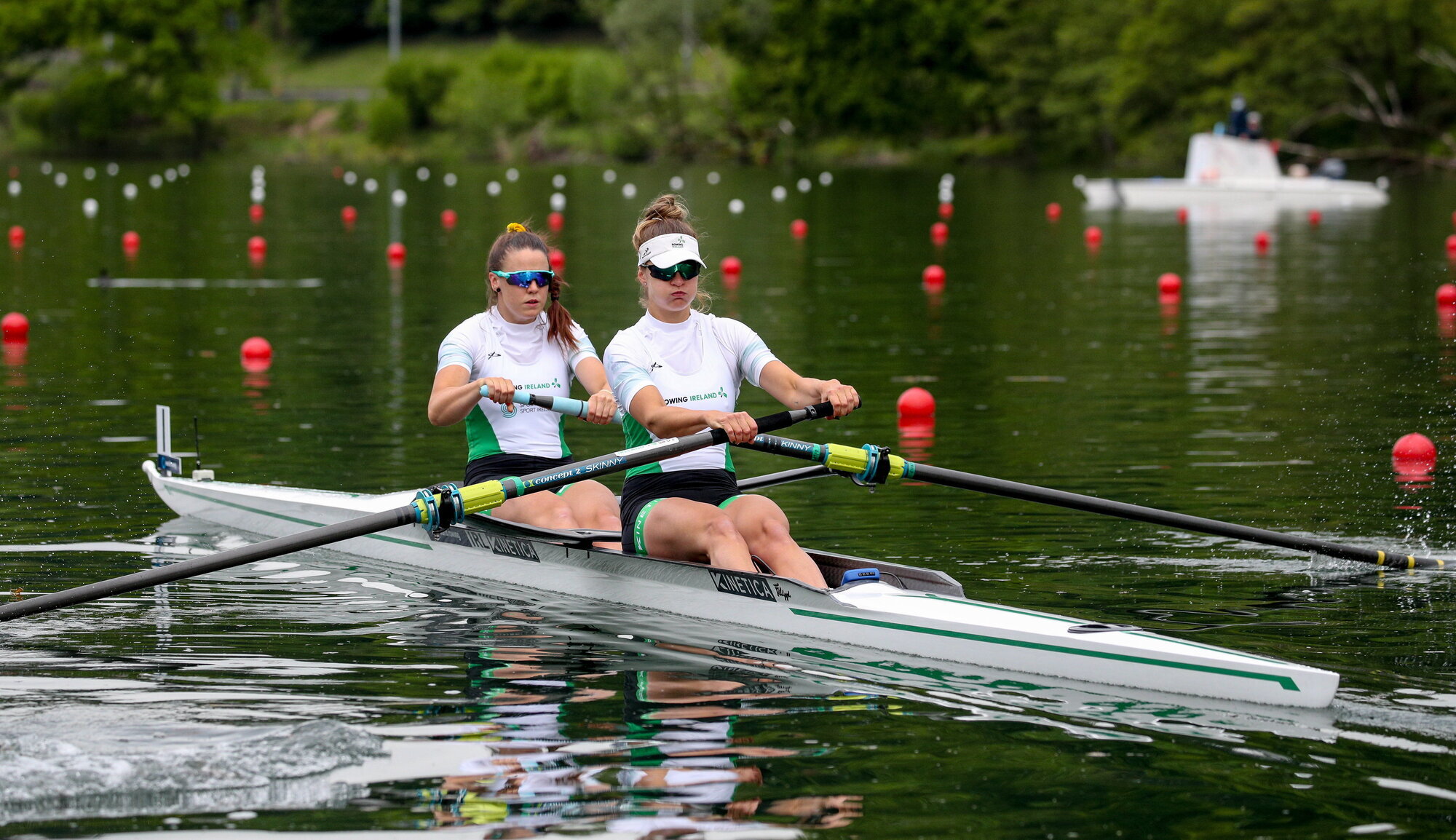
Aileen Crowley, left, and Monika Dukarska of Ireland compete in their heat of the Women's Pair during day one of the FISA World Cup Rowing II at Lake Gottersee in Lucerne, Switzerland. Picture: Roberto Bregani/Sportsfile
For many, the word ‘retirement’ conjures up images of people in their 60s or older.
I, like many other athletes, had to take this leap much earlier.
These days, I’m training in the art of fine-furniture-making at the Chippendale School of Furniture and Design outside Edinburgh, in Scotland. However, for a long time, rowing was all I knew. I started competing for Ireland at a senior level in 2017. Rowing was a huge part of my life, and despite studying architecture in University College Dublin (UCD) after school, I had no intention of conforming to a nine-to-five role. If anything, I felt like I was dodging normality.
Competing in the women’s coxless pair event at the Summer Olympics in Tokyo was somewhat different to the experiences of rowers who came before me.
The year 2021 was a bizarre time for the world. Many of us will remember it for the covid Olympics. It was obviously fantastic to be part of it all, but it was also strange. There were, after all, no spectators involved and only the teams were present. My memories of that time in Japan are still amazing. I was 27 when I did the Olympics. From 2016 until 2021, I was getting paid to row, so it was my full-time job. Looking back, I never really had a grown-up job. I went straight from my university experience in to rowing full-time, so I never really knew what normal was.
Anybody involved in high-performance sports will know how hard it is to stop. That moment is difficult, because your normality has been taken away from you. I’ll be the first to admit that I didn’t adjust very well initially. It’s so hard to have to completely change your life, but I’m lucky to have found something that I love.
I always had this awareness when I was rowing that my brain was 50/50. It was always sport and art, but those two worlds don’t collide very easily. During my time rowing, I sometimes felt like I had missed out on the creative side of life. After the Tokyo Olympics, I was contemplating whether to keep rowing or move on. I gave myself a year to try and decide what I wanted to do. That was when I did a short course in Chippendale School of Furniture and Design, outside Edinburgh, in the summer of 2022.
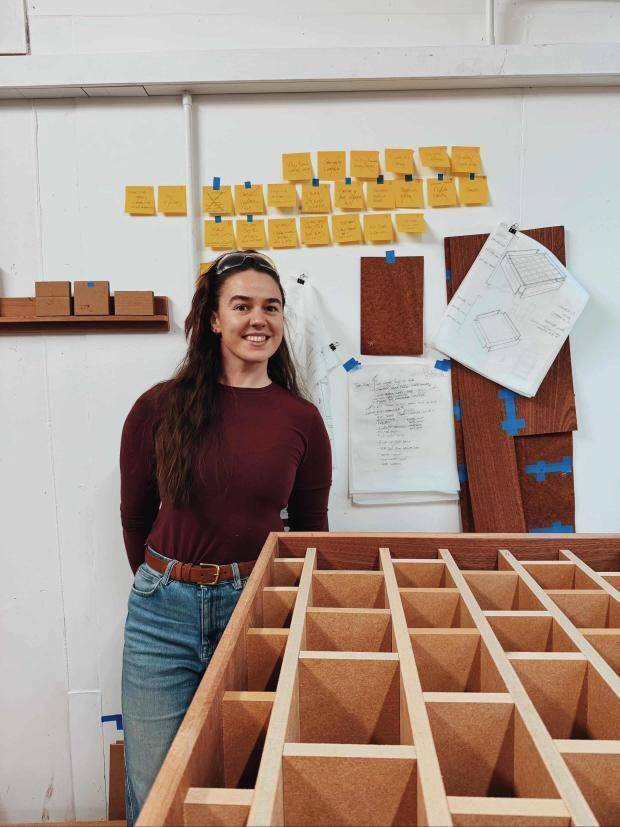
My decision to enrol in Chippendale School of Furniture and Design was inspired by my time studying architecture in UCD. While I never used my degree, the first semester of that course was what cultivated my love for the craft of furniture-making.
Naturally, they didn’t throw us straight in to designing large-scale buildings, so we started with small things, like designing a piece of furniture or a staircase. I remember how much I loved it. Slowly, but surely, the briefs became larger-scale. However, the bigger they got, the less I liked it. You might say that architecture draws very artistic people, but when you are designing for the normal person, your designs have to be palatable to the masses. This can prove counterintuitive to an artistic person.
When you’re pursuing a goal as specific as becoming a furniture-maker, it can be difficult to know where to go. I can even remember chatting to one of the local carpenters at home in Kerry, who offered me an apprenticeship. I never wanted to be a carpenter. My goal was to become a furniture-maker, but, sometimes, people find it difficult to recognise the difference. I’m currently completing their nine-month professional course at the Chippendale School of Furniture and Design.
One of the things I love about the place is the mix of people it attracts. You have people aged around 19 or 20 years, who treat this like their equivalent of university. Then, there are the ones in their 60s, who are pursuing retirement goals. Those in between might be seeking a career change or, like me, just trying to figure things out.
What fascinates me is that there are more people from Australia and the States in the school than there are from Ireland.
One of the main things I’ve learned from the course is the time it takes to make a piece of furniture. I now have a lot more appreciation for people who work with their hands. Students start off making small things, like a jewellery box or small bowl. The main project for us was a bedside cabinet. We all had to make the exact same bedside cabinet, just to learn the basic skills of joinery. They let us fly free in the second term. I currently have one or two days left in a coffee table I’m making.
Letting go of sport was like a form of heartbreak, but I’m so delighted that I’ve found this passion. I would be a fool to think that I will walk away from this course and be able to open up my own business straight away, but this is definitely a long-term dream of mine.


CONNECT WITH US TODAY



Be the first to know the latest news and updates