Adi Roche on 40 years since Chornobyl disaster and how Cork was first to welcome the children
As the 40th anniversary of the Chornobyl disaster approaches, Gemma Fullam sits down with Adi Roche, whose decades of compassion and action have brought hope to thousands affected by one of history’s darkest moments
Adi Roche on 40 years since Chornobyl disaster and how Cork was first to welcome the children

Adi Roche pictured near her home in Blackrock Cork. Picture Chani Anderson

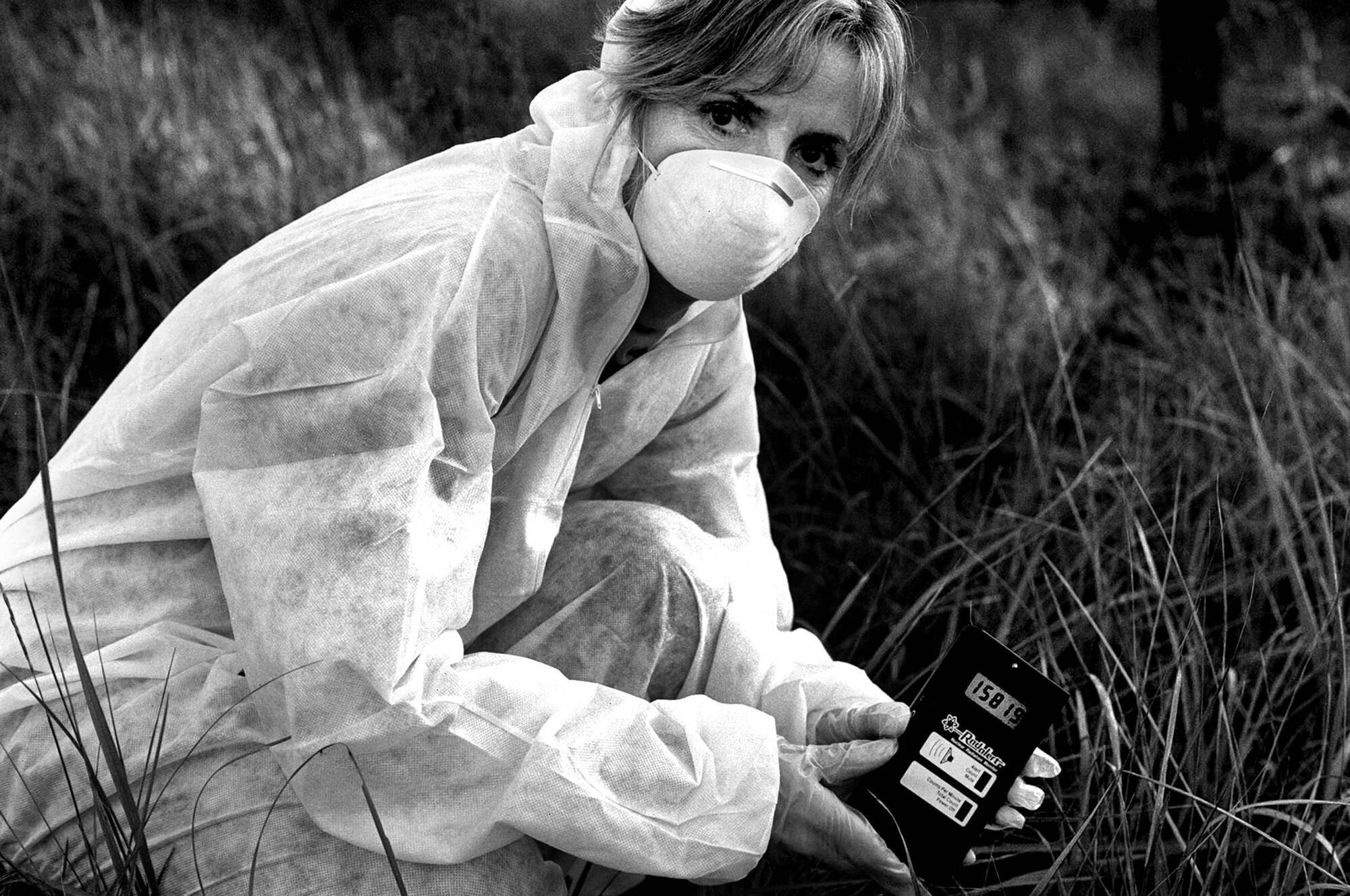
At  1.23am on April 26, 1986, a chain reaction at the Chornobyl* Power Plant in northern Ukraine caused an explosion that led to the world’s first level-seven meltdown and the most catastrophic nuclear event in history. Over the following hours and days, it released radiation estimated to be 400 times greater than that of the atomic bombing of Hiroshima in 1945.

The fallout, literally and metaphorically, continues to impact today.

“Chornobyl is forever,” says Adi Roche, whose name is synonymous with Chornobyl in Ireland because of Chornobyl Children International (CCI), the charity she founded in 1991 and for which she has since been a full-time volunteer.

The impact of Chornobyl

“It is not a historic event, even though it’s like reading ancient history for people. It is yesterday. It is today. And unfortunately and sadly, it is forever.”

It’s now 40 years since the Chornobyl disaster, and while the world may have largely forgotten it and the plight of those it continues to affect, Roche has not.

She’s under the weather when we speak, but her enthusiasm for helping those impacted is undimmed. She speaks with passion about CCI’s work, and shares many stories of children that she’s met down through the years — stories I am sure she’s told countless times at this stage, but you’d never know it, because each one is told with love.

Roche, who married Cork man Séan Dunne in 1977, has never had children of her own. In 2023, on The Meaning of Life, she told Joe Duffy she’d “learned over time in the grief of that, and coming to terms with that, that actually you don’t have to have a physical umbilical cord to be attached to a newborn baby to love and adore that life. And I have had that experience endless times over the years”.

Roche talks a mile a minute. Uppermost in her mind when we speak is the impending anniversary, and the events around it — among which is the unveiling in Cork City of Sandra Bell’s sculpture Chornobyl Mother, which is in remembrance of the child victims and survivors of the Chornobyl disaster.

Roche takes me back to that fateful day in April, when, she says, the first casualty of the Chornobyl disaster was the truth itself, “because the Soviet Union went into secrecy mode”. In 1986, it took until April 28 — when a worker at a Swedish power plant detected abnormally high levels of radiation — for Moscow to even admit an accident had occurred (they didn’t reveal the accident was major until May 10). A terse despatch from the Soviet Council of Ministers stated “measures were being taken to eliminate the consequences”. Some of those measures would prove devastating for the Belarussian people.

The rain of Chornobyl

Adi Roche pictured near her home in Blackrock Cork. Picture Chani Anderson

In the aftermath of the blast, the Soviets manipulated the weather to prevent radioactive clouds reaching Moscow, “where all the big guns were”, explains Roche. On April 27, military pilots seeded clouds with silver iodide, which forced radioactive rain — thus preventing radioactive particles from drifting towards the capital.

Muscovites were safe, but the inhabitants of Belarus, which borders Ukraine, paid the price.

“Black, sticky rain rained down upon 9m people,” says Roche. “That rain was the rain of Chornobyl.”

The rain deposited 70% of the radioactive fallout that had spewed from Reactor No 4 onto Belarus, contaminating 20% of its land, crops, and livestock, and exposing every man, woman, and child in its path, including the unborn, to significant radiation.

“There was no antidote to that,” she says of the radiation exposure. “No medication. There was no fallout shelter, there was no protection, there was no weapon, no standing army that could have been sent to protect the people and their environment.”

The legacy of the disaster is bleak. Not only were the Belarussians of 1986 contaminated, “but it has passed onto their children and now onto their grandchildren”, Roche says, adding: “It is impossible for us to say whether we are past the peak of the consequences of radioactive contamination or only at the threshold. There is a latency period of up to 60 years between exposure in 1986 and the manifestation of its effects. These effects can range widely, including birth defects, cancers, immune system disorders, heart conditions, and more.”

Forty years on from the Chornobyl disaster, the world has largely forgotten those who continue to suffer the consequences.

Among that cohort are the heroes who dealt with the aftermath, the hundreds of thousands of ‘liquidators’ who were recruited — some volunteered but many were forced — from all over the USSR to ‘clean up’ the site and build a sarcophagus to entomb Reactor No 4.

“Because of their intercession, which is unparalleled in human history, they actually saved the world,” says Roche, explaining that because of the prevailing culture of secrecy in the USSR, the truth about liquidators and their fate was supressed — most are now thought dead or disabled. The “phenomenal” 2019 HBO/Sky miniseries Chernobyl, which starred Jessie Buckley as the wife of a liquidator, highlighted their role, she notes, and was “very true to the truth of the story”.

Roche wants the 40th anniversary to “act as a reminder of our potential destructive capability when things go radically wrong” and “to speak for those that have never had a voice”.

Clonmel-born Roche, who will be 71 this year, has long spoken up for those without a voice, and for peace. She vividly remembers where she was when she heard about the Chornobyl disaster: “I was standing on a stage in a secondary school in Middleton, giving a class on peace education, when the principal came and said, ‘there’s been a newsflash’.”

‘For God’s sake, help us get the children out’

It was the height of the Cold War; Roche had been talking to the girls about East and West threatening to annihilate each other with nuclear weapons, and of the eyewitness accounts from the bombing of Hiroshima and Nagasaki.

“It was like one of those light-bulb moments,” she recalls. Now that this was happening in her lifetime, in real time, what could she do?

As it happened, plenty.

“I’m very proud to say that here in Cork, we became first responders to the Chornobyl tragedy,” she says, explaining how, in the absence of any government response, a small team of doctors assembled to provide information to the Irish public via an emergency hotline that she and a colleague operated for months from the “box bedroom” of her house in Ballincollig.

At the time, Roche was a volunteer with the Irish Campaign for Nuclear Disarmament (CND), which, along with other peace organisations “had relationships with people that were working on East-West peace-building measures”, so had a line of communication with people behind the Iron Curtain.

“Despite the KGB not allowing doctors or specialists or scientists to divulge what was the true impact of Chornobyl under pain of incarceration or being sent to a gulag in Siberia, a group of doctors eventually felt they could be silent no longer. Through this network of peace organisations, ourselves included, they sent out a two-line fax message,” Roche recalls. It was a January day in 1991, almost five years after the disaster — by year’s end, the USSR would collapse.

I’ll always remember the lines of that fax. It said, ‘SOS appeal, for God’s sake, help us get the children out’. And that was really the beginning of something that ended up changing our lives

The doctors who’d sent the fax were witnessing shocking things: Birth defects, spontaneous abortions, an epidemic of thyroid cancer.

“Then over the first two or three years, they began to see an absolute breakdown in the immune systems of newborn babies and children; children being born having heart attacks and strokes,” Roche explains.

The doctors told Roche that even a few weeks in a radiation-free environment would hugely benefit the children’s health. That knowledge spurred her on to facilitate respite in Ireland for 45 children that summer.

“Cork became the model. Because we were the first city, the first town in Ireland that responded with the céad míle fáilte to these children of Chornobyl,” Roche says. “The people of Cork, and subsequently the people of Ireland, opened their hearts, opened their homes, opened their purse strings, and welcomed these children.”

Chornobyl Children International

In 1991, Roche set up what’s now known as Chornobyl Children International (CCI) to better support children, families, and communities affected by the disaster. Since its foundation, CCI has delivered in excess of €110m of humanitarian aid and programmes.

Those first 45 children “became the best ambassadors for their plight and for the plight of subsequent Chornobyl children,” Roche says.

In all, CCI has brought 26,500 children “from western Russia, the Chornobyl area, across northern Ukraine and Belarus” to Ireland under what’s now called their rest and recuperation programme.

The pandemic and subsequently the war in Ukraine forced a suspension of the programme, but in lieu of coming to Ireland the CCI has facilitated summer camps in the Carpathian mountains.

“I often say we are beyond the politics. We are beyond the regimes because we are with the people, and that’s where we will stay rooted,” Roche says.

The achievements of CCI are impressive by any standards, but truly astonishing when you learn its staff totals a mere three.

“We’re a tiny team,” acknowledges Roche, who is full-time voluntary CEO. Helen Faughnan is the national coordinator and the trio is completed by strategy and communications manager Aileen O’Sullivan.

The core team may be tiny but they have an army of volunteers, which, Roche says, “are the lifeblood that runs through the veins of the charity”.

Adi Roche pictured near her home in Blackrock Cork. Picture Chani Anderson

“Sometimes, when we don’t have enough for cardiac missions or for medical supplies or for our staff over there, or to bring children in, I often say, look, we’re cash poor, which we have been in the past, but we are people-rich,” she says.

CCI’s programmes have expanded hugely since the early days, to the extent that there are too many to list here. Every single one has, at its root, the story of a child. CCI’s child paediatric cardiac programme came about through Roche’s 1992 trip to Belarus and her encounter with nine-year-old Vitaly, who had ‘Chornobyl heart’, a severe congenital cardiac degradation condition linked to radiation exposure. He told Roche he would die in the Belarussian hospital; she found a way to get him to Crumlin, now CHI, for life-saving treatment.

“And from that time until now, almost four decades later, we have been flying in cardiac surgeons to perform lifesaving treatment on children and babies with this condition called Chornobyl heart,” Roche says, telling me that when this piece appears, “we will at that time have a cardiac surgical team on the humanitarian frontline in Ukraine. We have never stopped. The pandemic didn’t stop this programme. The war, the invasion of Ukraine didn’t stop this programme. Our doctors and surgeons continued to run the gauntlet because the children would die without their intervention”.

Over the years, the CCI has evolved, as the “scattergunning” approach of the early years wasn’t sustainable, Roche admits. The hope is to work towards empowering people on the ground, by building on their infrastructure so that “we’re eventually going to see ourselves no longer as necessary because the people in the stricken regions of Chornobyl will take responsibility themselves if and when the time comes”.

One example of this empowerment is the work CCI is doing around de-institutionalisation of children. Its homes of hope programme helps children in orphanages move to foster families, into homes provided by the charity, which are gifted to the families after a period of 15 years, while its pioneering independent living programme means teenagers in child mental asylums can avoid the awful fate of being moved to an adult asylum at 18, and instead live independently in specially built homes.

It’s truly life-changing stuff. The work, Roche tells me, has never really felt like a sacrifice, but she’s human too, and admits “some mornings, it’s harder than others, and I have to dig deep for the optimism and dig deep for the love, and to dig deep for the hope”. But keep on digging she does.

“Both love and hope are central to the essence of our work. Without those two elements, I honestly don’t believe we could continue. I truly feel that we have anchored our hearts in hope itself, because hope is the most enabling gift of all. It allows us to overcome the despair that can arise when facing so many challenges in our world today. Forty years of giving is huge,” she says, but she’s not talking about her contribution; rather, she wants the laurels to go to the Irish people’s incredible generosity and CCI’s “army of volunteers that have been there forever”.

They are “the unsung heroes and heroines, all of them”, she says, adding: “The plumbers, the carpenters, the tilers, the surgeons, the nurses, all of them. None of it would’ve been possible without that extraordinary outpouring of love.”

  • In December 2025, the UN adopted a resolution officially endorsing the use of the Ukrainian transliteration ‘Chornobyl’ instead of the Soviet-era ‘Chernobyl’ in all instances going forward.

chernobyl-international.com

x

More in this section

Lifestyle

Newsletter

The best food, health, entertainment and lifestyle content from the Irish Examiner, direct to your inbox.

Cookie Policy Privacy Policy Brand Safety FAQ Help Contact Us Terms and Conditions

© Examiner Echo Group Limited