'If you've lived in the North, you'll recognise the sticking plaster approach to issues'
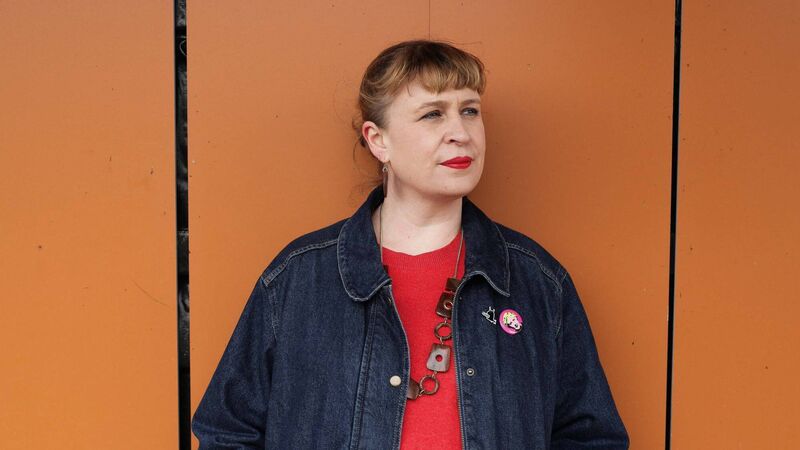
Press Eye - Belfast - Northern Ireland - 26th March 2026 Author Jan Carson Photo by Kelvin Boyes / Press Eye
In December 2022, I was deep into a four-month residency in France and struggling with writers’ block. Two days before Christmas, a helpful friend sent me an email, entitled: “This sounds like something you’d write about.”
Friends often send me “great” ideas for stories. Rarely do I take the bait. This particular email included an article about Terrence O’Neill’s madcap, 1958 proposal to solve Northern Ireland’s unemployment problem by draining Lough Neagh, thereby creating a seventh county.
My friend was right. It was exactly the kind of bizarre occurrence I love to write about.
I cracked open a nice bottle of red and began plotting an alternative history, imagining what might’ve happened if O’Neill’s drainage scheme had gone ahead.
I spent the following three years researching and writing . The novel is set on the archipelago of small islands which emerged during O’Neill’s failed attempt to drain Lough Neagh. It focuses upon the Ark’s last remaining residents, Marion and Robert-John Connolly, adult children of a famous Armagh-born anthropologist. Their father, RJ Connolly, moved his family to the islands in the 1970s, where he documented the resident community seeking sanctuary from the Troubles.
It mostly takes place in 2017, when a blue-green algae outbreak, similar to that currently plaguing Lough Neagh, has forced Stormont to seek drastic solutions. Plans are in process to flood the lough, submerging the Ark and the haunted islands which the Connollys oversee. Robert-John and Marion will be forced to return to mainland Northern Ireland and the modernity they’ve avoided for 50 years.
Few and Far Between is a novel which merges fact with fiction. The story of the Ark and its residents unfolds in parallel with the real story of Northern Ireland during the conflict and post-Good Friday period.
A few Sundays ago, I made a pilgrimage to the Antrim lough shore. I wanted to take some photos of my book with the landscape which had inspired it. Though the day was bleak and the lough itself unrelentingly grey, the park and visitors’ centre were heaving with families picnicking and tourists ignoring the “don’t feed the swans” signs. Dog walkers walked dogs. Children swarmed across the play equipment, baying for ice cream from the ice cream van.
An artist was painting the boats moored in the marina, her view obscured by a wall of modest saloons. The best parking spots, those facing lough-wards, had been nabbed early on. Behind the foggy windscreens, the senior citizens of Antrim enjoyed their Sunday afternoon naps in blissful ignorance of the stunning view.
I’ve been coming to this carpark for 40-odd years. Growing up outside Ballymena, it was a regular destination for family strolls. We barbecued and picnicked here; occasionally in sunshine, more frequently in the car, seeking shelter from the rain.
One of the last walks I took with my late father was down the Six Mile Water to the lough shore. I have a photo of him and my mother with Neagh looming damply behind them like a backyard puddle that’s lost the run of itself. Though the facilities have improved since my younger days, the lough’s always felt much the same to me: Familiar and homely, a “you’ll have to take us as you find us” kind of beauty spot.
Not everyone in the North has such a deep and longstanding relationship with Lough Neagh. Though it borders five of the six counties and is, at over 150 square miles, the largest freshwater lake in Ireland and Britain, it’s not the most accessible. I discovered this whilst researching . I spent a frustrating weekend attempting to drive the circumference of the lough.
At Antrim, Oxford Island, and other key spots, it’s extremely approachable; much has been made of the lough’s tourist draw. Elsewhere, I found myself clambering over fences and through muddy fields, battling swarms of vicious midges for a chance to paddle in the lough. I found myself wondering why Lough Neagh isn’t held in the same esteem as other key sites of natural beauty, such as the north coast and the Mountains of Mourne.
Aside from its scenic potential, Lough Neagh was amongst the first 10 places in the world to be designated a wetland of international significance, back in 1971. It’s home to many rare species of fish and birds.
This same lack of regard is notably present in how the lough has been written about. Before I began my book, I went searching for other authors who’d engaged with Lough Neagh. I was shocked to find that a natural phenomenon so outstanding it’s literally visible from space is so glaringly absent from the canon of local literature. Aside from Séamus Heaney’s , Ciaran Carson’s , and Alexander Irvine’s , our literature has paid scant attention to the lough.
I wonder if this lack of interest in Lough Neagh might be why it’s taken so long for the average northerner to become aware of, and subsequently concerned about, the blue-green algae outbreak currently devastating the lough.
In my novel, Lough Neagh serves as an extended metaphor for a number of issues endemic in this part of the world, not least, the inability to recognise the enormous potential of what is right in front of us. Marion and Robert-John lead a quiet existence on the lough. They are closely bound to the natural cycles of the islands they tend. The Connollys live simply and sustainably, growing most of the food they eat.
They can’t understand why those in a position to protect Lough Neagh don’t value it in the way they do.
It’s clear, from early on in the novel, that Stormont’s plans to flood the lough — sweeping the blue-green algae up the Lower Bann and out to sea — will only offer a temporary respite. The surface issue might disappear but, as soon as the summer rolls around, the sun will provoke a fresh algae bloom and Lough Neagh will face the same problems.
The characters in become frustrated that nobody’s willing to deal with the cause of the outbreak. The government prefers to tackle the symptoms with cheap, short-term fixes, fully aware that they’re merely sticking a plaster over a potential ecological crisis.
If you’ve lived in the North for any time, you’ll recognise this kind of approach to problem-solving. It seems to provide a blueprint for how we’ve gone about practising politics in the period after 1998, frequently fixating on the symptoms associated with a post-conflict society while avoiding the hard conversations and legislative changes which might address the root cause of the divisions, fears, and residual sectarianism still prevalent 28 years into the “Peace”.
Problems like those we face in Northern Ireland do not just go away. Any attempts to bury the past or submerge our issues will only ever be a temporary fix. Eglish Flat, one of the islands in my fictional Neagh Archipelago, possesses the uncanny ability to swallow whatever is dumped on its shores.
Over the years, Eglish has helpfully “disappeared” much of the unwanted detritus leftover from the Troubles: Guns, paperwork, occasionally body parts. One character even admits that it’s incredibly convenient to have somewhere to dump all the things society doesn’t want to deal with.
As progresses, the community on the Ark and beyond are horrified to notice Eglish Flat is vomitting up all the shameful deposits it has swallowed over the years. The Connollys are horrified but not surprised. They’ve lived on Lough Neagh long enough to be familiar with the old adage: “Lough Neagh hones, Lough Neagh hones. Put in sticks and brought out stones,” It speaks of the belief, common in local folklore, that the lough possesses a pseudo-miraculous ability to petrify wood and other materials.
The lough’s not in the habit of eroding the past. If anything, buried secrets and submerged pain will only grow harder and more resolute. The implication for Northern Ireland as a whole is upsettingly clear.
is, amongst many other things, a novel about how we deal with contemporary crises and the trauma of the past. We’re currently living through strange, absurd times, and so it felt
natural to use the fantastical and these extended metaphors as a means of exploring Northern Ireland’s reality. The novel tackles some heavy topics, though it is peppered with humour and wry asides. While the jury’s still out on the future of Lough Neagh and how the ecological crisis will play out, I’ve woven hope through my book.
In , as in life, it’s the tenacity, bravery, and resilience of people which continually reminds me that all is not lost.
There’s hope for the Connollys and Lough Neagh, for Northern Ireland and beyond. There’s a better future available, but we need to contend for it. We can’t keep burying the past.
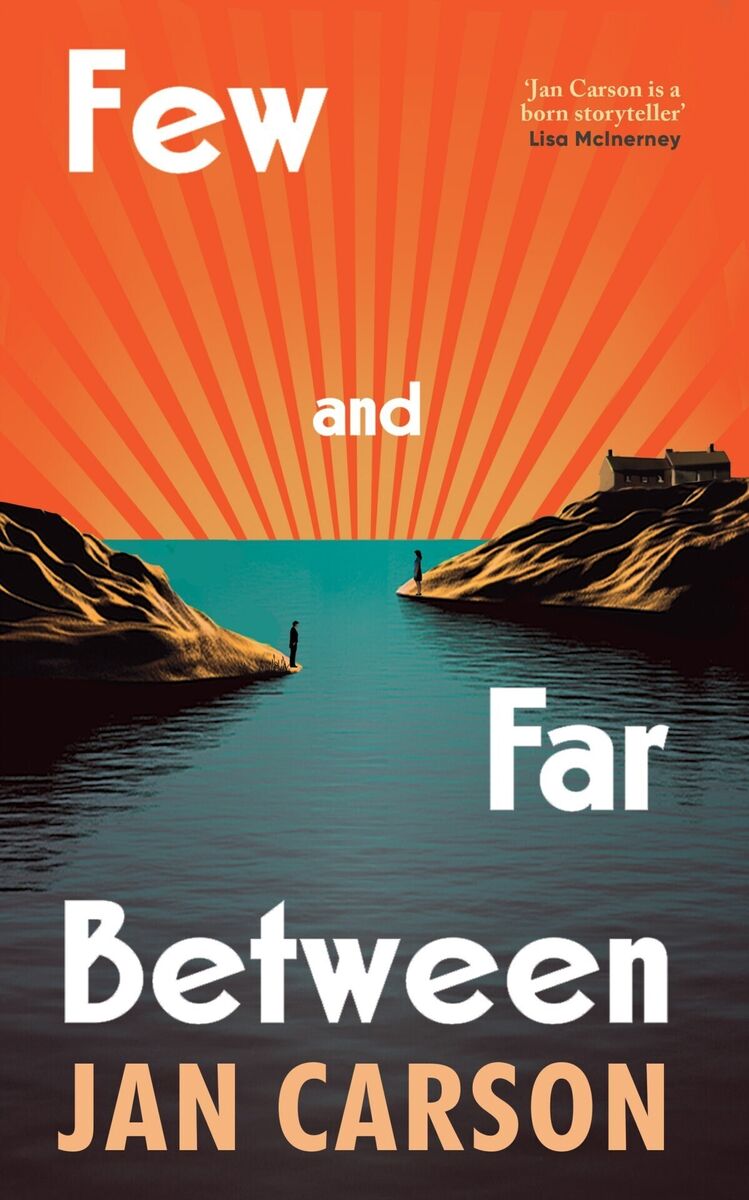
- Jan Carson’s novel ‘’, published by Doubleday, is out now
CONNECT WITH US TODAY



Be the first to know the latest news and updates