How To Gael: 'There’s no use learning Irish if you don’t care what happens to Ireland'

Louise Cantillon and Doireann Ní Ghlacáin of How to Gael. Picture: Nina Val @nvksocial
: It all started on a night out. We were sitting in 777 having what were very expensive spicy margaritas — delicious, but definitely expensive — and the three of us were just chatting. We were talking about Irishness, about language, about culture, and about the kinds of conversations we felt weren’t really happening in Irish media in the way we wanted them to.
: The whole thing was authentically rooted in our love of Irish culture. It wasn’t that we sat down with a business plan or anything like that. It was just a reflection of who we were as three pals. We had all been working in Irish media in different ways, and we had this shared appreciation for the Irish language and culture, but also for the kind of conversations we were having between ourselves. At some point, we realised that if we were enjoying those conversations this much, maybe other people would too.
: On paper, we probably should have been in competition with each other. We were all working in Irish media, trying to get gigs, trying to build careers. That industry can be very competitive, especially when you’re starting out. But what actually happened with the three of us was the opposite. Once you take that competitive strain away and you start supporting each other instead, something shifts. Suddenly you’re not guarding ideas or opportunities – you’re building something together.
: There’s something really powerful about what can come from friendship and collaboration. When you’re not trying to compete with each other all the time, you create space for something else. That’s what How to Gael came from.
: What is a language? For me, a language is an outlook on life. When you come to life through the lens of the English language, you have one experience of the world. When you come to life through the lens of Irish, it’s very different. The way you think, the way you express yourself, the way you understand certain things, all of that shifts.
The podcast was never meant to replicate what already exists. There’s some incredible Irish-language media out there already. Raidió na Gaeltachta is fantastic, and there are brilliant Irish-language programmes across different platforms. But How to Gael isn’t really an Irish-language podcast in that sense. It’s for the person who maybe can’t access that. It’s for the person who feels a bit intimidated by it, or who feels like their Irish isn’t good enough.
We sometimes describe it as a gateway drug.
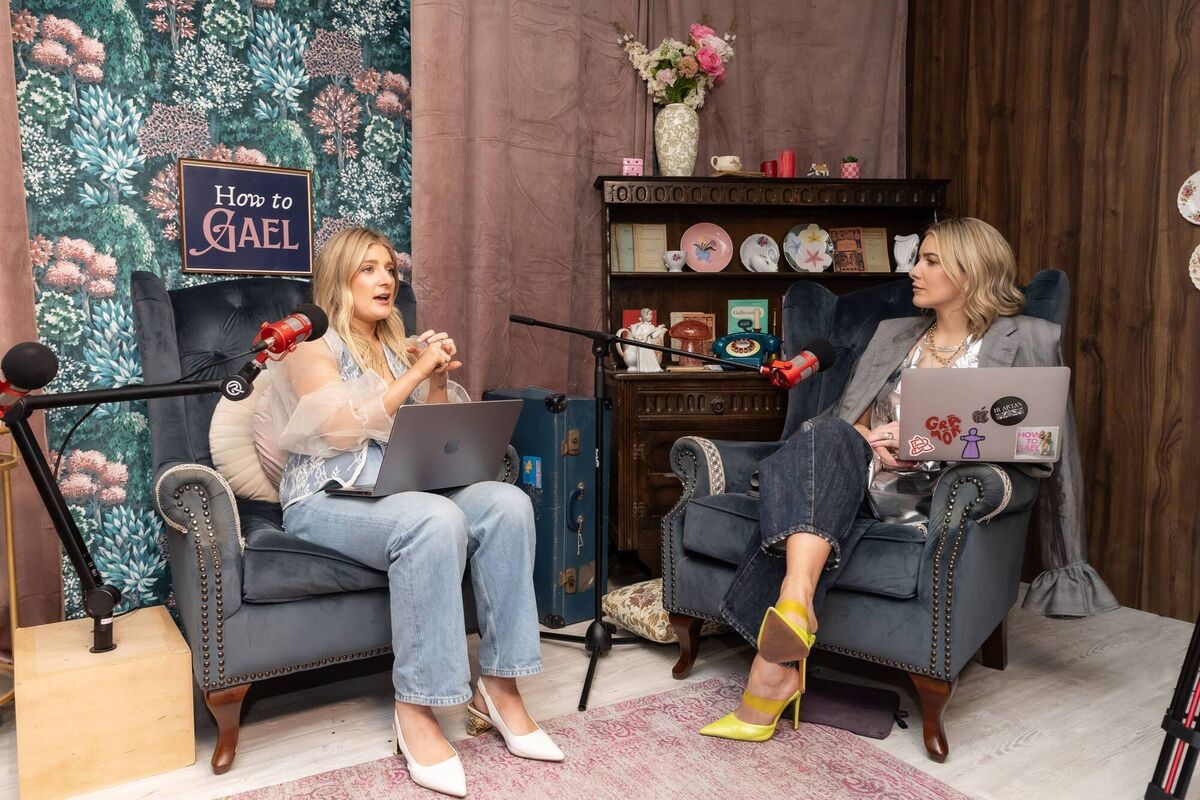
: A lot of people in Ireland have Irish but don’t feel confident using it. They’re afraid of getting something wrong or sounding silly. What we try to do is make it less intimidating. It’s very normal to just ‘caith isteach’ — to throw in a word or two here and there. That’s actually how a lot of people speak.
: You just have to be ballsy about it.
: It’s a privilege to talk about the Ireland and the Irish language we would love to experience, but we also have to acknowledge that there’s a big, long road ahead of us if we want that to become a reality.
: It’s all well and good to talk about a cultural revival, but not if nobody can afford to live here. People come to Ireland for the language, for the culture, for the traditional music. They want to experience these things authentically. We have great tourist attractions like The Cliffs of Moher, Brú na Boinne etc that gives us a window into our past. In the Gaeltacht we have a living breathing organism that preserves and furthers this culture, our most valuable commodity maybe.

Its becoming increasingly difficult for these communities to survive. Unless we make a drastic change there wont be any Gaeltacht communities and there certainly wont be any cultural communities left in our cities and villages as its getting harder and harder for creatives to live here.
We have a horrific housing crisis that feels like it’s never going to end. And it affects everything about how people live. Who wants to live at home in their twenties and well into their thirties? People should be out building lives, making mistakes, figuring things out.
But a lot of people can’t do that anymore. They can’t have parties, they can’t hang out with their friends all day, they can’t just exist in the way people in their twenties should be able to. There’s this whole stage of life that people are missing out on.
: NUIG is talking about scaling back its arts degree and this is a direct result of the housing crisis. An arts degree is less attractive to students now because of the current economic climate they need a direct path into employment. NUIG was always such a strong place for the Irish language. It was known for being a bilingual campus where people could really immerse themselves in the language. So what does that tell us about the future of our language and the standard of education we can offer people here?
: When I was in college in Galway I was paying €300 a month in rent and that allowed me to go on and do a MA and a PhD. People can’t afford that kind of experience anymore. You start to wonder what that means long-term.
What kind of adults are we going to produce in twenty years’ time if people never get the chance to have those formative experiences?
: I think it’s really important for our generation to be politically engaged. We can’t just sit back and assume things will sort themselves out.
A podcast is our form of art from week to week. And like any art form, it reflects the world you’re living in.
: CMAT made a really good point recently. She said that art is political. And she’s absolutely right. There’s no use in going back and learning the Irish language and then not giving a fuck about what happens to Ireland.
: Our Catherine Connolly interview was a real How to Gael highlight. Cool is such a gammy word, but it did feel cool. It was one of those moments where you suddenly realise that something which started very casually has grown into something people are actually paying attention to.
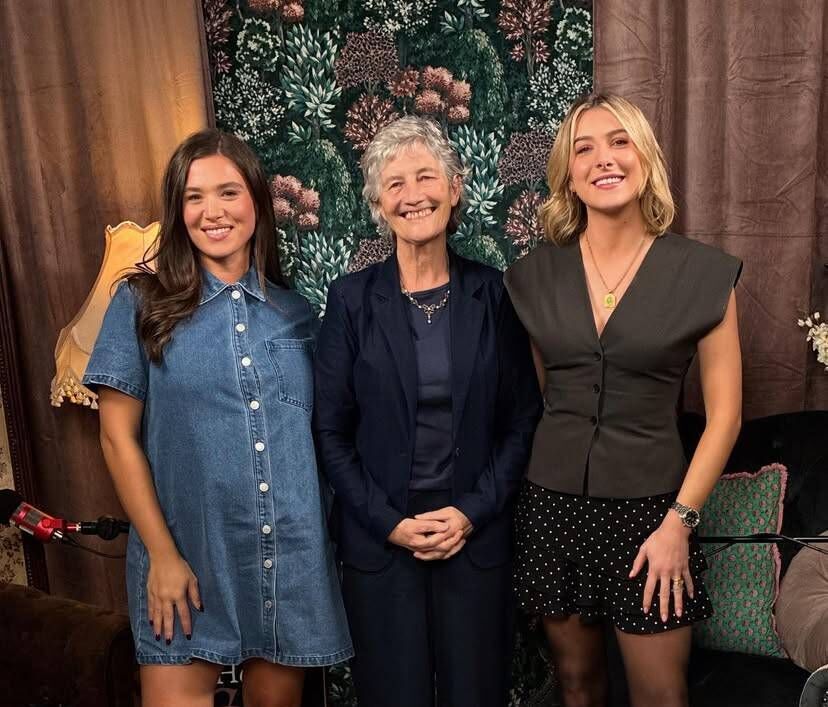
: I think there was a sense that younger people were actually engaging with what she was saying in a way that felt quite fresh. It felt like a real young person’s vote. There was energy there that maybe people hadn’t expected.
: We were mentioned in the RTÉ documentary about it, and I remember thinking — isn’t it amazing what a year can bring? A year earlier, we were just having conversations between ourselves, and suddenly we’re part of this bigger cultural moment. This is where our United Ireland series grew from. We’re interested in having these conversations and our listeners are interested in having them too. To have sat down with the president of Ireland and now to get to sit down with the Taoiseach and talk about the future of Ireland is a real privilege.
: Young people are incredibly engaged when it comes to politics, culture and language. I think sometimes there’s this perception that younger generations are disengaged or apathetic, but that’s not what we’ve seen at all. When the conversation feels relevant to people’s lives, they’re absolutely paying attention.
- How to Gael’s ‘Le Gealaí’ live show travelled to Paris on February 20 and London on March 14. Their next stop is Cork’s Opera House on March 28. They will be in Killarney on April 18 and in Dublin’s Ambassador Theatre on October 8. Visit their Instagram @howtogael for more
- ‘How to: Unite Ireland?’, a series exploring the question of a united Ireland will launch March 19. You can listen wherever you get your
: [How to Gael's] upcoming live shows celebrate some incredible women from Irish history and culture. There’s storytelling, there’s music, and there’s a lot of fun in it as well. It’s really about celebrating being Irish and celebrating being a woman.
: [The tour name] 'Le Gaelaí' means to have gone a little bit mad — a kind of temporary madness. But some of the most iconic women to come out of Ireland were seen as a little bit mad in their time. Women like Sinéad O’Connor, who were speaking out about things long before people were ready to listen.
So in a way, it’s about reclaiming that idea — celebrating it, and using your voice.

: On the question of a United Ireland... it’s a really big question. And I think a lot of people steer clear of it because they don’t want to give their opinion in case it’s wrong, or because they feel like they don’t know enough about it to speak confidently.
: It’s a real dirty subject sometimes. And we came of age in a time when there was peace on this island, which is something we absolutely shouldn’t take for granted. But now we’re looking forward and asking how we can shape Ireland and make it a better place.
The idea of building a new state doesn’t come along very often in the history of countries. And things are so frustrating at the moment that you almost have to be optimistic about the possibility of doing something differently to get through it.
: I’ve learned so much from bringing in experts. I’m probably in the majority of people from the south who feel like they don’t know enough about the subject. But that’s exactly why we wanted to do the series. People down south really haven’t got a sense of what unification would actually look like, so we’re trying to start the conversation.
The first episode is Taoiseach Micheál Martin. For us, it was important to start with someone who is right at the centre of political decision-making in Ireland. It’s a chance to ask questions that a lot of people our age are curious about, but maybe don’t always hear discussed in detail.
: What surprised me most, was that there weren’t really any answers. It can be overwhelming when you realise how much work there is to do. But generally, people want to make this the best country it can be. Everybody wants to dig ourselves out of this hole.
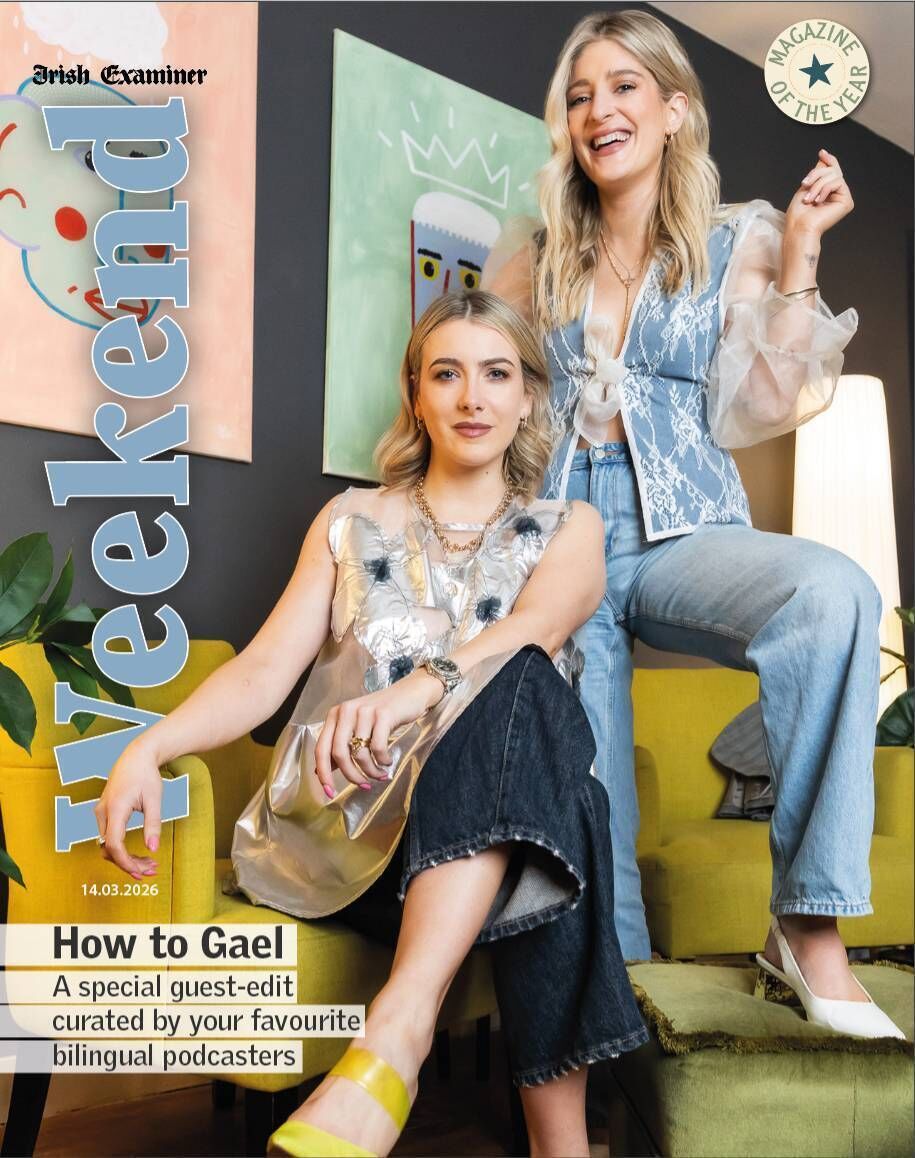
Fáilte romhaibh to our St Patrick’s day special edition of Weekend magazine where we’re shining a light on all things Éire. For anyone who doesn’t know, we are two thirds of the popular bilingual How To Gael podcast (our third member Síomha is currently on maternity leave) agus is mór an phribhléid dúinn a bheith ag obair leis an Examiner chun an eagrán speisialta seo a chuir i gcríoch.


CONNECT WITH US TODAY



Be the first to know the latest news and updates