Three simple exercises couples in a romance rut can try at home to reconnect

Carmel Wynne: 'Put a timer on for two minutes, and for that two minutes, just look at your partner. Usually even couples who are fighting will often just hug after that without saying anything, because that rekindles the intimacy.'
Celebrating Valentine’s Day can be wonderful in the early stages of a relationship, when sparks fly and you can’t get enough of each other. Then life happens, and work, kids, and bills take over. Before you know it, you and your partner are more like housemates than lovers. For couples who have found themselves in a bit of a romance rut, buying flowers and chocolates can become just another job on the to-do list.
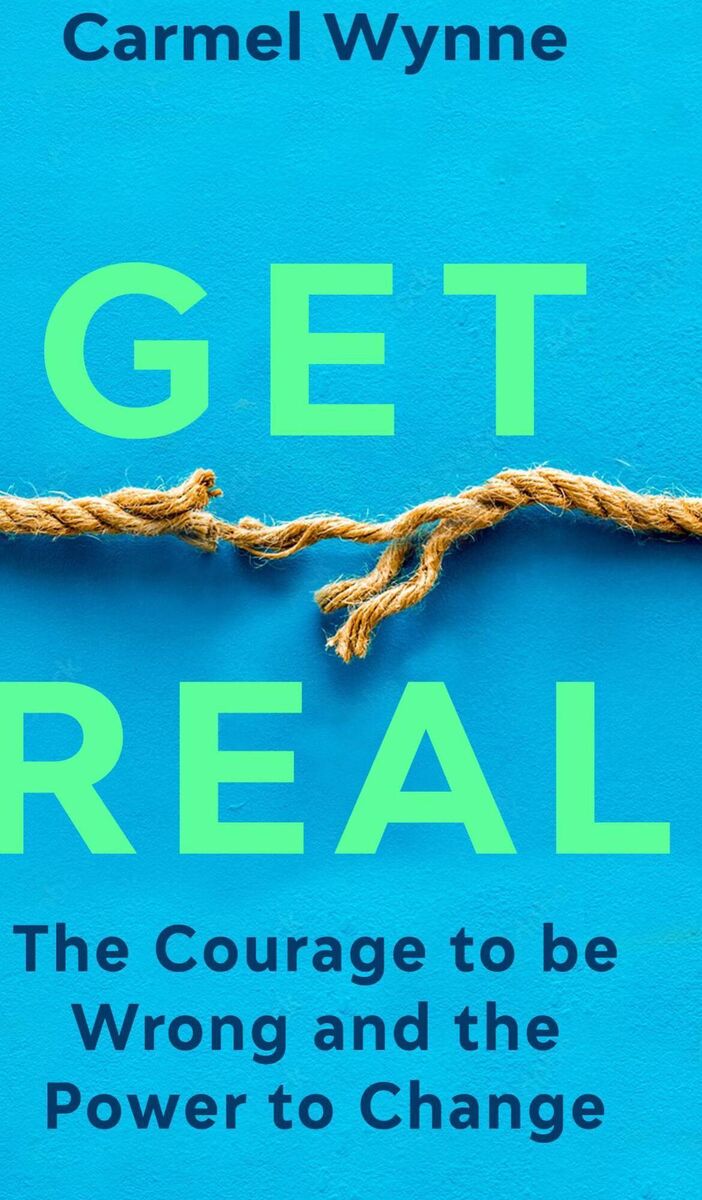
If this sounds familiar, a new book called , by sex and relationship expert Carmel Wynne, might be the perfect Valentine’s gift for your other half. This no-nonsense guide promises to cut through the typical, fluffy relationship advice and tackle what’s really going on when partners drift apart.
“The purpose of the book is to invite people to see how so much stress [comes from] not communicating clearly or asking for what they want, or not being tolerant and compassionate with themselves,” says Wynne.
This is her fifth book, and the first she has written in 23 years. During that time, she has been helping people to solve problems in their relationships.
“For the last quarter of a century, I have worked both as a counsellor and as a life coach, and the way I work with people has empowered them to sort out their issues and their problems,” says Wynne.
“I would work a lot on changing your communication, not changing you, but framing things in a different way.”
While she may not be a well-known figure on social media, she has been sharing her refreshingly honest approach to sex education for many years.
In the 1990s, Wynne was interviewed by Gay Byrne on , where she introduced the audience to the topic of oral sex. A complaint was made to the Broadcasting Commission but was not upheld.
“We actually mortified our daughters because my kids were in secondary school at the time, and it was mortifying for Gay, whose daughters were [young] at the time as well, that their parents were actually talking about sex on ,” she recalls.
In the early 2000s, she brought her straight-talking approach to teenagers when she delivered sex education lessons in schools.
“I used to be known as ‘The Sex Lady’,” she says. “Secondary schools used to have retreats, and I was embarrassed with the material that they were giving me to do… I would say to the kids ‘I’m sorry, what you got here today is probably not very helpful… would you please tell me what you really need to know so I can do better tomorrow?’”
She soon gained a reputation for giving honest answers to questions and sharing practical information with students.
“I brought in condoms with me, coils, IUDs, femidoms [female condoms]. I brought in the whole lot. If they needed the information, I gave it to them.”
The lessons proved popular. One afternoon, Wynne was running a session in a school with such poor attendance rates that the teachers did a roll call in the morning and after lunch. “They said ‘For the first time ever, we had more students back after lunch than we had in the morning’,” she remembers.
Now, Wynne is focusing her attention on helping couples whose relationships have grown stale. Her new book combines stories from people with simple exercises for couples who have drifted apart and want to find each other again.
She emphasises this book is not about gimmicks or simple tips but getting to the route of true intimacy — open and truthful communication.
“I think what happens for a huge number of couples is they live such busy lives that their conversations, they stop. They move from being friends to being busy about who’s doing what,” she says.
“When couples aren’t communicating and they don’t have that intimacy, they may be having sex but they’re not making love. Because to make love and have that intimacy and connection, you need to be communicating.”
This lack of communication creates problems in the bedroom, particularly at a time of unrealistic expectations about sex and intimacy.
“We’re not good at talking about our sexual needs or sexual desires, and part of the problem is people don’t have the language,” says Wynne.
“With younger couples, there’s so much pornography about that the expectations of what good sex is like are unrealistic… There’s a whole issue around communicating in the bedroom about what you like, what you don’t like, [and] what you want to experiment with.”

To help couples begin to bridge the gap between them, Wynne shares three simple exercises that partners can try at home to reconnect. As a starting point, it’s good to let your partner know how you’re feeling. “If this is coming up for you, you say to your partner: ‘I really miss how we used to be. I remember how you used to look at me’.”
Wynne says a good indication you’ve drifted apart is how often you really look at your partner. She recommends setting aside two minutes to look at each other “eyeball to eyeball”.
“If you’re beginning to realise that it’s been months, maybe longer, since you’ve really looked at your partner, stand up with your partner, put a timer on for two minutes and, for those two minutes, just look at your partner,” she says.
“Neither person says anything. Just look at your partner for those two minutes. And it’s a beautiful exercise because it really [connects] to the person’s experience, it’s not head stuff.”
Although it “may feel like a lifetime”, Wynne believes it’s worth sticking with it. “That looking at each other, really looking at each other… and not saying anything — that is a beautiful, intimate moment,” she says.
“Usually, even couples who are fighting will often just hug after that without saying anything because that rekindles the intimacy.”
To help foster honest communication, Wynne recommends asking yourself three questions to clarify your own desires and needs within the relationship.
These are:
- What do I want?
- What will that do for me?
- Why is that important?
“I call that spiralling down,” she says.
“The clarity that comes when you get a sense of why it’s important, because nearly always it’s… ‘I want to feel lovable, I want to be special, I want to feel cared for’, and that’s why people drift apart, because that need is not being met.”
Often, couples drift apart because unspoken resentment quietly builds up between them. “If there are resentments between a couple, those resentments cause them to drift apart, because they’re not going to be talking in a friendly way, and then that cuts down the intimacy, and they’re not having sex,” says Wynne.
Her advice is to name the resentment, and think about how you would like to feel if you were in a better space with your partner, rather than expecting them to automatically know what you want.
“It’s not your partner’s role in life to live up to your expectations. When your partner is not living up to your expectations, many people interpret that as, ‘If they truly loved me, they would… pick up the towels [or empty the dishwasher'.”
Try to use language that focuses on your own feelings, rather than criticising your partner’s behaviour.
Use statements starting with, ‘When you [do X], I feel [Y] because…’ to express emotions clearly and honestly.
“Rather than say you left the towels on the floor again, say ‘When you leave the towels on the floor, I feel disappointed or I feel ignored’,” adds Wynne.
By focusing on how we feel because of a certain situation, we discover what we really want.
- , by Carmel Wynne [Mercier Press] €16.99


CONNECT WITH US TODAY



Be the first to know the latest news and updates