Are winter sports suddenly sexy thanks to Heated Rivalry and the Olympics?
From pop-up rinks to Olympic dreams, Irish athletes are building winter sports culture despite a country short on ice
Are winter sports suddenly sexy thanks to Heated Rivalry and the Olympics?

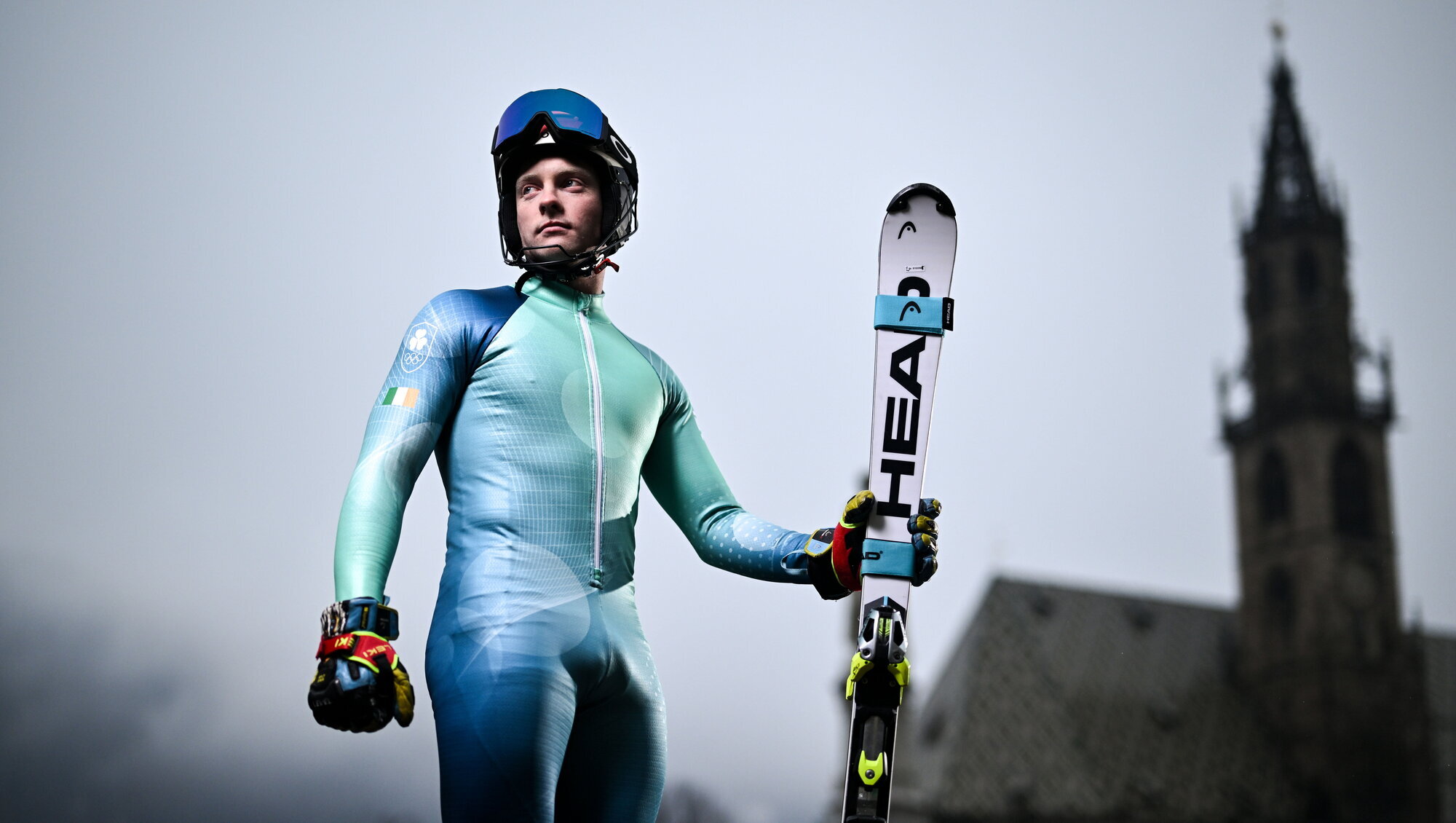
Team Ireland alpine skiier Cormac Comerford in Piazza Walther during the Milano Cortina 2026 content capture day ahead of the Winter Olympic Games in Bolzano, Italy. Photo by David Fitzgerald/Sportsfile

In recent weeks, what can only be described as a phenomenon took hold. Suddenly, everyone seemed to be talking about... ice hockey?

Heated Rivalry, a steamy drama about two gay ice-hockey players shot to success against the odds. Perhaps surprisingly, it has had the side effect of piquing people’s interests in the world of ice hockey. In Canada, the National Hockey League commented on the recent swell in popularity, signing off a recent press release with “see you all at the rink”.

Aye, there’s the rub.

Here in Ireland, we don’t have a permanent ice rink, or much of anything by way of winter sports facilities. It’s not just ice hockey — winter sporting came to Ireland quite doggedly and against the odds.

After a failed 1988 attempt, in 1992 Ireland competed in the Winter Olympics for the first time on the narrow blades of a bobsled.

Ireland fielded two teams: One piloted by Terry McHugh with Pat McDonagh, another by Gerry Macken with Malachy Sheridan.

Macken laughed that it was “like getting a Swiss hurling team to take on Kilkenny”.

They all persevered, sustained by an “if they can do it, why not us?” mentality. This year, Ireland’s chef de mission, Nancy Chillingworth, expects a delegation of up to eight athletes, across seven different disciplines, to take part in the Winter Olympic Games.

As a people, we’ve found ways to mould winter sports to fit our circumstances. The Ski Club of Ireland is a perfect example.
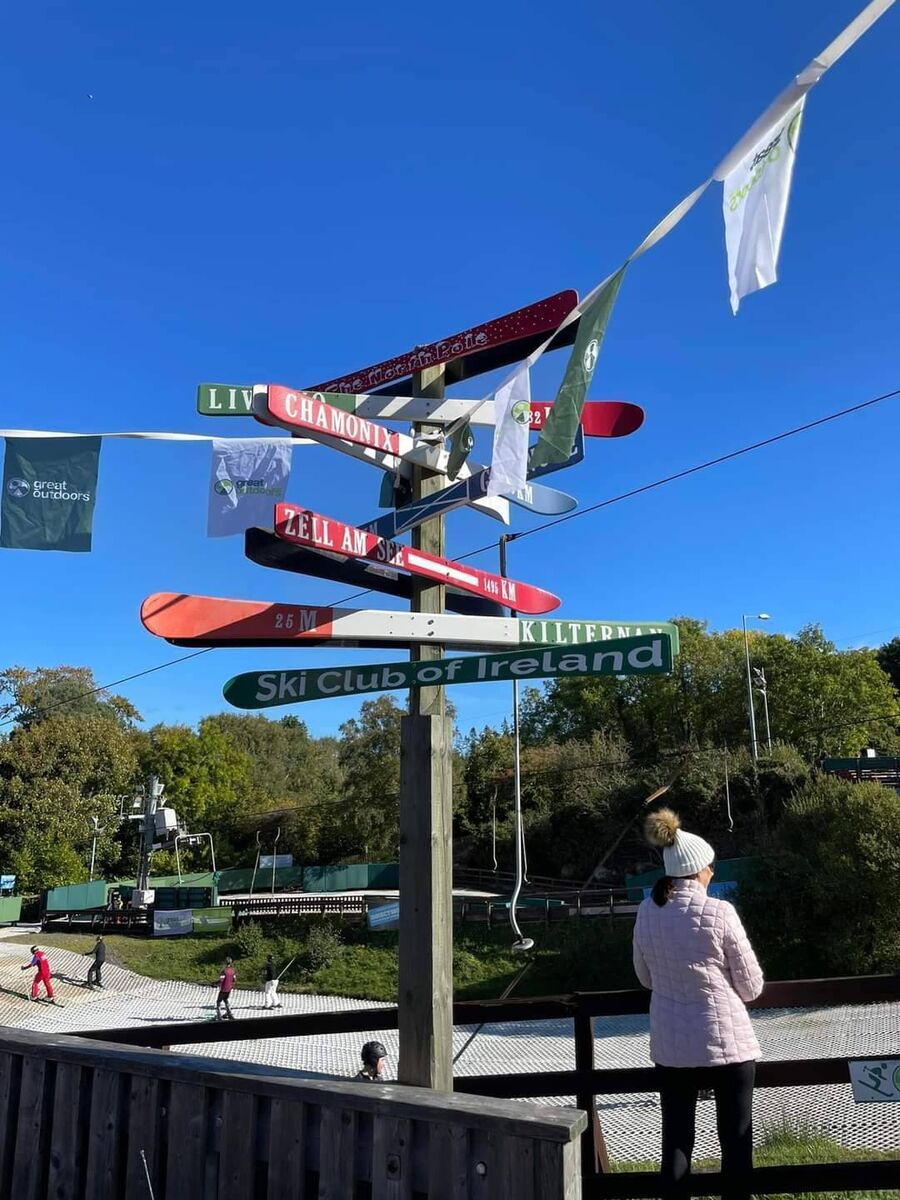
The Ski Club of Ireland has among the finest dry slops in Europe

Founded in 1964 ,“it started as a social club of skiing enthusiasts,” explains Aileen Eglinton, the club’s spokesperson, “and in the mid-1970s, the club moved to its current location” atop a green wooded hill outside Dublin.

“The facilities here at Kilternan are now among the finest dry slopes in Europe,” she says. “We’ve trained thousands of people [to ski] on them since.”

It’s great that curious people, “can get a taste for it in Ireland, before they go to the slopes”, she says.

Her sentiment is echoed by the committee of Trinity College Dublin’s SnowSports Society. The committee is not a competitive sporting community but a way for people to dip their toes, or for people who’ve had a familial taste to get the chance to upskill with other enthusiasts their own age.

Every year they organise and subsidise “a great pack of four lessons” training in Kiltiernan before their annual ski trip.

Angus Meade, the society’s president, is quick to point out that “the difference between the people who went to Kilternan, even just once, compared to the people who didn’t, is profound”.

Fellow committee member Katharine Clarke says that they’re really fortunate to be able to offer ways to get their contingent “trained up to the stage that when they are on the trip they can properly ski with their friends, and have a much better time on the slopes”.

For them, that’s what it’s about. The recreational sport, and the odd competition with University College Dublin.

Other people who trained on Kiltiernan include Wicklow alpine skier Cormac Comerford, who is among the four Irish athletes who will compete in this year’s Winter Olympics, Milano Cortina 2026.

This year marked his fourth attempt at qualifying. Speaking to The Irish Times last week, he said: “There are so many obstacles coming from Ireland, even just putting your feet on snow... but where there’s a will, there’s a way.”
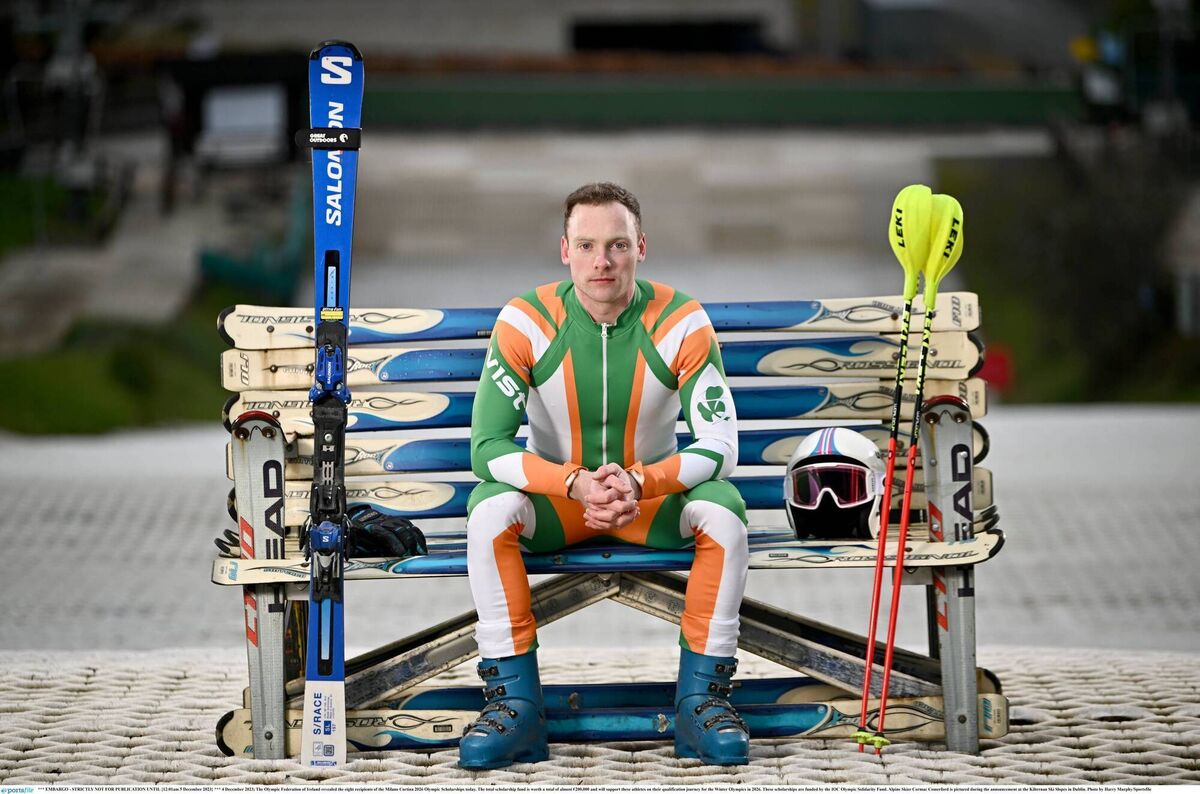
Alpine Skier Cormac Comerford at the Kilternan Ski Slopes in Dublin. Photo by Harry Murphy/Sportsfile

“We have a marvellous athlete in Cormac Comerford,” according to Eglinton who knows him through her work with Ski Ireland. “To see somebody like Cormac, who didn’t grow up in the Alps, who learned on a dry slope in Ireland, is incredibly important for winter sports here.”

Trailblazers like Comerford get a taste for winter sports by exposure.

Dillon Judge, is a British-Irish figure skater competing under the Irish flag. His first exposure to the sport he has dedicated his life to was on TV.

“I was young. I was watching figure skating in the Winter Olympics and I said to my mom, ‘I want to be an Olympian’,” he told me.
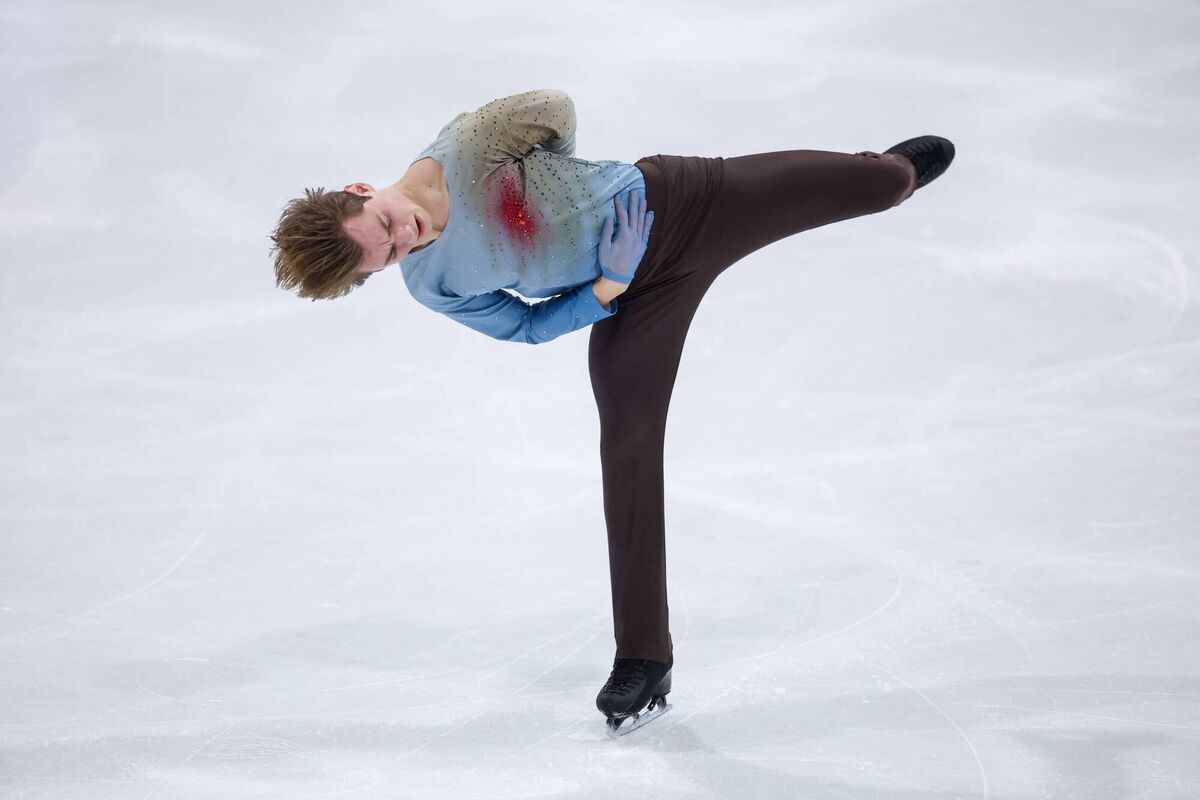
Dillon Judge competes in the Men's Short Program on Day 1 of the 2025 ISU (Photo by Igor Kralj/Pixsell/MB Media/Getty Images)

“We don’t have the mountains, we don’t have the ice rinks in Ireland.”

Judge can still recall the exact performances that mesmerised him as a kid.

“It was Jason Brown and Yuzuru Hanyu and Javier Fernández,” he says, naming world-famous figure skaters he watched on the screen at age seven. “I remember them so clearly.”

He is part of a steadily growing cohort pushing winter sport into the national conversation. Still early in his career, he has already marked himself out on the international circuit, claiming bronze at both the 2024 Triglav Trophy and the 2024 Lõunakeskus Trophy. In January 2026, Judge finished third overall at the Dragon Trophy in Ljubljana, Slovenia.

For all the romantic talk of underdogs and trailblazers like Judge and Comerford, the realities of pursuing winter sports as an Irish person are, to put it mildly, daunting. Every step of the journey requires extra effort. But if there is one thing every Irish winter athlete has in abundance, it’s resilience in the face of unlikely odds. They’ve been living with scarcity for so long that they’ve built a whole ecosystem around it.

Overshadowed by Gaelic games, football, rugby, and even summer Olympic sports, there are no lucrative college scholarships for ski racers or bobsledders in Ireland, no government-funded winter sports institutes. For the most part, there isn’t even snow.

The 1992 athletes were almost entirely privately funded. Famously, the bobsleighs used in ’98 were rented from Prince Albert of Monaco. The hermetically sealed world of winter sports is often referred to as “blueblooded” because the financial barrier to entry is extraordinarily high. Many Irish winter athletes self-fund or rely on family support or connections to get sponsorships.

Eglinton agrees that cost is the obvious barrier. The material constraints are dramatic. Skiing has ancillary costs like “lift passes, equipment, tuition, appropriate attire” and this is where the classic criticism of winter sports, elitism, comes into play.

Judge called figure skating “quite elitist”, noting the structural fact that, “ice time costs money, coaching costs money, travel costs money”, and if you are not independently resourced, the sport is too hard to sustain for most people — even if they show promise.He talked about how, even at 21, he couldn’t train at his level if he had to work a part-time job. He is eternally grateful that his “family gives so much” so he can be in the position he is in. His father is retirement age but still working. He will continue for as long as Judge wants to skate. The sport runs, in other words, on private sacrifice.
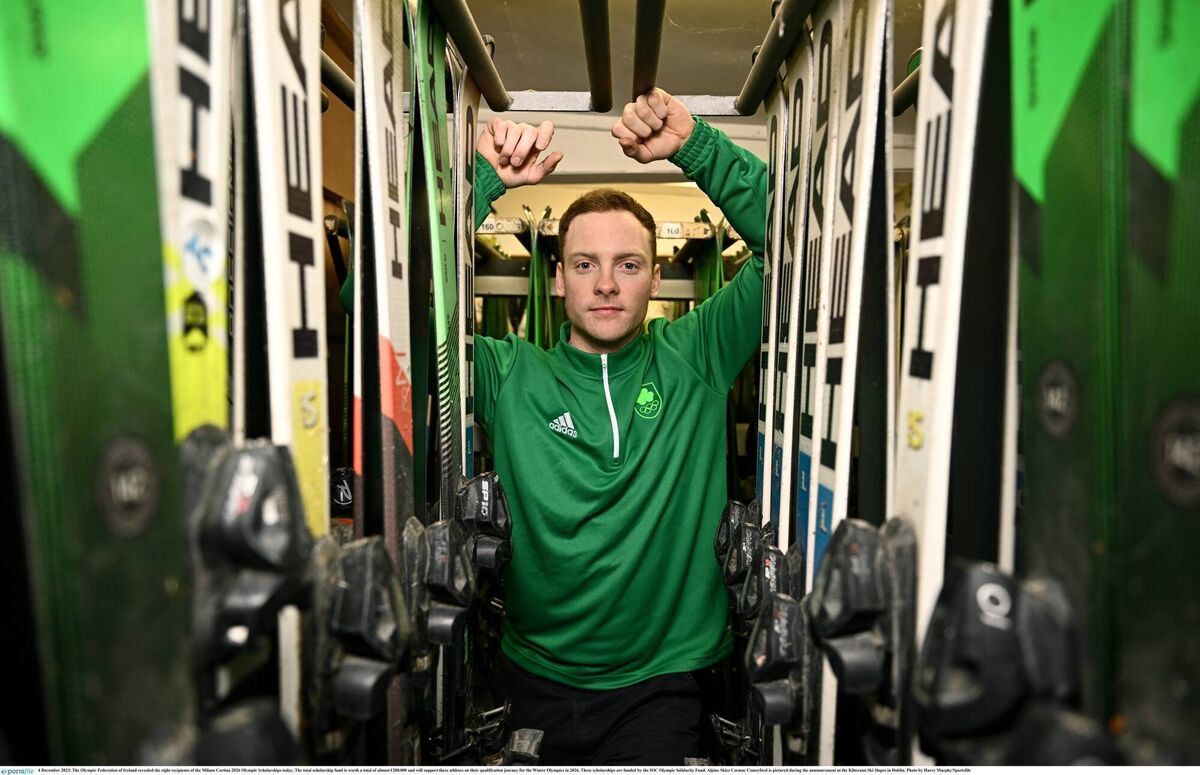
Alpine Skier Cormac Comerford at the Kilternan Ski Slopes in Dublin. Photo by Harry Murphy/Sportsfile

Sean Gillis, president of the Ice Skating Association of Ireland, told me that Ireland’s skating system is, for want of a better word, lacking.

“We run learn-to-skate lessons on the pop-up rinks when they open at the beginning of November until around about now,” he said.

“It’s about two, two and a half months of ice time.”

And the demand is intense: “We’re literally turning people away.”

Imagine, he said, if Ireland’s most beloved sport had to operate like this: “A GAA pitch, but it’s a third the regulation size, and you only get to use it for three months of a year.”

There would be parliamentary inquiries. But GAA is a fundamental part of Irish culture and winter sports, like all athletics, come to Ireland as part of a globalised culture.

For many new communities in Ireland, Gillis tells me: “Teaching your child to skate is as fundamental as teaching them to ride a bike… When they contact us asking where Ireland’s permanent rinks are, we have to tell them that there aren’t any.”

However, these communities create demand for facilities and programs that were easy to write off before.

Another factor to consider is the country’s broadening cultural horizon. Ireland has grown more cosmopolitan and sports-minded in general. The generation that grew up in the 1990s and 2000s came of age in a more globalised Ireland. An Ireland where rugby, basketball, and even snowboarding, seeped into the national consciousness alongside GAA during their formative years. These people covet new activities; they’re fitness conscious, travel savvy, and far less bound by the old idea that “Irish people don’t do winter sports”.

The question, however, remains: Can Ireland conjure a culture of winter sporting?

Judge, for his part, thinks the first step towards that future would be for Ireland to get a permanent rink.

“Ireland always felt like home,” he says.

If we ever got our big Olympic ice rink in Dublin. I don’t know if I could stay away. I’d probably come back and teach.

The idea of Irish kids being coached by an internationally renowned Irish figure skater is almost reason enough to build one. And then another one.

Ireland did, briefly, have a ‘permanent’ Olympic-sized rink: The Dundalk Ice Dome, which opened in the late 2000s, right in time to be kneecapped by the recession. By 2010 it closed.

“The building is still there, and it’s just lying idle,” according to Gillis. It has a kind of symbolic weight in Irish winter-sport circles. It haunts the narrative.

If Dundalk stands as a monument to our past shame then the much-whispered about prospective rink in Dublin’s as of yet unfinished Cherrywood hovers like the ghost of infrastructure future. Everyone is talking about it, but no one is sure it’ll actually happen.

OFI’s winter sports strategy proposed the “I don’t want to jinx it by talking about it” Olympic-standard ice arena in Cherrywood. The €190m project could, in theory, transform Irish skating. There’s also talk of
developing a national indoor snow centre — a ski dome — in the longer term, which would be a game-changer for ski and snowboard training. That said, Ireland is very good at having projects in the conditional tense.

Gillis allows himself a moment of rosy imagination: “You could have thousands of kids coming through skating classes, hockey leagues starting up, figure skating competitions... it would really put us on a different level.”
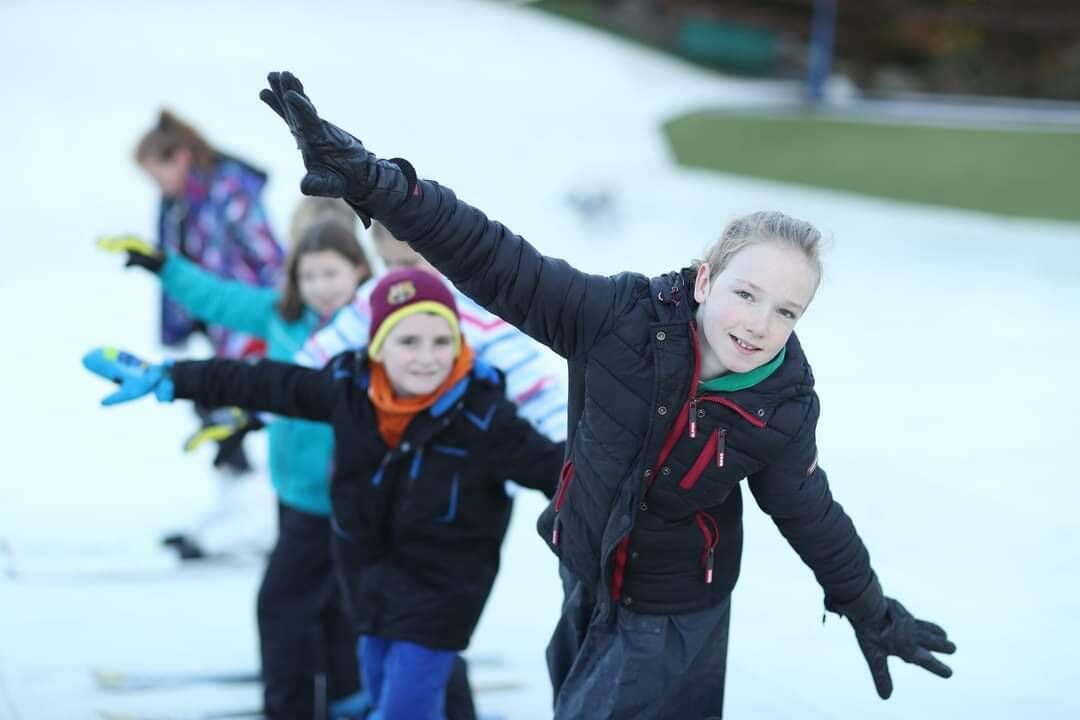

You could have thousands of kids coming through skating classes, hockey leagues starting up, figure skating competitions... it would really put us on a different level

If we had a rink like that, ice skating could, in theory, become as normal as going to the pool.

Gillis described the project with the careful optimism of someone who has watched too many promises dissolve into committees. He seems to know the way to get the rink of his sporting dreams is to appeal to capitalist economics. He talked with surety about how, up North, they have an ice rink that is “extremely profitable”.

Belfast’s SSE Arena opened in 2000. Alongside the Dundonald Ice Bowl, it created a local ecosystem for ice sports.

Eglinton, ever the optimist, believes government support will come if the public shows interest. She hopes Heated Rivalry might help the cause, but she points to how other Irish sports once considered niche have blossomed with modest funding and achieved success on the world stage.

“Look at how our rowers have come on,” she says, “once they showed world-class potential, the support followed. If an Irish athlete is competing at that world level, they deserve some support. We should be proud of all our athletes, regardless of sport.”

Yes, there’s a risk of over-romanticising these underdogs, of projecting grand meaning onto a few hardy souls sliding down mountains. One could argue that winter sports will always be a minority pursuit here, a curiosity. But who’s to say an Irish kid strapping on skates or clipping into skis today won’t be tomorrow’s surprise success story? And perhaps a raunchy queer love story is the start of that journey. How very 2026 would that be?

x

More in this section

Lifestyle

Newsletter

The best food, health, entertainment and lifestyle content from the Irish Examiner, direct to your inbox.

Cookie Policy Privacy Policy Brand Safety FAQ Help Contact Us Terms and Conditions

© Examiner Echo Group Limited