Why are Easter eggs smaller and Mini Eggs more expensive? We compare our receipts
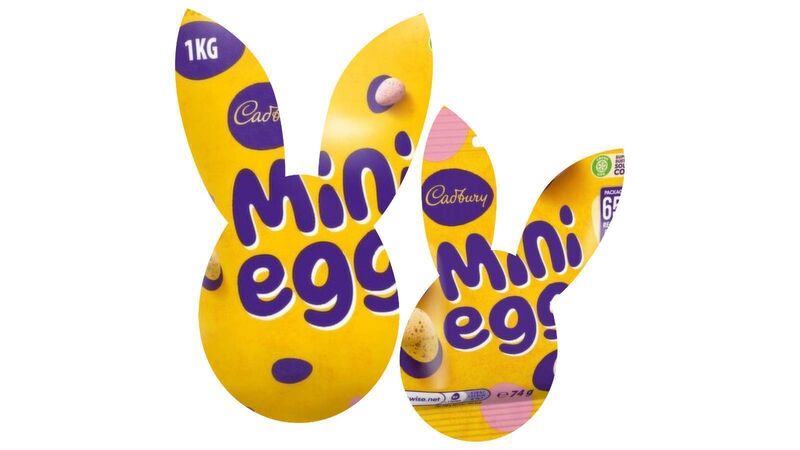
Buying a kilo of Cadbury Mini Eggs will cost you €20 this year. And the sized of Easter Eggs has dropped by 24.2g on average over the last seven years
You may have noticed that the price of some seasonal sweet favourites has rocketed in recent months. For example a 1kg bag of Cadbury Mini Eggs now costs €20 in stores such as Dunnes, Supervalu and Tesco. However, buying a 74g bag costs €4 which works out at €54.05.
Ireland has long had a love affair with chocolate. Anyone who travelled down the Greencastle Road of Coolock in Dublin while the Cadbury Flake was in production can tell you of the heady smell filling the air. You could almost taste the chocolate.
Like many Irish people, I love chocolate. I don’t eat it every day, but when I indulge myself, I will often reach for a piece of chocolate. There’s very few supermarkets or coffee shops that don’t have some form of bar on display and most restaurants will have a chocolate-based dessert on the menu.
Mondelez, a global food and beverage conglomerate, owns one of Ireland’s most popular brands, Cadbury but they also own other chocolate-based brands such as Daim, Milka, and Toblerone. Their 2024 annual report mentioned that the high cost of cocoa is likely to remain elevated into the future as it is exposed to climate change and regulations. Mondelez mentions that it has potential to significantly impact profitability.
Milk chocolate must contain at least 25% cocoa solids with 14% milk solids. Unless it's sold in Ireland, where we have a slight derogation. The ‘glass and a half of milk in every bar’ led to negotiations which resulted in our milk chocolate requiring at least 20% milk solids.
In America these limits are set by the FDA, which requires at least 10% chocolate liquor, 12% milk solids and 3.39% milk fat. Small wonder that American milk chocolate tastes so different to our traditional bars, or that it is a poor seller in the Irish market.
Increases in the cost-of-living impact businesses and consumers in different ways. There are now increased costs associated with shipping, packaging, along with higher sugar prices, milk, and cocoa. Manufacturers must constantly innovate and plan years in advance of products landing on the shelves.
Large and small confectionery manufacturers tweak their recipes, manufacturing methods, packaging, and transport to try to squeeze the greatest profit for their shareholders. Some manufacturers use more palm oil or vegetable oil in the ingredients to compensate for poor cocoa quality. Others decrease the cocoa volume in their bars and bulk this up with more sugar or sweeteners.
Changing a popular recipe is a calculated risk. There's a tipping point where consumers will stop buying a preferred product if they believe it has deviated from their preference and the manufacturer doesn't address it. On the other hand, if the price of a chocolate bar continued to rise to match the increased ingredient cost, then consumers would stop putting the bars into their shopping baskets.
This was very apparent in Autumn 2025 when several popular bars such as Club and Penguin no longer had enough cocoa content to be described as chocolate bars. The companies concerned said they had carried out extensive consumer testing to ensure that consumers would still enjoy the bar and not notice the difference. It’s likely that they started developing these recipes as much as two years in advance.
Yet, St Valentine’s Day will arrive in less than two weeks, followed swiftly by Easter, and we will all be bombarded with advertising for boxes of chocolate and easter eggs.
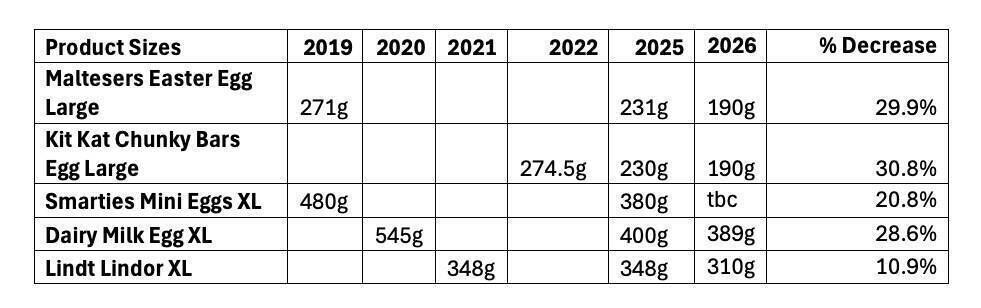
Those eggs have radically changed in the past eight years, with some eggs decreasing by as much as 30% in size, but prices remain stubbornly high. Last year, I tracked these exact same egg sizes, and it’s clear that the size of easter eggs is continuing to decline in the face of high manufacturing costs.
It’s not just large Easter eggs either. Small Cadbury Easter eggs such as Dairy Milk Freddo Faces have shrunk in the space of a year from 96g to 90g. I can confidently tell you this after examining my shopping receipt from this week last year.
The packaging is a wider concern too. Generating so much single-use cardboard and wrapping is not good for the environment. That packaging is costing us all money to recycle, not forgetting the environmental cost of the trees felled to make the paper and cardboard that is swiftly cast to one side when the chocolate is eaten.
While writing my column I still find myself hankering after a piece of chocolate. That desire is one that confectionery companies are depending upon, to justify their tinkering with decades old recipes in the chase to bolster their profit margins.
The problem is, how much are we prepared to pay to feed our chocolate desires? If you’re not prepared to give up on your addiction, expect to pay more and receive less for your money for many years to come.
If you're buying chocolate in the weeks ahead, check to see if it has a certification such as Fairtrade or Rainforest Alliance. Some larger manufacturers bypass these standards and have created their own sustainability measure. The stronger certification, the more ethically and sustainably-produced is the chocolate on sale.
I’m a big fan of 'Way to Go!' is sold in Lidl, and is incredibly good value, and Tony’s Chocolonely has excellent credentials.
You can find out more on fairtrade.ie
Or maybe consider putting the money normally spent on Easter eggs for the family on money towards a day out together instead. Start a new tradition of spending time together rather than buying more stuff.


CONNECT WITH US TODAY



Be the first to know the latest news and updates