'Bees are crucial to our survival — should we all start keeping bees to help them thrive?'
Today is World Bee Day. Jonathan deBurca Butler speaks to beekeepers and business owners who wax lyrical about community, colonies, and conservation.
'Bees are crucial to our survival — should we all start keeping bees to help them thrive?'

Aoife Nic Giolla Coda: “It is a small and close community. That knowledge of the bees is an ancient Irish tradition and, if I’m honest, my Dad was at the forefront of keeping it alive. He was one of the pioneers in native Irish honeybee conservation."
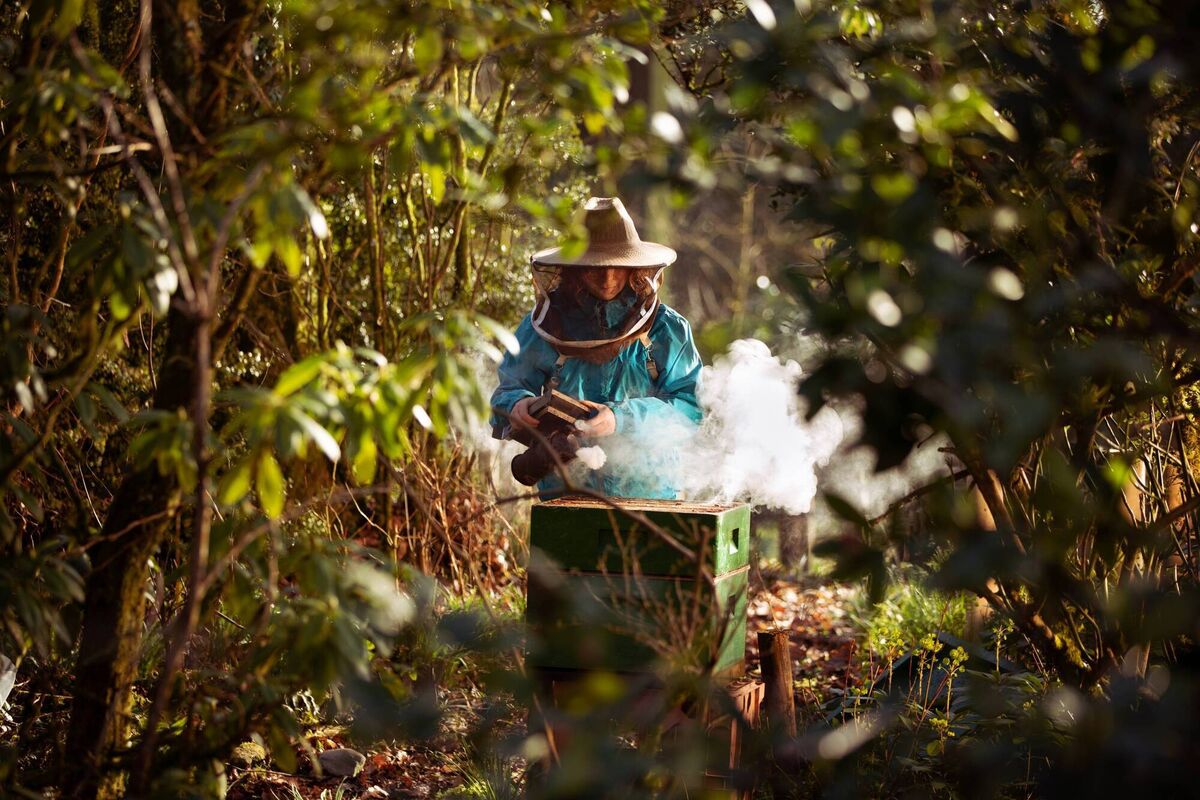
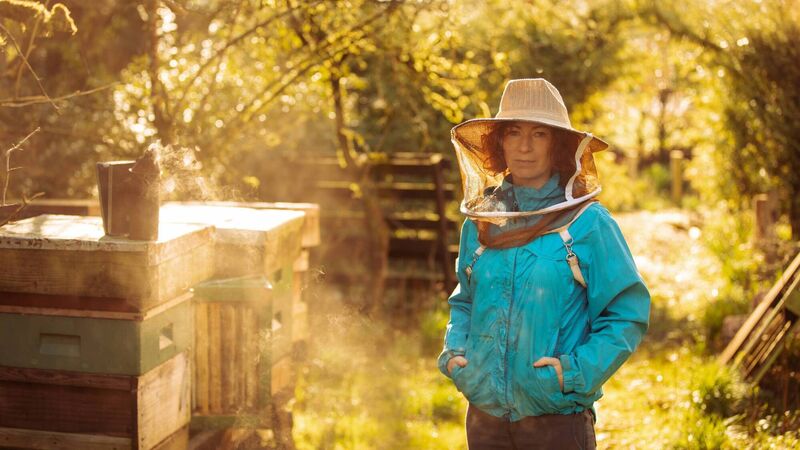
Bee-keeper Aoife Nic Giolla Coda says: “I used to get stung a lot when I was a child. I wasn’t even three when I got stung the first time. It’s one of my first memories. It’s fine, you get over it.” In Aoife’s case, there was little choice. 

Her father, Micheál, was maintaining generations of beekeeping family tradition, bringing his knowledge from his native Kerry to Tipperary in the 1970s.

“There were always beekeepers coming in and out,” says Aoife.

“It is a small and close community. That knowledge of the bees is an ancient Irish tradition and, if I’m honest, my Dad was at the forefront of keeping it alive. He was one of the pioneers in native Irish honeybee conservation. 

"He spearheaded the movement here in the Galtee Valley in the early 1990s. He got beekeepers together who committed to keeping only native Irish black honeybees, which is a threatened subspecies of honeybee. That eventually evolved and was replicated all over the island of Ireland.”

After a childhood with six siblings spent “talking at the table about mainly bees and honey”, Aoife took off for a career in graphic design and teaching. She set up home and started a family in County Clare, but was soon drawn back to the hive.

“I wanted my children to grow up beside family,” Aoife says. 

Though Galtee Honey Farm now has 170 hives, producing nature’s golden nectar is hit and miss.

“I also knew that if there wasn’t someone there on the farm to take it over, it just would’ve gone completely. I wasn’t prepared to let that happen. I’m a fourth-generation beekeeper, so I feel like I need to pass that on to the next generation.”

Though Galtee Honey Farm now has 170 hives, producing nature’s golden nectar is hit and miss. In a good year, honey is produced for two to three weeks at best and so making a living from honey is difficult. Since taking over the farm from her father, who is still working at 92, Aoife has had to find other sources of income.

“We make candles out of the beeswax and we do quite well in the gift market,” Aoife says.

“We also do honey tours on the farm. I’m a certified beekeeping instructor and, with my teaching background, I love telling people about the honeybees. It is such a fascinating world.”

When Hanna Bäckmo first arrived in Ireland 24 years ago, she had a rucksack and a sewing machine. Not long before, she had met her Irish husband in Budapest. When the couple moved into a “typical old-stone cottage with a half-acre garden”, she set about growing her own food.

“I come from a small island in western Sweden,” she says. “The climate here is great. You can grow things all year round. In Sweden, we’d have frost; you can’t even stick a shovel into the ground.”

Hanna Bäckmo: “The climate here is great. You can grow things all year round. In Sweden, we’d have frost; you can’t even stick a shovel into the ground.”

As part of her drive to thrive in the Irish climate, Hanna started growing peaches and nectarines.

“They flower early and require pollinators to help them bear fruit,” she says. “So my only chance of getting peaches was to get bees, because, of course, they survive as full colonies in the winter and, on good days, they will go out and look for pollen and nectar. So it was all for peaches.”

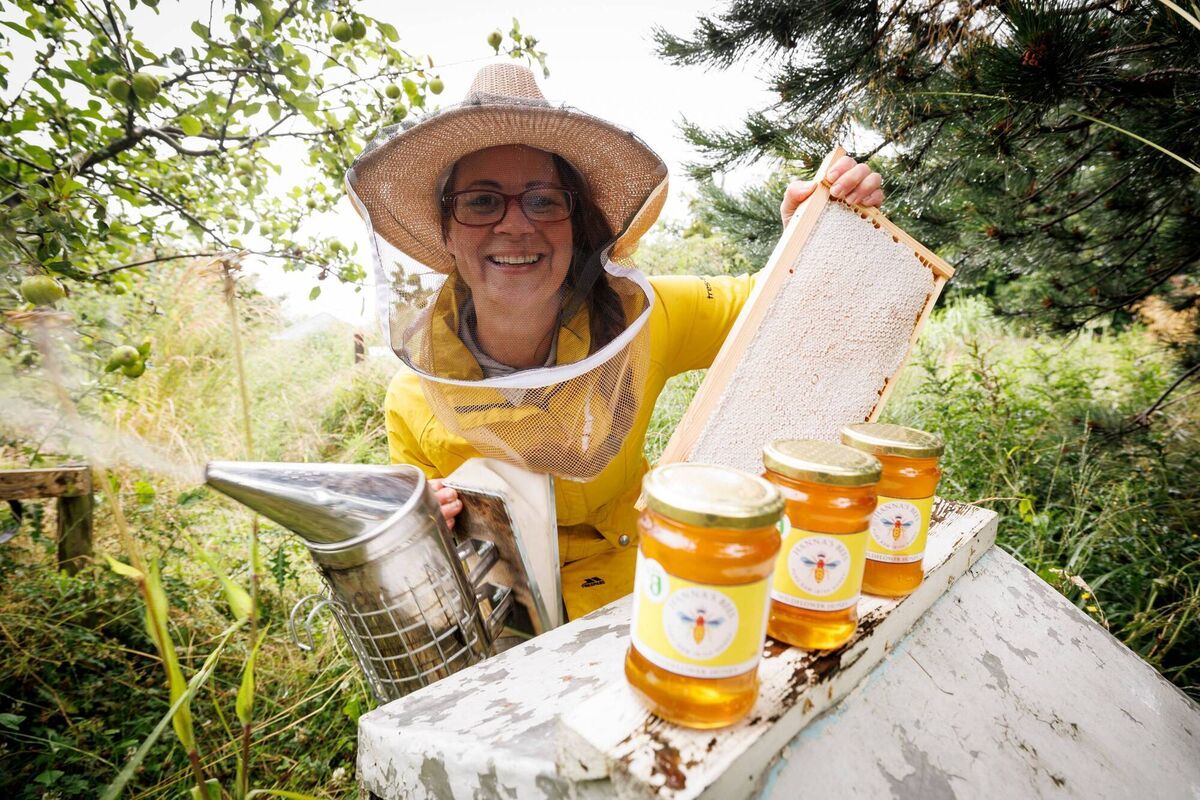
“I started with one colony and I’m now up to 70. I got hooked quickly. I was a dressmaker, making wedding dresses for 20-odd years. I quit that job, set up Hanna’s Bees, and just decided to be a full-time beekeeper.”

Hanna’s Bees employs five full-time workers, but, like Aoife’s farm, it cannot survive on honey alone.

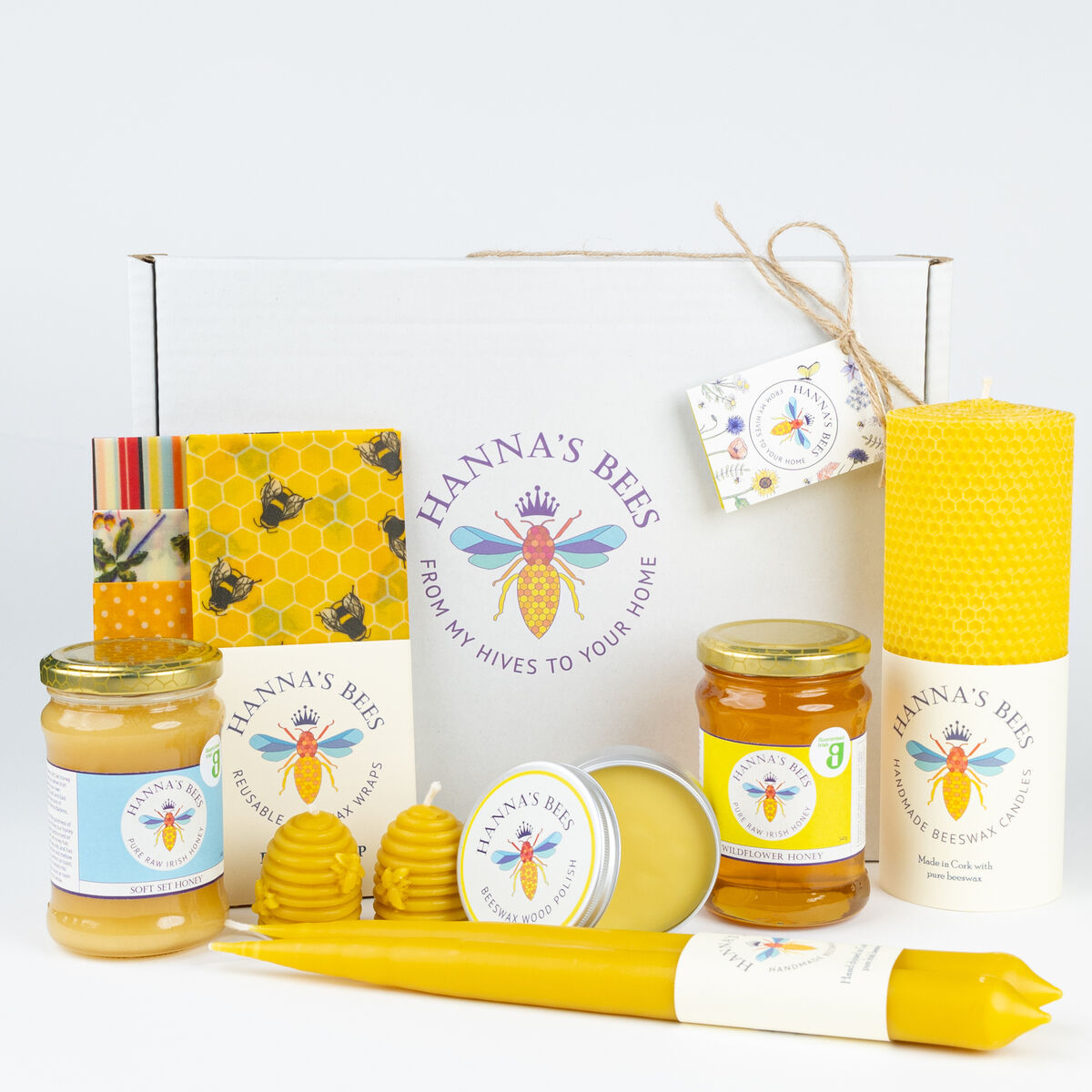
“We produce other honeybee products, so a lot of beeswax products, like polishes and candles,” Hanna says. “We have propolis and it’s amazing how many different products you can get from the hive. There is a real appetite for them.”

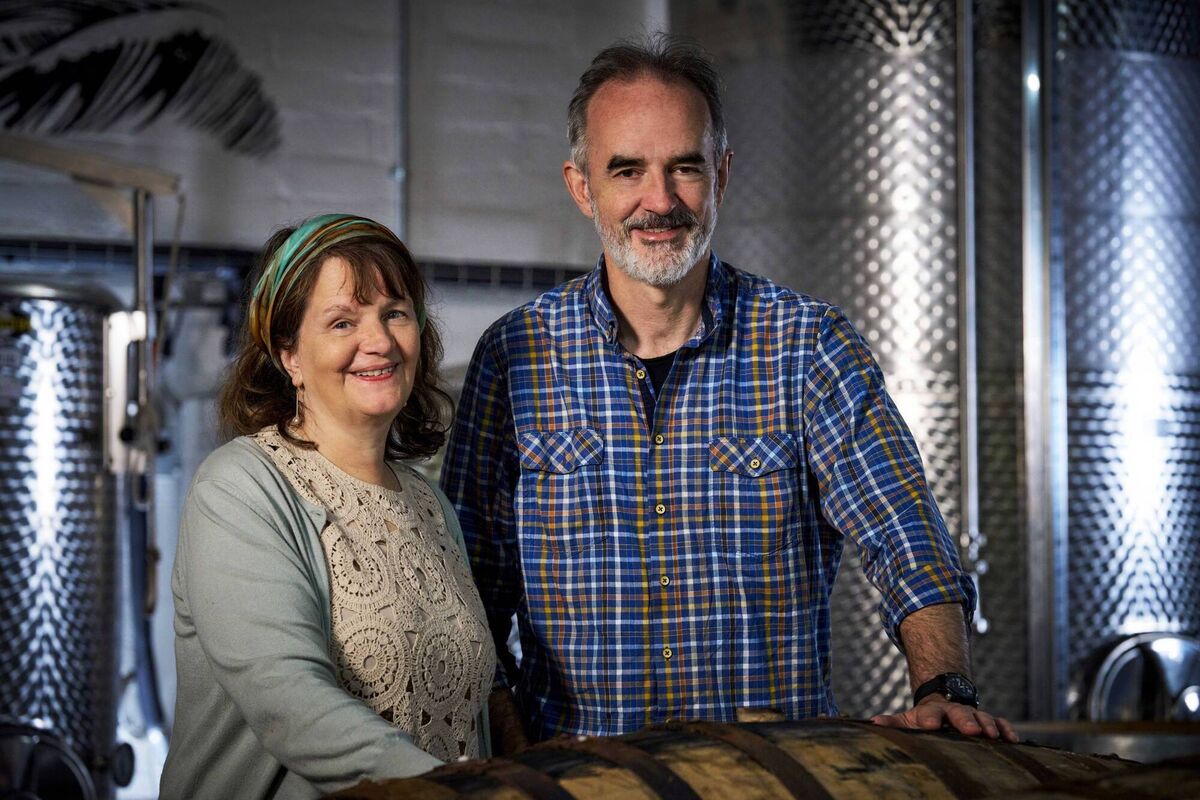
Judging by the volumes of produce leaving the nearby Kinsale Mead Co, there is something of a thirst for them, too. Kate and Denis Dempsey have been producing their award-winning mead since 2016. Inspired by a visit to the Tech Midchúarta (in English, House of the Mead Circuit) on The Hill of Tara, the couple decided to try their hand at making this ancient brew. They now make 10 different types of mead, using honey as the base ingredient and mixing it with local flavours.

“If you walk around the country lanes here, you’ll see thousands of hawthorn trees in blossom,” says Denis.

Hanna's Bees gift set.

“A huge amount of the bees’ nectar in our local honey comes from them. So we make a beautiful mead from our local honey, and blackberry with a hint of clover and sycamore. And that’s really like the taste of the area; what you smell around the country lanes in May and June.”

Not only is it tasty, but like any decent alcoholic beverage, mead also has medicinal powers. In his research, Denis has come across recipes and literature celebrating the benefits of the drink.

“We have a copy of a cookbook from the 1660s that has about 80 recipes for what are called metheglin meads,” says Denis. “There are all kinds of herbs that were used; five, six herbs in each of the recipes for different ailments.”

Though he can’t be sure that local honey is any better for you than honey from elsewhere, he has little doubt that consuming the golden syrup of bees is beneficial.

“We’ve had several hospice nurses visit us on tour here, American nurses who’ve talked about the success they’ve had with honey for treating people’s skin conditions or ulcers and other wounds.”

Kate and Denis Dempsey, KInsale MEad Co.

The jury is still out on honey as a cure for hayfever, however, and there is a very scientific reason for that, according to Hanna.

“The honey that we produce is not filtered, so that it contains pollen from your local flora,” she says. “The idea is that if you eat this honey, you ingest the local pollen and then your system gets better at handling it. Anecdotally, a lot of our customers say it works.

“But when scientists are looking at this, they’re saying there are two different types of pollen: Windborne pollen and insect-borne pollen. A lot of the pollen people are allergic to is windborne.

“Insects don’t visit those plants. So the science says it shouldn’t work. But then, if you look at the different pollen proteins, some of them would be different, but some would be the same in the different types of pollen. On top of that, it’s more than likely bees pick up ambient pollen when they’re flying and that ends up back in the colony. So some of it might come through in the honey.”

We need bees. They pollinate crops, which feed humans and animals, and, in turn, those animals provide us with meat and milk and eggs. Bees also pollinate trees and wildflowers, creating an ecosystem, habitat, and food source for other creatures. Bees are crucial to our survival. So, should we all start keeping bees to help them thrive?

“We have over 100 species of bees in Ireland,” says Aoife. “Apart from the honeybee, bumble bees and solitary bees, they are in more danger, because they don’t have beekeepers looking after them and their habitat is being destroyed more and more every year. 

"Our hedgerows are the number-one, most important habitat for all bees in Ireland. So the best action someone can take is to make their surroundings more pollinator-friendly, rather than getting a hive of bees.”

So, for the summer months at least, keep those hedge trimmers and lawnmowers in the shed.

x

More in this section

Lifestyle

Newsletter

The best food, health, entertainment and lifestyle content from the Irish Examiner, direct to your inbox.

Cookie Policy Privacy Policy Brand Safety FAQ Help Contact Us Terms and Conditions

© Examiner Echo Group Limited