Early arrivals: Parents of premature babies face a wake-up call
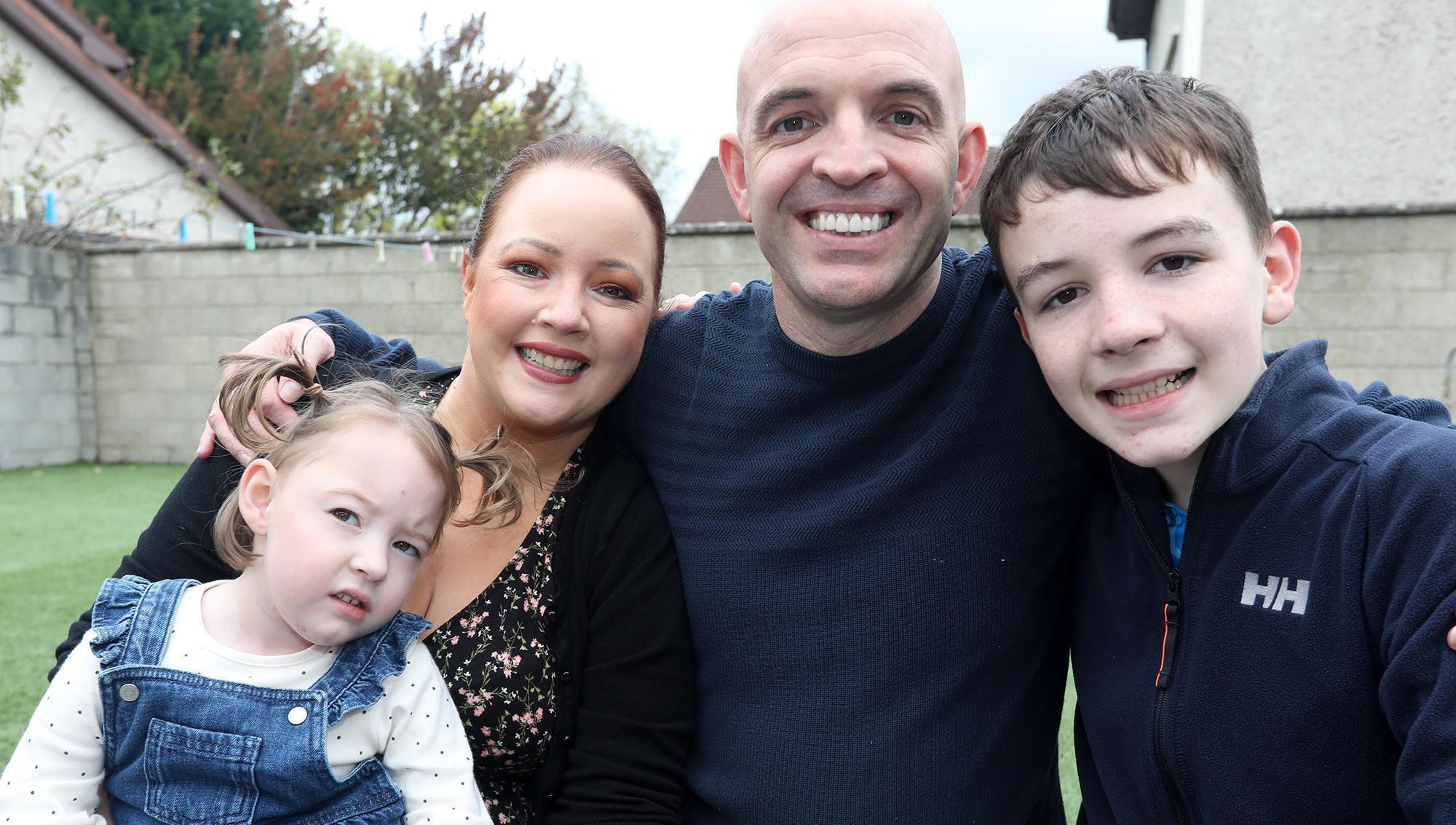
Jonathan Hughes and Katherine Keane with their children Jack (13) and Daisy (3). Picture: Brendan Gleeson
Katherine Keane believes a medical report or weighing scales cannot capture a premature baby’s strength.
The Limerick-based mum of two and her partner, Jonathan Hughes, lost count of how often they were told their baby, Daisy, would not survive.
Severe pre-eclampsia and skyrocketing blood pressure meant Keane had no choice in October 2021 — it was to deliver her baby or risk death.
She says: “Doctors said they’d have to do a C-section. If they didn’t, I could die, the pre-eclampsia was so bad. But we also knew Daisy mightn’t survive the C-section.”
Daisy, now three, was born at 23 weeks and four days gestation.
One week later, she was transferred to the Coombe with suspected necrotizing enterocolitis, a serious intestinal disease common among premature babies.
Keane says: “If they didn’t send her then, she might have become too sick to travel.
“She went in the ambulance on her own, we couldn’t go with her. I was still hospitalised in Limerick.”
At 29 days, weighing 745g — “the size of a 500ml coke bottle” — Daisy was rushed to Crumlin for emergency surgery, where a team placed an ileostomy for stoma.
Well enough to be transferred back to the Coombe two days later, she spent three further months there. During this time, Daisy had “lots of episodes”, says Keane.
“She had problems with her eyes, her lungs,” she says. “Mainly, she found it hard to gain weight.
"The team tried many feed combinations, including breastmilk and fortifiers.
"Eventually, a mix of TPN [Total Parental Nutrition] and tube feeds helped her grow. I expressed breastmilk every three hours for months to help her bowels recover.
“She was 42 days old before I was allowed to hold her. I’d ask every day: ‘Can I hold her?’ They’d say no, she was too fragile. Jonathan asked, ‘Why do you keep asking?’ I said, ‘Because one day they’ll let me’.”
While Daisy was initially expected to lose parts of her bowel, ultimately, this did not happen.
Casey, chairperson of the special interest group in perinatal and infant mental health with the Psychological Society of Ireland, says parents of premature babies “have almost a startle response — it’s almost they can’t believe baby is here”.
“They’re catapulted from the rhythm of what they expected into an alien environment. The brain has to catch up,” she says.
Self-compassion is always important, but Casey says it is even more so with unexpected life events. Parents of premature infants may have a critical inner voice saying they could have done something different to prevent their baby from arriving early.
“You didn’t choose to have a baby born early,” says Casey. “Self-compassion helps you be kinder to yourself as you navigate the challenges of having a baby in Nicu, helps calm difficult emotions and improves your ability to care for yourself and your infant.
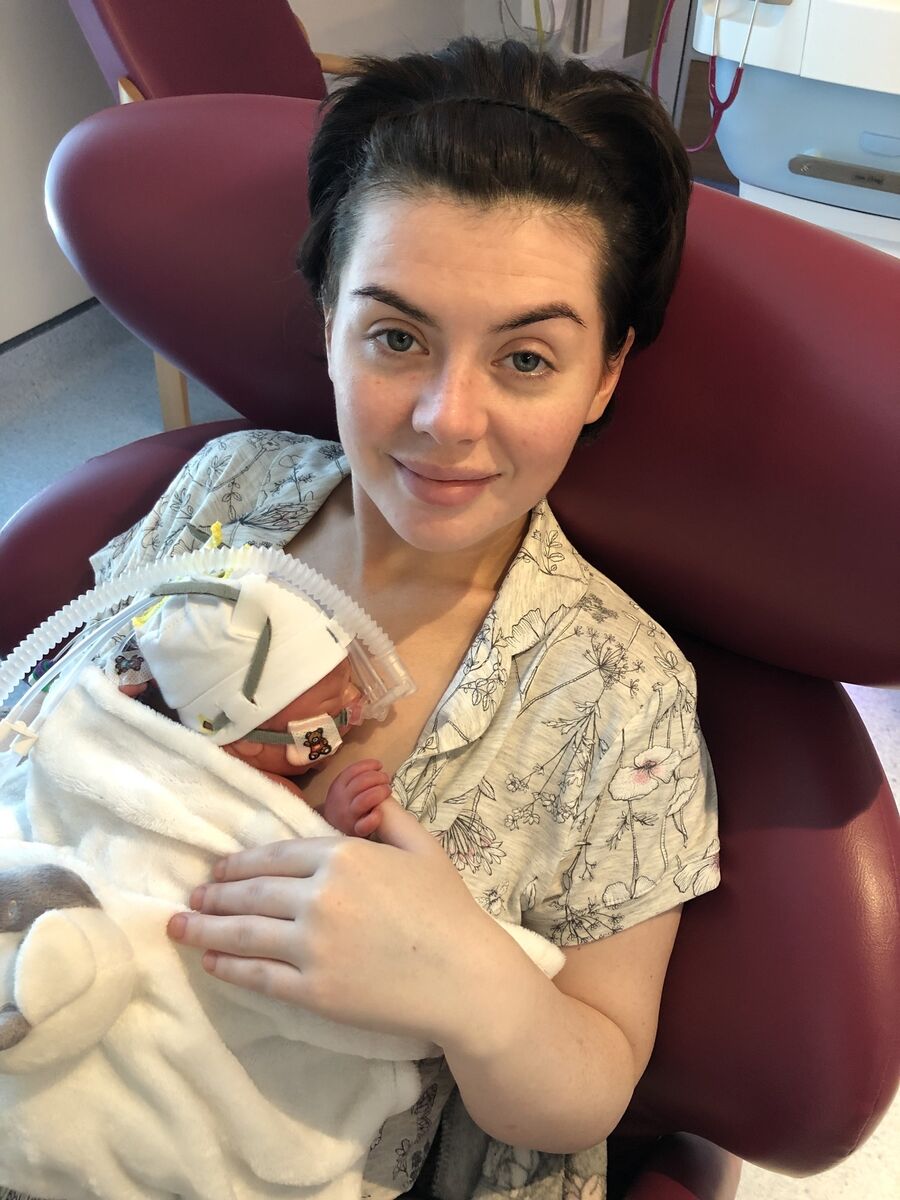
Mum-of-three and influencer Róisín Doherty echoes this message: “Sometimes you blame yourself, in terms of ‘what did I do wrong’. But believe in yourself as a mum.”
Doherty’s middle child, Brodie, was born at 33 weeks and two days. From the outset her pregnancy was marred by complications, she says: “I had very bad sickness. My health really declined. I was scheduled to have a C-section at 27 weeks — they said the baby was safer out than in.
“I was gowned up, being wheeled in for surgery, and, I don’t know, mother’s instinct, I asked to be scanned again. My doctor did so.
She said ‘Róisín, I’m calling it off — do you accept that?’ It was my decision at that point. I truly believe if I hadn’t done that Brodie wouldn’t be with me today.”
Brodie is now five, she adds: “He’s really intelligent, though there are still milestones not being met. But he’s thriving. He’s the most gorgeous little human. He’s all about football, just a typical wee boy.”
But Doherty has not forgotten the terror of when Brodie looked so vastly different to a full-term baby: “These babies are so tiny and their heads so big… Brodie’s body was the size of an iPad. And even when he was thriving, I was asking, ‘Why is he breathing like that?’ and ‘Why isn’t he latching on [to my breast]?’”
For the parent — who goes from having a baby so close in the womb to then experiencing an untimely separation with early arrival — there can be a lot of distress, says Casey.
“There are all the unknowns, the assessments, the diagnoses. And there can be unintentional alienation where parents feel others know their baby better,” she says.
What helps is “all the good stuff”, which encompasses continual parental closeness, the constant care of a caregiver, Casey says, adding: “A parent feeling they’re there to look after their baby, to change and wash baby, look after their feeding needs, help baby feel secure, pay attention to baby’s cues — their behaviour, which is their language — and to respond appropriately.”
With World Prematurity Day on November 17, new research conducted by Pampers has found 82% of parents of pre-term babies feel nervous touching their infant while in neonatal care — 52% cite the fragility of their skin as the main reason.
But allowing parents do the simple tasks to support their baby’s needs, Casey says, helps both child and parent. Also, parents’ observations are vital, even in their baby’s medical care.
“If you ask a parent what they’ve noticed about their infant today, they’ll have noticed the minutest changes,” Casey says.
She points to research that shows optimising parental involvement helps reduce ventilator days and improve neuro-behavioural functioning. It improves weight gain and growth, and lowers length of hospital stay (https://nidcap.org,/science/).
Keane recalls “the wonderful team in the Coombe” teaching her to do Daisy’s stoma care: “If the same person was doing it all the time, it lessened infection risk. I felt I was helping her at a time when nothing seemed to be in my control.”
Mum also to 13-year-old Jack, Keane was eventually allowed to hold Daisy for a whole afternoon, do skin-to-skin and kangaroo care.
“Holding her was amazing,” she says. “I read to her. I went in early every morning, sat with her before the doctors came on their rounds. Every day, I’d ask what’s the plan for today, are you changing her meds or feeds. It gave me some level of control.”
When doctors sometimes doubted Daisy would survive, Keane and her partner would tell their daughter: “Don’t listen to them, you’re going to be OK.”
“I think little babies pick up on your energy,” Keane says. “And Daisy was OK. We were in hospital for Halloween, Christmas, New Year, Valentine’s Day, and Mother’s Day. I kept saying we’ll get home for Easter, and we did.”
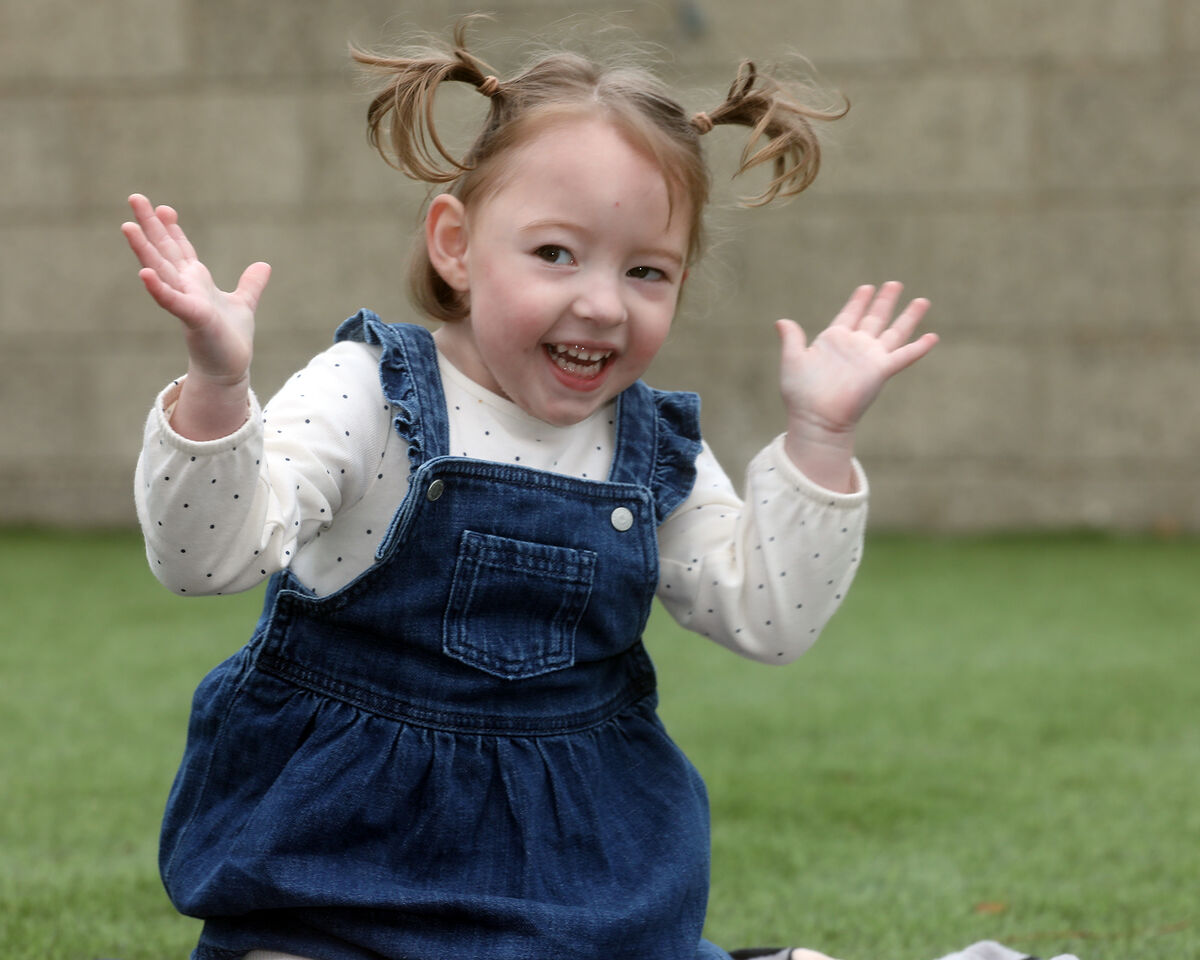
Today, Daisy is full of energy and chat. Keane says: “She’s the happiest child, very bossy. She’s had developmental delays but is progressing very well.
"She’s starting to sing her alphabet, count to 10 — she’s having full-blown conversations with us. She’s tough. She adores her older brother. She has that personality that lights up a room. To look at her, you’d never think she’s been through what she has.”
Since 2017, Pampers has donated almost one million of its premium protection nappies to premature babies in Irish hospitals countrywide.

CONNECT WITH US TODAY



Be the first to know the latest news and updates