Bernard O'Shea: I stopped talking for 24 hours — here's what I learned
Losing my voice was a forced respite, an opportunity to reflect on the power of silence
Bernard O'Shea: I stopped talking for 24 hours — here's what I learned

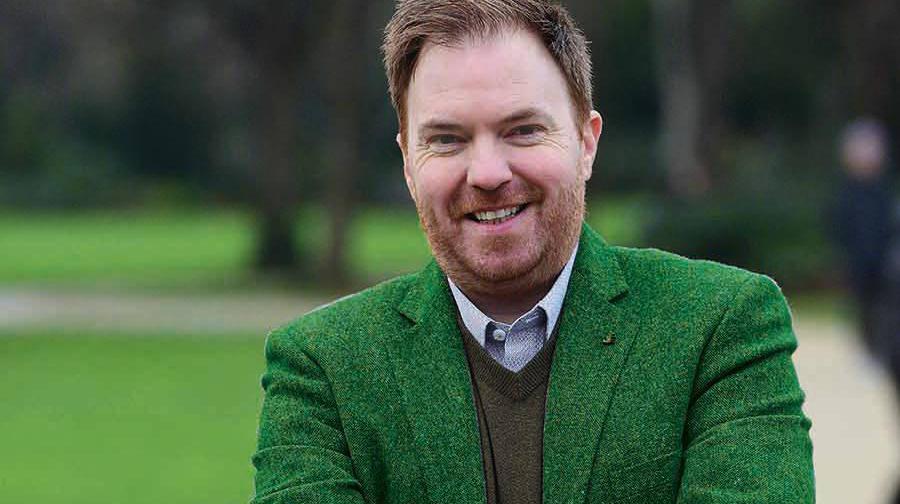
I rarely pause to think before speaking. Picture: Moya Nolan

As a comedian, my mouth is my most valuable asset — and sometimes my most significant liability. I have often thought of the famous Abraham Lincoln quote: “Sometimes it’s better to be silent and be thought a fool than to speak and remove all doubt.” If only I could use this jewel of advice more often.

Over the years, it’s gotten me into more trouble than I care to admit. Always ready with a quick retort, I rarely pause to think before speaking. Last week, however, after performing 12 gigs in a row, I lost my voice. My wife, ever the pragmatist, rejoiced. For me, it was a forced respite, an opportunity to reflect on the power of silence. Could I go 24 hours without speaking? I decided to find out.

We live in a world where immediate responses are expected. However, neuroscientists suggest that pausing before replying allows our brains to process information more thoroughly, leading to more considerate and insightful responses. Dr. Susan David, a psychologist at Harvard Medical School, emphasises that reflection can lead to emotional agility, helping us navigate our thoughts and emotions more effectively. In other words, it can be wise more often than not to “dún do bheál”.

Historically, various religious orders have embraced silence for spiritual growth and reflection. The Trappist monks of Christianity, known for their vow of silence, believe it helps them detach from worldly distractions, deepening their spiritual connection. Buddhist monks practice noble silence to foster mindfulness and inner peace. Jain monks in India observe silence to cultivate self-control and non-violence. These practices aim to purify the mind and soul, allowing for a more profound connection with the divine. The nearest I’ve ever come to this spiritual enlightenment was being dragged along to Sunday mass when I was a child in the 80s.

Silence can profoundly affect the brain, mood, and thought patterns. Neuroscientific research indicates that silence helps reduce stress by lowering cortisol levels. It can also enhance creativity and improve mental clarity by allowing the brain to rest and rejuvenate. Moreover, silence can increase the production of new cells in the hippocampus, the brain region associated with memory and learning. (I wonder how long I’d have to shut up to regrow my brain back to pre Leaving Cert levels?)

Society often views quiet people through a lens of suspicion or admiration. They’re sometimes perceived as mysterious, reserved, or even untrustworthy. 

Conversely, some quiet individuals are seen as wise or introspective geniuses. This dichotomy reflects our complex relationship with silence and our value of verbal communication. In a culture that often equates talkativeness with confidence and success, choosing silence can be a radical act of self-preservation and introspection.

During my somewhat forced 24-hour silence, I did, however, experience several notable changes:

Urgency of replies: I realised that what seemed like urgent vocal replies were often non-urgent. Pausing for just 50 seconds usually revealed that the need to respond was less pressing than initially thought. If my wife dosen’t get an almost instant answer to most questions she just leaves the room anyway as her constant reply to me is “It’s just a yes or a no Bernard”.

Children’s reactions: My kids didn’t notice my silence after getting their dinner and treats. This showed me that my verbal interactions were less critical to their daily routine than I had imagined. It was a humbling reminder of how much we overestimate our role in our children’s lives. Essentially I’m there to get them various milk-based products throughout the day.

Smiling more: Knowing I couldn’t speak if approached (I’m rarely if ever approached), I smiled a lot more when I was out. I wanted to appear friendly, so I smiled and nodded instead of talking. This made me feel more connected to people in a non-verbal way. It was a powerful lesson in how simple gestures can bridge communication gaps and create a sense of camaraderie without uttering a word. Of course I add the the classic Irish head nod too.

My 24-hour silence experiment taught me the value of pausing and reflecting before speaking. Silence, though challenging for a talkative comedian like myself, proved to be a golden experience. By embracing silence, I discovered a quieter, more reflective side of myself that I hope to nurture amidst the chaos of our always-on world, and my wife seemed happier - in fact she almost began to like me again!

So, the next time you feel the urge to fill a gap with words, consider the power of silence. It is, after all, the most profound thing you can ever say.

More in this section

Lifestyle

Newsletter

The best food, health, entertainment and lifestyle content from the Irish Examiner, direct to your inbox.

Cookie Policy Privacy Policy Brand Safety FAQ Help Contact Us Terms and Conditions

© Examiner Echo Group Limited