'If you feel something’s amiss, trust that feeling': Navigating the early days of breastfeeding

According to the HSE, 60.3% of babies in Ireland are breastfed when they leave hospital. This is short of the target of 64%
While breastfeeding is straightforward for many women, new mothers can encounter challenges in the early days. Knowing which services are available and how to access them is essential for anyone who wants to breastfeed long-term.
According to the HSE, 60.3% of babies in Ireland are breastfed when they leave hospital. This is short of the target of 64%, which hasn’t been updated since 2021. The figure is 42% at three months.
“The first 10 days of breastfeeding are vital. If things are not going right in the first week, mothers should reach out for help if they really want to breastfeed," says Community Midwife and International Board Certified Lactation Consultant, Mary Cronin.
Lucy Roche from Cork gave birth to her first daughter, Maggie, in March 2022. Within 48 hours, Lucy had “a strong sense that something wasn't right.” She remembers thinking: “I know this is meant to be sore, but I don't think it's meant to be as bad as this.” There was no lactation consultant available, and although the midwives tried to help, the pain continued.
At home, Lucy reached out to the public health nurse for advice. As Maggie was gaining weight well, the public health nurse encouraged Lucy to persevere. Lucy continued, hoping the pain would subside.
Lucy couldn’t get an appointment with the hospital lactation consultant until Maggie was four weeks old. While she waited, the pain worsened and Lucy got mastitis. Eventually, she felt she had no option but to stop breastfeeding. “I was so emotional and so disappointed with the whole situation,” says Lucy.
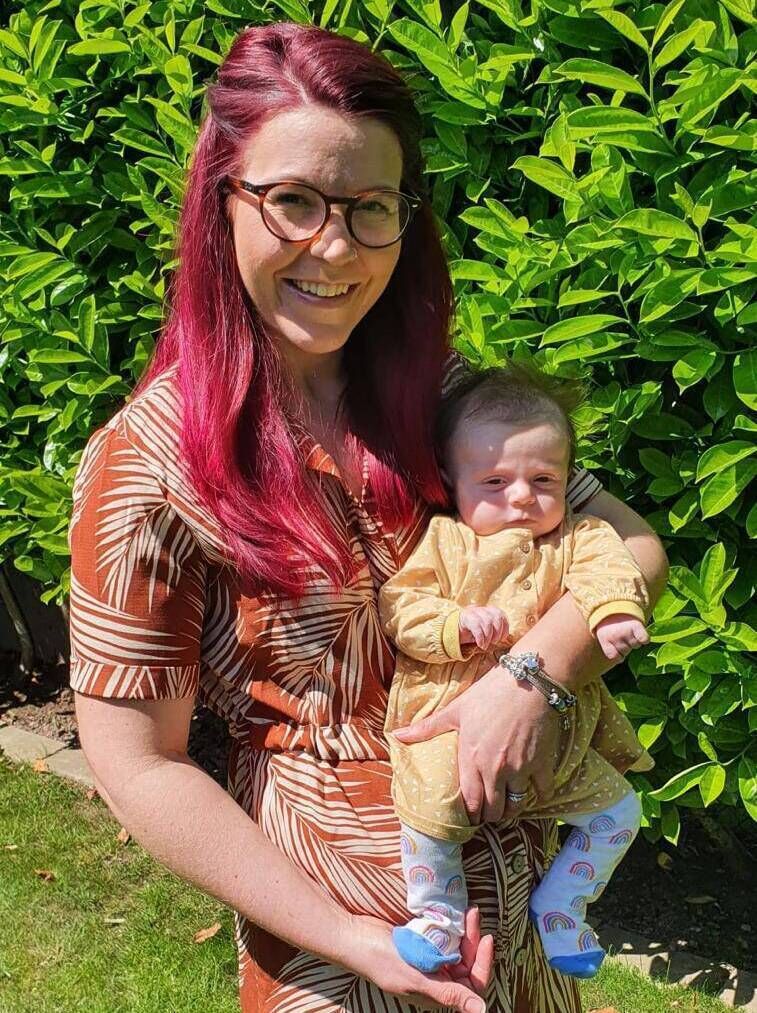
While there can be some discomfort at the very beginning, Mary Cronin says breastfeeding should not be painful. “Pain is a sign that something is wrong,” she says. “It’s not normal for breastfeeding to be painful and getting worse.”
In search of answers, Lucy arranged a private tongue tie assessment when Maggie was seven weeks old. “I really wanted to understand what went wrong,” says Lucy. She was told that Maggie had a tongue tie, which may have impacted her feeding.
Lucy’s second daughter, Ellen, was born eight months ago. Although she had almost identical issues at the beginning, things have worked out differently. As soon as she experienced pain, Lucy asked for help. “I advocated for myself,” she says. “I said there is something not right, and I want to do something about it.” After her first public health nurse visit, Lucy was given a hospital grade pump and referred to the maternity hospital for treatment to repair damage to her nipples.
She arranged a private tongue tie assessment, and booked an appointment with a private lactation consultant. Eight months on, Lucy is still breastfeeding Ellen. She urges new mothers to listen to their instincts: “If you feel like something’s not right or something’s amiss, trust that feeling.”
When Sarah Lachapelle, from Dublin, gave birth to her daughter Lucie in 2021, she had trouble trying to breastfeed in hospital. Looking back, she wishes she had been more vocal in asking for support. “I think you have to ask for help,” says Sarah. “I would have liked more active assistance.”
Mary Cronin urges new mothers to ask for support in hospital. “In hospital, the mother needs to be asking a midwife [for help],” says Mary. “If it's not resolving, ask to speak to a lactation consultant in the hospital.”
At home, Sarah continued to experience pain when feeding Lucie. She had an online assessment with a private lactation consultant, as in-person support wasn’t available during the pandemic. Although the lactation consultant tried to help, it was of limited benefit without follow-up support.
Sarah tried pumping, as feeding Lucie was too painful. She wasn’t getting much milk, and eventually decided the toll it was taking on her physical and mental health was too much. After three weeks, she switched fully to formula. “I just couldn’t keep going,” says Sarah.

Sarah was hard on herself when breastfeeding wasn’t working. “When you’re in the thick of it, you really think you’re the problem,” she says. She wants to reassure new mothers that it’s ok if breastfeeding doesn’t work out. “If your mental health is in place, and you're taking care of your kids in whatever way is best for you and your family, then your kids are going to thrive,” she says.
Isis Cooper, from Cork, gave birth to her daughter Ada in November 2023. Ada had jaundice when she was born, which made breastfeeding “a little bit stressful” at the beginning.
Isis was experiencing pain while feeding, and the hospital lactation consultant recommended pumping. “Pumping was something I had never even considered,” Isis explains. “I thought all you need is a bit of determination and willingness to go through the initial pain of breastfeeding.”
At home, Ada was slow gaining weight and wasn’t transferring milk effectively, so Isis continued pumping and topped her up with formula. “All of these expectations I had about what [breastfeeding] would look like weren't happening for me,” says Isis.
Eventually, Isis took Ada to see a tongue tie specialist. She confirmed that Ada had a tongue tie, and performed a procedure to release it. Isis found it helpful to know that “there's a physical, mechanical reason why this isn't working”.
Currently there are 10 HSE sites offering public clinics for tongue tie assessment and consultation. The HSE says: “Up to 50% of infants with ankyloglossia (tongue tie) may not require further treatment if intensive lactation and feeding support are provided.”
After the procedure, Isis saw a private lactation consultant who helped her to breastfeed without pain. “That’s when things turned around,” she says. Eight months on, Isis has found a balance that works for her and Ada, breastfeeding at night and bottle feeding during the day.

Isis advises expectant mothers planning to breastfeed to “meet with a lactation consultant prior to having your baby and talk through some of the troubleshooting.” She says: “You’re tired, emotional and raw in those early days and weeks. That's a really hard time to get your head around those kind of things.”
Isis would like to see more funding and support for breastfeeding. “The Government really recommends the World Health Organization recommendations of ‘breast is best’ until six months,” she says. “But the funding that's given to breastfeeding supports with the HSE doesn't align with what they say.”
Mary Cronin says there should be more free support available for mothers who want to breastfeed. “If the mother wants to [breastfeed], she should be supported to do so, and everything that she needs should be freely available.”
Laura McHugh, HSE National Breastfeeding Co-ordinator, says: “The HSE is committed to protecting, supporting and promoting breastfeeding by addressing priority areas as set out in the Breastfeeding Action Plan 2016-2023. Midwives and public health nurses are trained and are skilled in supporting breastfeeding,” says Laura. “Midwives support mothers to establish breastfeeding immediately after birth and help mothers learn the skill of breastfeeding in the immediate postnatal period. Public health nurses, many of whom are midwives and paediatric nurses are also trained and skilled in providing breastfeeding support throughout the postnatal period.”
Laura says: “Since 2021, the HSE has doubled the number of infant feeding/lactation posts. There are now 59 lactation and infant feeding staff members nationwide providing a specialist service support in all maternity and public health nursing primary care services.”
Support for parents is also available at the HSE’s mychild.ie website.

CONNECT WITH US TODAY



Be the first to know the latest news and updates