The Heart of the City: Billy O'Callaghan's short Christmas story
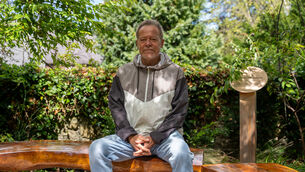
“Over on the Grand Parade, starting back towards where I’d parked the car, I saw Francis stretched out on his side, asleep on one of the benches facing the library”
The Heart of the City: Billy O'Callaghan's short Christmas story

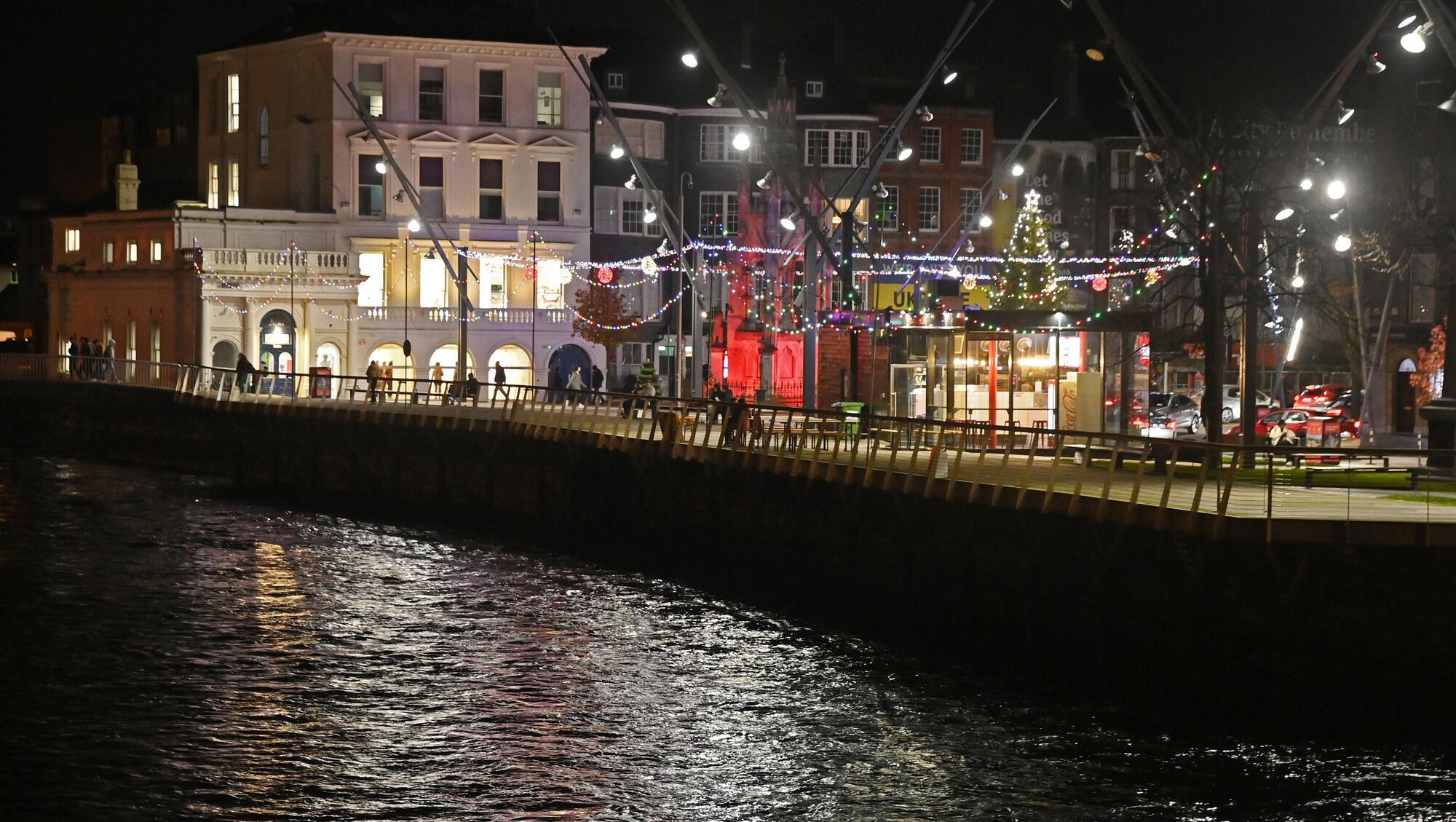
Looking towards the Christmas lights at the junction of South Mall and Grand Parade in Cork - one of the scenes of Billy O'Callaghan's 2023 Christmas story. Picture: Denis Minihane.

Last year, on a Wednesday lunchtime full of watery sunshine and stern, snapping wind, a week before Christmas, I was making my way at something of an angry walk into the heart of the city when a woman stopped me to ask a favour. 

Town has no shortage of such people, employed on commission by one of the charities, trying to smilingly flag down passers-by and coax bank details from them with some well-practised pitch of a sob story. 

There have been times when I’ve stopped and been persuaded, grudgingly, by the worthy cause they were selling – an impulse I’ve never actually regretted, since it’s no harm to be reminded now and then, especially at this time of year, of those worse off than ourselves. 

And the amount, the direct debit, running to barely the price of a cup or two of frothy coffee in the month, is usually only barely enough for me to miss.

But on this day, season of goodwill or not, I simply wasn’t in a giving mood. 

I’d just come out of the Mercy hospital having wasted the whole of the morning since before nine sitting in a corridor on an orange plastic chair designed with someone half my size in mind, for a scan that I had been assured was of critical importance, just to rule everything out or, if there was anything sinister going on, to catch it early, nip things in the bud. 

Then eventually a doctor with a folder of notes under one arm and a stethoscope draped around his neck in the lengthwise fashion of a scarf, a boy who looked as if he’d only just begun sprouting hair but who reeked of aftershave, probably for the benefit of the student nurses, appeared before me and in a tone offering only the merest pretence towards contrition explained that unfortunately, due to technical and administrative issues beyond everyone’s control, the test would need to be rescheduled and that I’d be written to with another date and time in due course.

The woman stepped into my path, one hand raised for my attention.

“I’m sorry,” I said, without slowing my stride. Barking the words, at her and at the whole of Grattan Street, not caring about causing offence. “I’m not interested. Not today.”

“No,” she said, her expression pleading. “It’s not that. I don’t want money. I’m not selling anything."

I stopped, reluctantly. Her hand was on my arm, the touch too gentle to feel through my anorak. 

Considering her now, properly, a woman of mid to late thirties, as tall as me and nice-looking, sandy-blonde hair drawn back into a loose knot, dressed in jeans, loose grey sweater and a long flowing beige wool coat that even worn open seemed to emphasise her shape, I wondered how I could have mistaken her for a collector. 

No coloured bib or ID badge, no clipboard. And yet, she wanted something.

“I wonder if you could help me,” she said, smiling but with sudden embarrassment.

“With what?”

She glanced back across the road at the brown-painted four-story Births, Deaths and Marriages building on the corner, the second level jutting oddly out over the curved, glass-fronted ground floor in a way that must have looked the height of modernity in some architect’s office.

The Births, Deaths and Marriages Registration Office on Adelaide Street, Cork. Pic: Dan Linehan

A wedding in need of a witness, the groom’s Best Man having fallen somehow by the wayside. But nothing really required of me except to stand there while the vows were made, and then afterwards to sign the book. 

Fifteen minutes for the ceremony, another five or ten while the formalities of the paperwork were completed, and my day would be once again my own.

“I really am sorry about this,” she repeated, her voice lower now, as we climbed the stairs to that oddly protruding upper floor, she leading the way, I traipsing behind. 

She’d introduced herself as Annie, offering me the hand that had so lightly held onto my arm. 

Her long, slender, heavily-ringed fingers were cold to the touch and without any kind of strength in their grip, but lingered in my hand as she spoke. 

Annie. Just that. I nodded seriously and kept to my own first name in reply.

“It’s a lot to ask, I know, but they’d have had to cancel otherwise, and there’s really no one else.”

“No, it’s fine,” I said, surprised to find myself meaning it. Because who wants to stand in the way of love, on those rare occasions when it happens to present itself, and who, if ever given the chance, especially at Christmastime, wouldn’t try to smooth the course of it for those in need? 

All of a sudden, standing for a few minutes in a room with strangers felt like the least I could do.

We pushed through one wing of a set of teak double doors into a room decked out in blanched shades and made larger-seeming by the several empty rows, either side of a pale pink carpeted aisle, of plastic folding chairs. 

An artificial Christmas tree, chest-high but slender as a rod, stood in one corner, innocuous in its scant dressing, a string of colourless, gently twinkling fairy lights and a few sparse, criss-crossing ropes of red, blue and golden tinsel, but welcome in its suggestion of goodwill, and the angel perched on top, some child’s crude and simple concoction of cardboard and crayon, unexpectedly touching as both a remembrance of Christmases past and a gesture of hope for the world.

Beside the room’s only window with its vantage out onto blustery Adelaide Street, the registrar, a heavyset man of about sixty in a navy suit, stood alone. 

He looked at Annie with myopic interest while she made the introductions and then studied me in a scrutinising way. 

An unusual situation, indeed, he said, but I was good to stand in, and that since we were a quorum it was probably as well, so, to get the party started, before minds got changed. 

Annie nodded and, taking hold of my arm again, led me to the first seat on the right side of the aisle, perched herself on the chair to my left, an arm’s span away, and gazed resolutely ahead while Puccini’s ‘O mio babbino caro’ sifted into the room, the soprano voice unidentifiable due to the soft volume and the recording’s age distortion yet, in the moment, indefinably beautiful. 

I tried not to steal glances but felt relentlessly drawn by the fine, easy polish of her profile, and just as the music began to lift and movement stirred the periphery, I caught the slightest tightening about her demeanour, as if her back teeth were biting down against some imminent sufferance.

A short man, in a brown serge suit hanging a couple sizes at least too heavily from his slumped frame and bunching badly at the shins, had entered the room from a side door and came to stand with the registrar at the head of the aisle. 

I got up and moved to the man’s right side, and he looked at me and rasped his gratitude in what I took to be a whisper until hearing more and understanding it to be his normal speaking voice, for stepping in at such short notice. 

He gave his name as Francis, adding the surname, O’Brien, as an afterthought, thinking aloud that it was probably something I needed to know, and it was clear in an instant that, even washed, shaved and reasonably dressed, even with his hair trimmed, I was standing beside a man who’d spent a notable chunk of his lifetime rough on the streets. 

We shook hands and the flesh of his palm and fingers against mine was like the bark of old oak, and when he took the measure of me, his eyes – so pale and washed-out they needed shadows in order to reveal their colour as something blue – had the distance about their focus, or, more than that, the kind of vacancy, of one far too long used to looking away.

“And the bride,” – he tipped his head in the direction of the still-empty aisle – “if she bothers to turn up, is Nell. Riordan until now, since she was married for a while, years back, to a fella from Dublin. A rotten type, who’s where he belongs now for all he used put her through. Getting free of that name will be a relief to her, I’d say.” 

They’d been doing a line for years, he explained, and would have tied the knot earlier only she was left a bit skittish and needed coaxing the long way round to doing it again. 

He made no mention of his Best Man, and I didn’t ask, and when he produced a ring from his jacket pocket, a cheap-looking number that probably consisted of more brass than gold, I accepted it into my open palm and smiled in an attempt at reassurance.

A Christmas wedding sets the tone for our protagonist's evening in Billy O'Callaghan's short story.

At that moment, the recorded soprano was silenced, and after a long pause during which I sought out Annie’s gaze and found it waiting equally nonplussed, a more forceful recording kicked in, the heavy organ sound of the Wedding March, and then Nell appeared, alone, at the end of the room, in a greyish white dress and slightly mismatching veil, clutching a small multicoloured posy of flowers. 

She had a broad face and short, wiry reddish-brown hair that might have been styled ahead of this but, if so, had failed to sustain the effort, and the smile she’d dug in place didn’t shift as she started down the aisle, canting leftward with every step, that leg obviously bad either due to some birth deformity or an injury that had healed wrong. 

She looked scared and sick but also, in the moment, even with all that ought to have been wrong, somehow quite beautiful, and Francis, watching from his place beside me, wore an expression too awed for anything else to take hold, until his tears did, unanticipated and in gouts, and then in response she began to cry too, happily now, and slackened with relief.

“Do you, Francis, take this woman, Nell…?” the registrar had asked, and the grinning tears continued on both sides, making the responses almost inaudible, and after I’d handed over the ring and they had laughingly and in the most loving way kissed, he shy about it and she blushing to the corners of her eyes with embarrassment, 

I noticed Annie also smiling through tears. “It’s the same every time,” she told me afterwards, once the formalities had been dispensed with and everything signed and stamped. 

“I’ve been to a few of these, and every time has me in floods. I can’t seem to help myself.” 

An employee of the registry office, a clerk or secretary, young and giddy and armed with both a small disposable plastic camera and her mobile phone, was busily arranging the newly-weds in various poses either side of the Christmas tree, and seeing how the couple stood so patiently for the shots, ready to obey the slightest instruction, it seemed impossible to me that two people could ever be more at peace with one another. 

I shook my head at Annie’s words and assured her that I wouldn’t want to know the person who wasn’t moved to tears by something like this, and everything else that needed to be said between us was left to the way our gazes held and lingered, at least until Francis, in his gasping husk of a voice, called out for us to stop making eyes at one another a while and to get in with them for the shot.

When it came time, ten minutes or so later, to say my goodbyes, I put an arm around the bride’s shoulders and kissed her cheek, which sent her into further gales of laughter, and offered my hand to Francis to shake, and they took turns thanking me with a profusion I’d done absolutely nothing to earn, wished me a sincerely happy Christmas and all the best for the new year, and said they looked forward to us all getting together again very soon, maybe at the next wedding. 

I took the stairs at a trot but lingered for a few minutes outside on the footpath, hunched against the wind and pretending to check my phone for messages, in the hope that Annie might hurry out after me; and just as I was about to give up on that she appeared, her stressed expression surrendering to the slightest smirk over the fact that I’d waited.

“I wanted to thank you again,” she said, having to force her voice above the cacophony of car engines, flapping breeze and vague snatches, teases, of seasonal songs; and using as my excuse the tides of students that had the street bustling, and how the angle of the road in acting as a tunnel for the wind turned the air so bleak, I drew her into the Births, Deaths and Marriages doorway, forcing us unexpectedly close to one another, snug almost. 

“It really was good of you to give up the time.” 

I shook my head, wanting to make nothing of it, and almost asked her if she thought they’d be happy now, Francis and Nell, whether love had that kind of power and could still be the answer to everything, the way it was in films and stories.

Instead, because the wet gleam in her pale green eyes had me afraid of the answer, I settled for returning her smile and sharing in it, and together, in easy silence, we stood and contented in watching the world’s turning. 

The street ahead of us really was thronged, kids, of college-age mostly, wrapped in scarves and heavy coats, the girls beautiful with their hair down and spinning wildly loose, the boys handsome in play-acting nonchalance, striding by singly and in packs, with parties to get to, even at this early hour, or essential shopping still to be done. 

And from where we stood, with our own coats held tight across our chests against the cold, we could see the North Main Street already lit, the Christmas colours lifting and transforming the afternoon’s greyness just that stage ahead of dusk, close to the year’s shortest day.

All of that took place a year ago, nearly to the day, and I’m remembering because this evening I found myself in town again, stopping off after work to collect a gift, a piece of jewellery of particular design that I’d had on special order for weeks and been desperately worried would not arrive in time.

Everything considered, I’m in a good place. The scan they’d made me wait so long for had in the end proven purely precautionary, and a lot of what life is supposedly all about has finally started clicking into place. 

As hesitant as I usually am to admit as much aloud, this is the happiest I’ve been.

Since the rain passed earlier in the month the weather has kept bright and clear and full of icy cold, the nights brilliant with stars; and strolling through town, able for once to take my ease, I savoured in the first darkness the glimmering gold-lit streets and the lavishly decorated windows and fronts of shops, cafés, pubs and restaurants, hummed along beneath my frozen breath to the sounds of Sinatra, Bing and Nat King Cole, White Christmas and Silver Bells, songs known to every heart that keeps the season dear, and felt my young boyhood alive again around me, rich and bitter-sweet in every direction. 

Holding my mother’s hand and shouting back the Holly Bough, Echo! shouts of the paper boys; walking alongside my father, gripping the hem of his coat so that I wouldn’t slip loose and be carried away by the crowds. 

The footpaths were already white with frost and starting to turn treacherous, the temperatures for the small hours set to plummet well into minus figures, with snow forecast for the coming days.

The statue of Michael Collins in front of the 30ft Ferris Wheel on the Grand Parade. Pic: Darragh Kane

Over on the Grand Parade, starting back towards where I’d parked the car, I saw Francis stretched out on his side, asleep on one of the benches facing the library. 

Though he hadn’t crossed my mind in some time, I knew instantly that it was him. 

People, most of them laden with bags, stared in passing by, and for all those who hurried on as many slowed, a few stopped and voiced concern, and one woman, young, hardly more than a teen, approached and stooped to shake him gently by the shoulder. 

“Do you think he’s just drunk?” she asked, when I came alongside, her small voice a quiver, dread and sadness making a wide harshness of her stare. 

“Or that he’s maybe taken something? God, I hate this. And the night is going to be so cold.”

I shook him too, more firmly, to not much avail. He was breathing, in that slow, heavy way of stupor, the sound scraping through his badly crooked nose, and I didn’t need to lean in very close to catch the reek of spirits on him. I began calling into his ear, my voice coaxing but firm, trying for familiarity, and at first he didn’t respond but then at last began to stir.

 The girl looked at me, her mouth tight. “That’s his name,” I explained. “Francis. Francis O’Brien.”

“Do you know him?”

“No. But I met him once. At his wedding.” I was his Best Man, I almost added, but held that back.

He shifted a little more, gibberish pouring from him, and within that what might have been a name, Nell, the sound of it pleading, and then after a further few seconds he opened his eyes, though only briefly and without registering anything of us or where he was, before sinking back down into an unconscious state. 

“It’s all right,” I said, to the girl and to him, digging for my phone to call an ambulance.

“Everything is going to be all right.” 

Saying that, and wanting to believe it with all my heart.

x

More in this section

Lifestyle

Newsletter

The best food, health, entertainment and lifestyle content from the Irish Examiner, direct to your inbox.

Cookie Policy Privacy Policy Brand Safety FAQ Help Contact Us Terms and Conditions

© Examiner Echo Group Limited