I Gave You My Heart: A short story for Christmas by Billy O'Callaghan
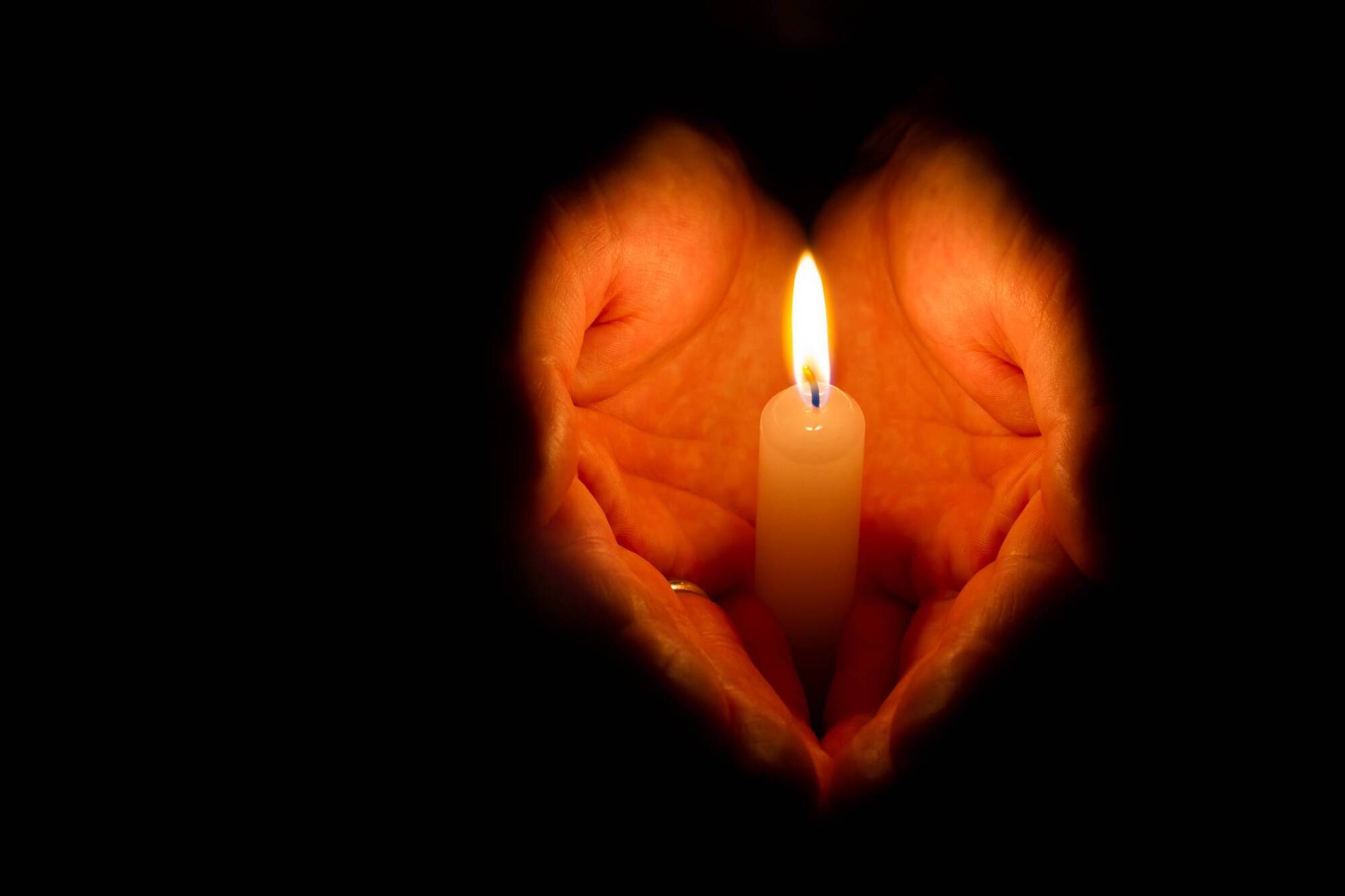
"Four o’clock on a Thursday, 10 days to Christmas, and the overhead lights are already burning small pale fire, ropes of yellow-white bulbs strung across building fronts and lampposts, grim rather than seasonal against the early dusk..."
I Gave You My Heart: A short story for Christmas by Billy O'Callaghan

“The Beamish and the Jameson,” the barman says, his voice easy beneath the music, setting the glasses down on the table before her. “God, isn’t town manic, this weather?”

On the Grand Parade, by Finn’s Corner, the footpath is a tide of people: students in packs, girls in short skirts muffled top-heavy against the sleety cold, shoppers laden with bags stressed in their hurry to make the crossing before the lights go red again. A double-decker bus, angled into a left turn but with no space to finish its swing, has gridlocked the junction, and somewhere in the distance, from the Washington Street direction, an emergency services siren, ambulance or fire engine, wails slowly, screaming to be let through. Four o’clock on a Thursday,10 days to Christmas, and the overhead lights are already burning small pale fire, ropes of yellow-white bulbs strung across building fronts and lampposts, grim rather than seasonal against the early dusk.

Margaret has been in to St. Augustine’s, where she’d lit a candle in memory of her mother and sat for some ten or fifteen minutes, without bothering to pray, in front of the oversized crib to one side of the altar. The church was cold and only barely lit, the nativity scene frocked in shadow, and drawing her coat more tightly across her chest she had felt her past Christmases near, 36 of them and counting, senses of them, anyway – the tree in the corner of the living room at home, the feel of the scorching air in around a settled fire after being outside, the world smelling sweet and slightly alcoholic, the sounds from other rooms, her father in front of the television with a newspaper spread open to the racing pages across his lap, her mother and aunt back in the kitchen, songs playing somewhere, Sinatra and Bing and Nat King Cole, the baritone vocals low and snugly dark, the sad beautiful sound of strings faint as wishes on waking. Now back out on the street, caught in the heave of bodies, she lets herself be swept along the Parade but breaks from the crowd at the first opportunity, slipping down Tobin Street and out onto the South Main Street. Here too, the road is at a standstill with traffic but there is room at least on the footpaths to walk and breathe.

She’d opened Michael’s email on her phone two mornings ago, in the 6am dark, immediately on waking, the first communication she’s had from him in nearly nine years, anger and excitement at the thought of it bursting through her.

Hi, Mags! in the subject header (he being the only person to ever call her that), and in the message space beneath: Will be in Cork for a few days, getting in tomorrow night and back on the bird home again by the 18th. Any chance you’ll fancy a catch-up? Be grand to see you. M. Just that, typically short and sweet, cavalier in its casualness, as if all the years of silence since his walking away should count for nothing. Her gmail account had recognised his address stowed from previous – if long-ago – interactions and identified him beyond the simple stated initial, but she’d have known anyway by the email’s raucous tone, his way of writing entirely the opposite of how he’d always been in person.

Just now, the first of the snow begins to fall. Cold sporadic scuds, talked about on the radio this morning as a possibility, but instead of hurrying to escape it she slows her pace and at the back gate of Bishop Lucey Park stands a while to watch the patterns it makes, on the spinning of a northly breeze, within the cast of the park’s lights. Fairground-type music flaps in distortion within the gusts, only snatches decipherable. You may find yourself. Inside the railings, people are idling, women with small children by the hand, couples too, young mostly but not exclusively, enjoying the illuminations and seasonal décor. leaning a shoulder to the railing’s bars, she watches, the lights and the people, one couple in particular, almost certainly foreign, Europeans, the man, early to mid-twenties, tightly bearded and towering in a long fawn coat, the girl, the woman, in a silver puff jacket, his age at a push but certainly not older, an abundance of dark hair cascading nearly to her waist, smiling up at him in response to whatever he’s just said and then taking his kiss when he dips with it. Young love, as heedless of the cold as of heartache. Same as it ever was. Even though Margaret has responded to Michael’s message with the suggestion of six o’clock as a good time to meet, which gives her plenty of time yet, she turns away from all there is to see, thinking about the glass of something that she’ll need to strengthen her against what might be to come.

Inside the door of the Spailpín Fánach, she hesitates a moment in the narrow floor space, facing into the mire of warm gloom. Snow flecks the shoulders of her coat and nestles damp and cold in her hair. Down along the bar a couple of men stand with pints, and further on, where the booths and tables spread out, a scattering of others, pairs and small groups, sit huddled, the mood, even from her distance, one of tranquil cheer. Shane MacGowan and Kirsty MacColl are singing the last few bars of the song that is playing everywhere, the great sustained chorus, about the boys from the NYPD choir and the bells ringing out, and a fire is blazing in the snug beyond the counter, the turf smell adding a sweet Christmas tinge to the portery air. Unbuttoning her coat but leaving it hang a while from her, she moves to the corner of the bar at its lifted hatch, takes the smiling greeting of the heavyset barman and asks, shyly, for a glass of Beamish and, as an afterthought and entirely on impulse, a small Jameson to go with it, one ice cube. “I’ll drop it down,” the barman says, and because the snug is empty she thanks him and settles in at a small table to the left of the fire. The dark in here is broken up only by the restless red and golden flashing of the flames, which brings her childhood Christmases once again close, and having shed her coat, and feeling suddenly weary, she lets her eyes for just a minute fall shut.

“The Beamish and the Jameson,” the barman says, his voice easy beneath the music, setting the glasses down on the table before her. “God, isn’t town manic, this weather?”

When he asks if it is still cold out, she tells him it is, the wind being the worst of it, and that it is doing what it can to snow but that the flakes are light yet, and too wet so far to properly stick. Who knew, though, what the night would bring. She doesn’t touch either of the glasses until he’s nodded and left her to it, and then she sips the stout, its coldness surprising her and then bringing small delight. Her grandmother used to drink a bottle of stout beside the fire of a Sunday night, filling a mug and mulling it with a douse of the poker lifted red-hot straight from the coals, entirely mindless of the clinging ash. Sitting crosslegged on the floor, Margaret loved the hiss caused by the scalding iron’s first plunge, and the sudden hoppy reek of the warming stout, and she always leaned in eagerly for the offered sip, even though at that age, six, seven years old, the taste was terrible, a bitter heft that clung on even after she’d run to the kitchen for a spoon of sugar. A compromise was eventually found, a cup of milk with a liberal pour of the Beamish or Murphy’s stirred in from the bottle and once again mulled, the old woman giving assurance where none was needed that many’s the child had grown up strong on stout and milk.

There’d been a time, at probably 14, 15, when Michael had been as sweet on her as she was from the beginning and continues to be, for him. Around that age or a little after, they’d even kissed – just once, and making a joke or trifling thing of it, she putting on a front for his sake as much as her own in an effort to lessen the sense of embarrassment, yet holding dear, ever after, to the moment as something precious to cherish. “All right,” she’d said, the best she could manage, exhilaration and terror keeping her voice to a murmur, the scenario she’d played out with such longing a thousand times in her mind catching her still somehow entirely unprepared. “If you really want to.” Smiling though, after a serious second or two, in a manner close to tears, and tilting her head for him in accommodation, her heart firing gunshots through her at the thought of it being such a first, for both of them. One of the Sundays before Christmas, that had been, recalled even now with the startling clarity of having just lived it, walking home together from a Legion of Mary jumble sale, coming up into the bottom of the steep field towards home after shortcutting through a corner of Donovan’s Wood. In crossing the wood’s small stream – using the pretence of the uncertain footing, the water barely ankle-deep but fast-running and, so late in the year, bitterly cold – she had slipped her hand into his and let herself be led, stepping with exaggerated care and concern for balance from stone to stone, acting far more helpless than she was. But even once safely across, she’d continued to hold on, savouring the slightly damp warmth of his palm against her own and how comfortably their fingers entwined, and again on solid ground they moved ahead at an easy pace, close enough for occasional glancing connections of shoulders or elbows, up along fern-clad pathways until eventually emerging from the cover onto the steep grassy incline of the hill field with the light, at probably no further into the day than a couple of hours on from noon, pale yet but already gathering its evening shades.

What had followed, brief as it must have been, has nevertheless proven for her a moment of forever, every sense and detail of it preserved: the grass just a few paces out from the edge of the wood already thick around their feet, birds as black flecks in the otherwise empty slowly-dimming sky in returning to the wood to roost, the catching breeze rattling the mostly stripped branches of the hazels and Wych elms. When he’d mentioned the idea of a kiss, she’d let herself lean into his arms and just as she closed her eyes had caught the heat of his mouth, gentle as balm, his breath sweet and ever so slightly liquorice-tinged from the Sherbet Fountain they’d shared on the walk up from the village. She’d been beautiful then, unknowingly, and never as beautiful again, or so perfectly alive. Ever after, life became and has remained a mixture of feeling both stuck and reaching, holding onto all that’s gone and full of worry for what is yet to come, in roughly equal measure an existence of longings and dread. But that December afternoon, that moment of the kiss, there’d been no past and no need for future, only the fire and, after they’d finally eased apart, his eyes, wide in watching her, serious, the fresh blue shade of a robin’s eggs, or the sky of an early morning after frost, or the sea on those afternoons when a scouring wind has torn its way through.

In the pub’s warm dark, and even more so when she closes her eyes, the taste of the Beamish has her filling up with the thought of him. What he’ll be like now, after so long, whether he’ll have thickened, filled out from the towering willow he’d been, or aged clear of his shyness into something more burlesque. Nine years since she’s last had word from him, 19 since he’d come to her door to say his goodbyes, a night she’d gone into his arms again but no further than that, a weeping hug to wish him safety and happiness and to implore that he keep in touch. Until months before that, and in the couple of years since their kiss, she’d harboured hope of more between them, and then there’d been the terrible Sunday evening, sharing the couch space of her front room while a Columbo rerun played out across the television screen, a typically bedraggled Peter Falk turning puppy-dog around his gorgeous prime murder-suspect, Faye Dunaway, when he’d cleared his throat and announced, casually, that he’d been thinking about the seminary once he was through the Leaving Cert. 

She’d spent nearly an hour that morning deciding on the clothes to wear, deciding at last on a summer dress, even though it was still only April then, and the weather cool and wet, because he’d previously remarked on how much it suited her, the colours, yellows, pinks and blues, of the flowered pattern, and because its light hugging cotton made the most and best of her shape. When he mentioned the seminary, he’d glanced at her and then quickly averted his eyes, and shortly after that he took his leave, mumbling something about having homework to finish. In shock, she’d just sat there, staring without focus at the crumpled detective chewing on a stump of cheap cigar, her throat aching with tears that would fill and flood the hours to come. Later, in bed, sobbing softly in the dark, her mother had come in, held her tight and kissed her cheeks, and said in the most heartfelt and well-intentioned way that it was for the best that this happened now, because all hearts got broken eventually and that, at least at 17, there’d be plenty of others along to fall for, that over the next few years Margaret would have boys falling over themselves to get alongside her, the handsome and brilliant alike, and if Michael, nice lad though he was, didn’t know or couldn’t see what a mistake he was making in leaving her down then a dog collar was probably the best of his play.

Now the music is choral, ‘In the Bleak Midwinter’, slow organ and a gorgeous melding of voices around a searing soprano lead, a carol familiar to her because they’d learned it one year in school to sing at an assembly that in the end had either never taken place or which she’d missed due to some reason she can’t now recollect. What can I give him? / Poor as I am – sweet, languid melancholy. She rarely bothers with spirits but now the spice of the whiskey makes her next sip of stout magnificent in its cold iron richness, and she slows her breathing on the taste of it, calms herself to savour how the fire’s heat seems to tighten the flesh of her face, and visualises the night taking hold outside, and within that dark, Michael, fighting his way through the intensifying snow.

That first Christmas, when he’d returned home for the week after being up in Maynooth since September, she had ignored the messages he’d left asking her to call him, and pleaded with her mother to say that she was out when he arrived finally, one evening, at the door. But then, on Christmas morning, he’d been down outside the church, hugging himself in a coat far too thin for the frosty cold, and because there was no way of avoiding him she’d given in and told her parents that, if nothing else, a good stretch of the legs would help her work up an appetite for the avalanche of food that would soon be on the table. He’d tried to smile when she stood before him but because neither of them could think of anything initially to say, she shrugged and indicated that they could just walk together, as they always had.

“So,” she said, once the traffic of early mass had thinned out and they were left with the road more or less to themselves. “You’re to be a priest.” “That’s the plan,” he said, having to fight to keep to her slower pace and watching the way ahead of them instead of meeting the sharp edges of her gaze. “It’s been in my thoughts a long time.” “You might have mentioned it. Instead of letting me go on being the fool I was, thinking because of how you kissed me that time that I was the future you wanted, that we’d be a couple in love, and in time get married, have kids and live happily ever after. The way people are supposed to.” There’d been no answer to that, her words, said with such regret and tired acceptance, fact simply stated. They climbed the hill at an unhurried pace, half an arm’s reach apart but huddled into their coats against the cold, each too full of their own thoughts to much trouble the silence between them. Maynooth? A shrug. Honestly, he’d been struggling to settle, though the study, at least, was interesting. And her? How was she finding UCC? 

She lied easily that the parties had her worn to a frazzle, that she’d already met someone – Tom, his name was, handsome, serious, lovely, the son of a horse vet – and that in a few days, stealing a look and trying to gauge the impact of her words, she’d be going up to Galway to meet his parents and to be with him to see in the new year. Michael had nodded his head, without remark, and after another long silence, just ahead of them parting, said in an almost whisper that it sounded like college life was agreeing with her, so. Outside her house he stopped and, trying to smile, wished her a happy Christmas, and for a second or two she’d felt certain he was going to lean in again to kiss her, even if just on the cheek. Instead, he cleared his throat and muttered that he’d better be getting along, and after a further hesitation turned and started away. She had continued to stand at the gate, willing him to look back until the bend in the road carried him finally out of sight.

This, she decides, all of a sudden, is a mistake. He’s the past, and can never now be anything but. And it’s not even his fault. Until she lets go there’ll be no going on. She has already waited too long with her dreams. Cloaked in the glistening murk of peace and goodwill, she drains the last of her stout, the final couple of mouthfuls having grown tepid from their proximity to the flames, and gets somewhat unsteadily to her feet.

“Same again?” the barman asks, when she places the glasses on his counter, but she shakes her head no, and through a brittle smile, and fumbling to fasten the buttons of her coat, wishes him all the very best of the season.

In the pub’s narrow entrance, an old-timbered alcove dark as a confessional, she is just about to pull the door open when it swings in hard at her, forcing her back against the wall. A man, hurrying to escape the worst of the conditions, looms to fill the empty space, tall, slender, cased in shadow, and for an instant, though for only that long, it is Michael before her, older but otherwise unchanged, just as she dreams him. Then the figure steps inside and his face catches a little of the pub’s soft light, revealing him as a stranger, a man of about 40, cheeks burnished by the air’s freezing sting.

“Evening,” he says, friendly in a country way, and she can almost feel the heft of his breath from exertion. “The snow is really coming down now. In another hour, the place will be white. You’re not venturing out in it, are you?”

It is only now that he seems to properly notice her, and his frame straightens with new intent, sensing a potential if entirely unexpected connection. “That’s a pity, when it’s so nice and warm inside.” Caught in that gaze, she is almost tempted. But seeing possibilities, too, for the first time in a long time, the bright days that might yet lie ahead, she sighs heavily, for effect, and shakes her head. “I’m sorry,” she says, in her most disappointed tone, sounding like someone else entirely. “I really wish I could. But I have a bus to catch before they stop running, which by the looks of things could be any minute.” The pause that breaks her words is masterful, another whispered breath slowly spent. “Another time, perhaps.” “Could there be?” His eyes are golden in how they catch the light. “I’d like that very much, I think.” He hesitates, then holds out a hand for her to take. “Stephen,” he says, smiling. And there is nothing else to do but smile back.

x

More in this section

Scene & Heard

Newsletter

Music, film art, culture, books and more from Munster and beyond.......curated weekly by the Irish Examiner Arts Editor.

Cookie Policy Privacy Policy Brand Safety FAQ Help Contact Us Terms and Conditions

© Examiner Echo Group Limited