Sobriety at Christmas: 'It feels less lonely, not to be the only one'
It’s Christmas party season — and with it comes the pressure to drink. Thankfully, writes Noelle McCarthy, our relationship with alcohol is changing
Sobriety at Christmas: 'It feels less lonely, not to be the only one'

Pic: iStock

When I first stopped drinking, losing my best friend was the thing that scared me.

I remember her sitting on the grey sofa in the new place I’d had to find after being evicted from the old one, saying, “Is that it so, forever? I’m sad we won’t have another bottle of wine together.” 

And I remember nodding my head, with a low burning shame in my chest, that it had come to this, to never. 

But also, feeling like not drinking again, not getting evicted from places, having all the hassle I was having, had to be better.

She doesn’t drink either, a decade-and-a-half later. She’s not sober or anything, just doesn’t have time for it. 

She has a demanding job, she’s raising her daughter. I didn’t really even notice her stopping, to be honest. At some point over the years, it stopped mattering, that she drank and I didn’t. 

We can still sit down together and be creased up laughing within 60 seconds, at the jokes you wouldn’t want anyone overhearing, or it would be fine if they did, because nobody would understand them anyway. 

I didn’t know it was going to be like this, that our friendship would weather my sobriety. At the time it felt like I was changing the nature of our dynamic, the thing that kept us together.

It’s hard to be sure that your memories aren’t coloured by present knowledge of what came later, but I do think there were fewer people giving up drinking 15 years ago. 

I stopped when I was in New Zealand, working in media. I went to a lot of events and launches where wine, champagne, and cocktails were the standard drink options. 

Carrying around a tumbler full of orange juice — the only non-alcoholic offering — marked you out as pregnant, hungover, or on antibiotics. 

For months, at the beginning, I would stalk the edges of a room, trying to find some water and a discarded wine glass or flute to pour it into, just for the comfort of holding something that looked like a drink from a distance. 

Mortified as I was, the irony is, there were probably a lot of people who would have thought it was well past time I gave up drinking and supported me in it. 

But I didn’t know that, so I went around for a good six months with dirty champagne flutes full of water.

I don’t go to events as much now, but the last time I was at a launch in Wellington, there were three different kinds of kombucha. 

It’s the same when I go home. I remember going to a wedding at a five-star hotel in Kerry not many years ago, getting told off for trying to take a tonic water off a tray in the foyer. “They’re for the gins,” the waiter snapped at me. 

Out for dinner in Cork last Summer, the wine list was shorter than the mocktail menu. 

Things have shifted, slowly at first and now all of a sudden. People aren’t drinking when they go out, even people who aren’t alcoholics.

There’s an element to this I find shocking, to be honest. If you are one of the people on this planet who can drink, happily and safely, in sane moderation, why the hell wouldn’t you? 

But you don’t have to be an extreme drinker to feel the benefits of not having any. I asked some friends who’ve stopped recently why they did it. 

Productivity, a couple of them said to me. You get more done, without even the low-level diminution in executive function that comes after a few drinks the night before, especially if you’re a middle-aged woman and perimenopause is already wreaking merry havoc on your body.

“It’s the paranoia” one says “I just can’t handle it.” I have a flashback then, to haunted mornings, scrolling through sent text messages, one eye closed, half-blinding myself to the horror. 

Someone else says they just feel more hopeful without it. And this makes sense, alcohol being a powerful depressive. 

I feel like this piece of medical information was either ignored by me — in fairness, likely — or maybe not as widely advertised in previous decades.

There’s also better stuff to drink now, when you’re not drinking. In New Zealand, the range of non-alcoholic craft beers is massive, all hipsterly designed with cool cans and ironic names like Tiny and Fugazi, marketed at men mostly, new generations for whom a few beers without a hangover looks like a genius life hack.

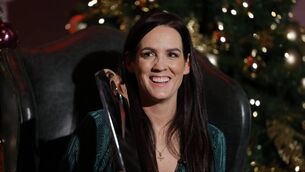
Author Noelle McCarthy, at the Maldron Hotel Cork, South Mall, Cork. Picture: Jim Coughlan.

Even the Gen X’ers are onto it. My husband went to a 50th where the host offered low-alcohol and no-alcohol beer as well as the hard stuff. 

Fearing a backlash, even though some friends had asked for it, he served the non-alcoholic beer already poured into glasses. 

But he had to fess up after so many people liked the taste of it so much they wanted to know what they were drinking. 

Far from being annoyed, the room was full of middle-aged men congratulating each other on not having a bad head to look forward to the next morning.

Low-alcohol wine seems to be specifically marketed to women, with lots of pink bottles and labels written in swirly cursive. 

None of it appeals to me, I drank to get drunk primarily. For people like me, the feel of a can in the hand, the muscle memory of pulling a cork from a bottle can be triggering. 

I stick to kombucha, not wanting to roll the dice by replicating the drinking experience.

What I most love though, in this age of beer and wine and cocktail ringers, is going to a party and having many more sober people to talk to. 

It’s really nice to live through a cultural shift that means there’s less of a likelihood of me being trapped with someone on his fifth drink, forgetting a crucial bit of the funny story or lapsing into a confused rehash of a freshly remembered historical grievance. 

Parties are different. I know there’ll still be those moments when the needle drops on a collective release, that moment that comes when a raucous crowd is drinking. 

Just before or just after midnight, when the atmosphere loosens and thickens simultaneously. A night out over Christmas, Slade blasting and the tray of shots comes down to the table, a 40th on the dancefloor when ‘The Whole of The Moon’ is playing. 

I’m always going to miss that, I made my peace with it. It’s a small, everyday pang of exile, a reasonable price to pay for escaping the general insanity of where my life was heading. 

Back then, when I stepped out gingerly, full of fear and misery, into a new world, where I wasn’t always going to be twisted, I never expected that the culture would shift around me.

That people who had never had a problem with drinking, would choose not to do it, for reasons of health, mental and physical, or aesthetics, or the general trend of lifestyle optimisation we’ve all fallen into. 

The whole paradigm of needing a few drinks for enjoyment, that at one point, felt culturally mandated, in New Zealand as much as in Ireland, seems to be shifting miraculously.

For what it’s worth, I think drinking as a pastime is not going anywhere. As human beings with a brain that gets sore from overthinking, and tender hearts that get bruised, we’re always going to have a tendency towards seeking oblivion. 

Alcohol is a boon, a balm that’s available easily. It’s a reliable release, and it’s fun, as I used to complain constantly, in early recovery. 

The deep roots of coming together with a drink to celebrate, commiserate, mourn, and commemorate are cultural, social, historical. 

Now though, with the mocktails, the 0.0% whatever, it’s possible to sit with a glass in the hand and feel part of it, knowing you’re not the only outlier. 

It feels less lonely, not to be the only one holding a drink that’s sweet and delicious, and carefully brewed and not containing a drug that changes you. 

I’m not sure whether non-alcoholic versions of beers and wines have the placebo effect some people report to me, or maybe everyone is still a bit more like I was, at the start of my non-drinking: slightly awkward, slightly edgy, a bit self-conscious. 

My experience is that over time, and with practice it gets easier to spend a night in your own skin, and go home in the same mental state you went out in. 

And I don’t miss the pain in the head the next morning, nor the free-floating paranoia.

More in this section

Lifestyle

Newsletter

The best food, health, entertainment and lifestyle content from the Irish Examiner, direct to your inbox.

Cookie Policy Privacy Policy Brand Safety FAQ Help Contact Us Terms and Conditions

© Examiner Echo Group Limited